Krabi in 7 Days — Elephants, Emerald Pools, and More Islands Than We Can Count — August 2025
Day 1 — August 10: Arrival & First Taste of Krabi
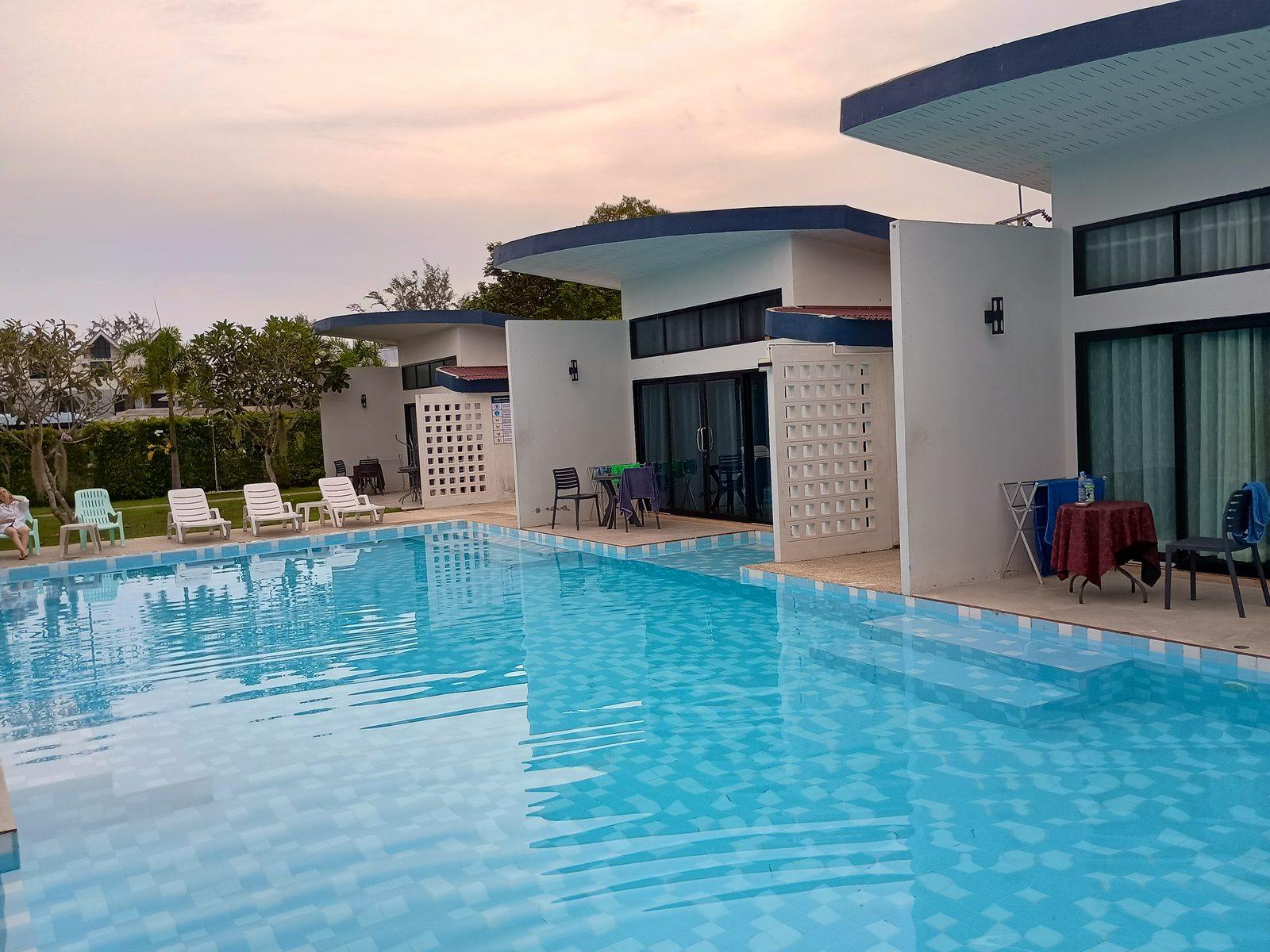
Blue Ba You Resort, a small boutique property in Ao Nang, sits a six-minute walk from Ao Nang Beach and the Krabi Boxing Stadium. Its defining feature is a saltwater swimming pool surrounded by rooms whose terraces open directly onto the water — a design that trades the anonymity of a large chain hotel for something more intimate. The on-site restaurant, unusually for a hotel of its size, has earned independent praise for its baguette sandwiches and curry rice, and the staff double as de facto tour operators, arranging island excursions for guests. At approximately $38 USD per night, it occupies the budget-to-mid-range tier of Ao Nang’s accommodation spectrum.
Krabi Province occupies 4,709 square kilometres on Thailand’s Andaman Sea coast, with a population of approximately 477,000 spread across eight districts and 154 islands. The provincial capital, Krabi Town, sits at the mouth of the Krabi River where two iconic limestone karsts — Khao Khanab Nam — flank the waterway like natural gatekeepers. These formations are the symbol of the province, appearing on its official seal alongside two crossed ancient swords that give Krabi its name (“krabi” means sword in Thai — a reference to a legend in which villagers unearthed an ancient blade and presented it to the governor).
Human habitation in the area dates back 25,000 to 35,000 years, with archaeological finds including stone tools and pottery at sites like Lang Rong Rien and Tham Phi Hua To. More than 60 prehistoric cave paintings, estimated at 3,000 to 5,000 years old, have been discovered at the Khao Pru Tee Mae cliff in Ao Luek district — evidence of what may have been one of Southeast Asia’s earliest coastal communities.
Modern Krabi began taking shape in 1872, when King Chulalongkorn (Rama V) elevated it to town status. By 1875 it had become a direct subordinate of Bangkok, evolving into the province it is today. Its economy rests on two pillars: agriculture — predominantly rubber and oil palm, which together cover 95% of the province’s cultivated land — and tourism, which now ranks fifth among all Thai provinces in revenue, generating roughly 36 billion baht annually from an estimated six million visitors.
Tourism came relatively late to Krabi. Backpackers and adventurers began arriving in the 1980s, drawn by pristine beaches and dramatic limestone landscapes that geologists classify as Permian Ratburi Limestone — deposited between 299 and 252 million years ago when the area was a shallow tropical sea. The karst towers, known in geomorphology as mogotes, rise vertically from both jungle and ocean, creating a landscape that appears sculpted rather than eroded. The 2000 film The Beach, starring Leonardo DiCaprio and filmed largely on the nearby Phi Phi Islands, transformed global awareness of Krabi almost overnight.
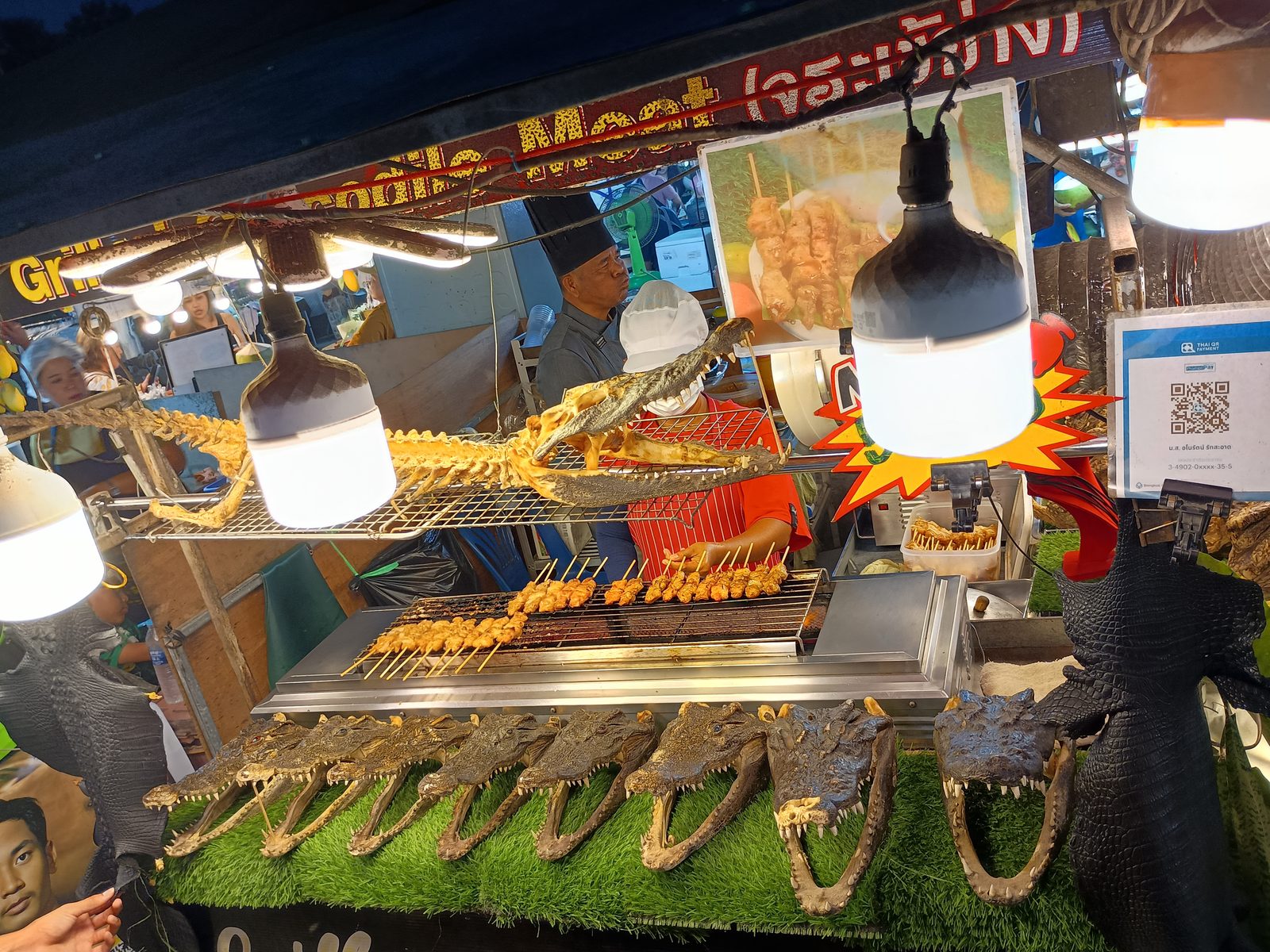
Krabi’s culinary identity is distinctly southern Thai — spicier than central Thai cuisine, making heavy use of turmeric, coconut, and the fresh catch from the Andaman Sea. Signature dishes include gaeng som (a sour curry), kua kling (an intensely spicy dry-fried meat curry), and an abundance of grilled seafood. Night markets throughout the province serve everything from mango sticky rice to more adventurous offerings like fried scorpions or crocodile skewers, grilled over charcoal and served with lime and chili.
Day 2 — August 11: Ao Nang & The Night the Fire Came Out
Ao Nang Beach
Once a quiet fishing village with a scattering of modest bungalows, Ao Nang has evolved into Krabi’s main tourist hub — though it has retained a more relaxed character than Phuket’s Patong or Koh Samui’s Chaweng. The beach itself stretches along a curved bay framed by limestone headlands on both sides. The sand is golden rather than white, and at low tide the sea withdraws far enough to expose vast tidal flats where longtail boats tilt on their sides in the shallows.
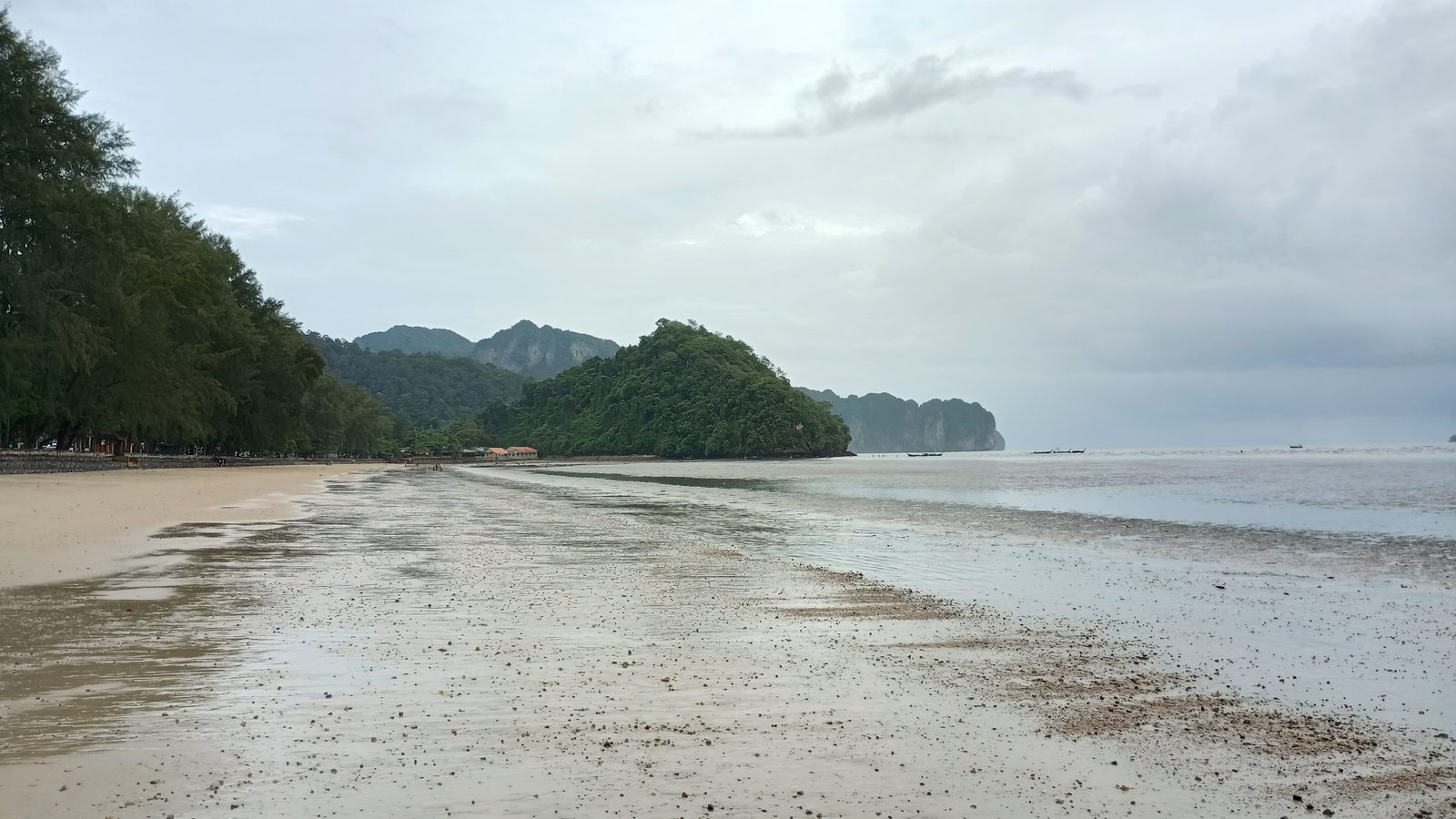
Geologically, the bay is part of the Hat Noppharat Thara–Mu Ko Phi Phi National Park system, established in 1983 and covering approximately 388 square kilometres of coastal and marine habitats. The limestone that forms Ao Nang’s dramatic backdrop is the same Permian-era rock that created the entire karst landscape of the Andaman coast, sculpted over millions of years by rainwater (which is slightly acidic and slowly dissolves calcium carbonate) and by the relentless action of tropical seas.
Ao Nang’s main strip today is a blend of dive shops, massage parlours, travel agencies advertising island tours by speedboat, and restaurants serving both Thai and international cuisine. The scent of coconut oil, sizzling satay, and salt air forms the olfactory signature of the place. Despite its development, the beach remains public and free to access — a distinction from some neighbouring resort areas where sections of coastline have been effectively privatised.
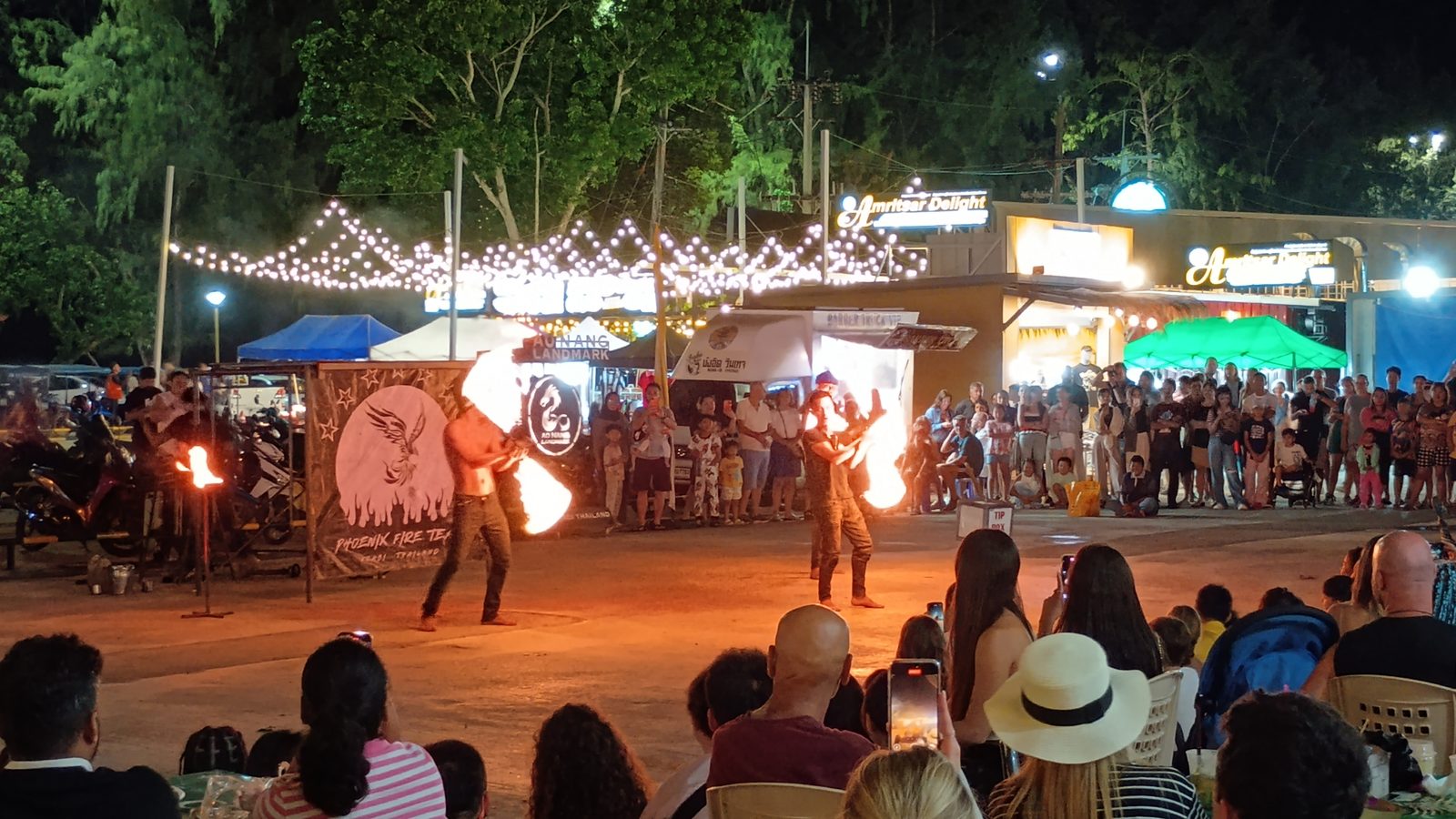
Ao Nang Landmark Night Market
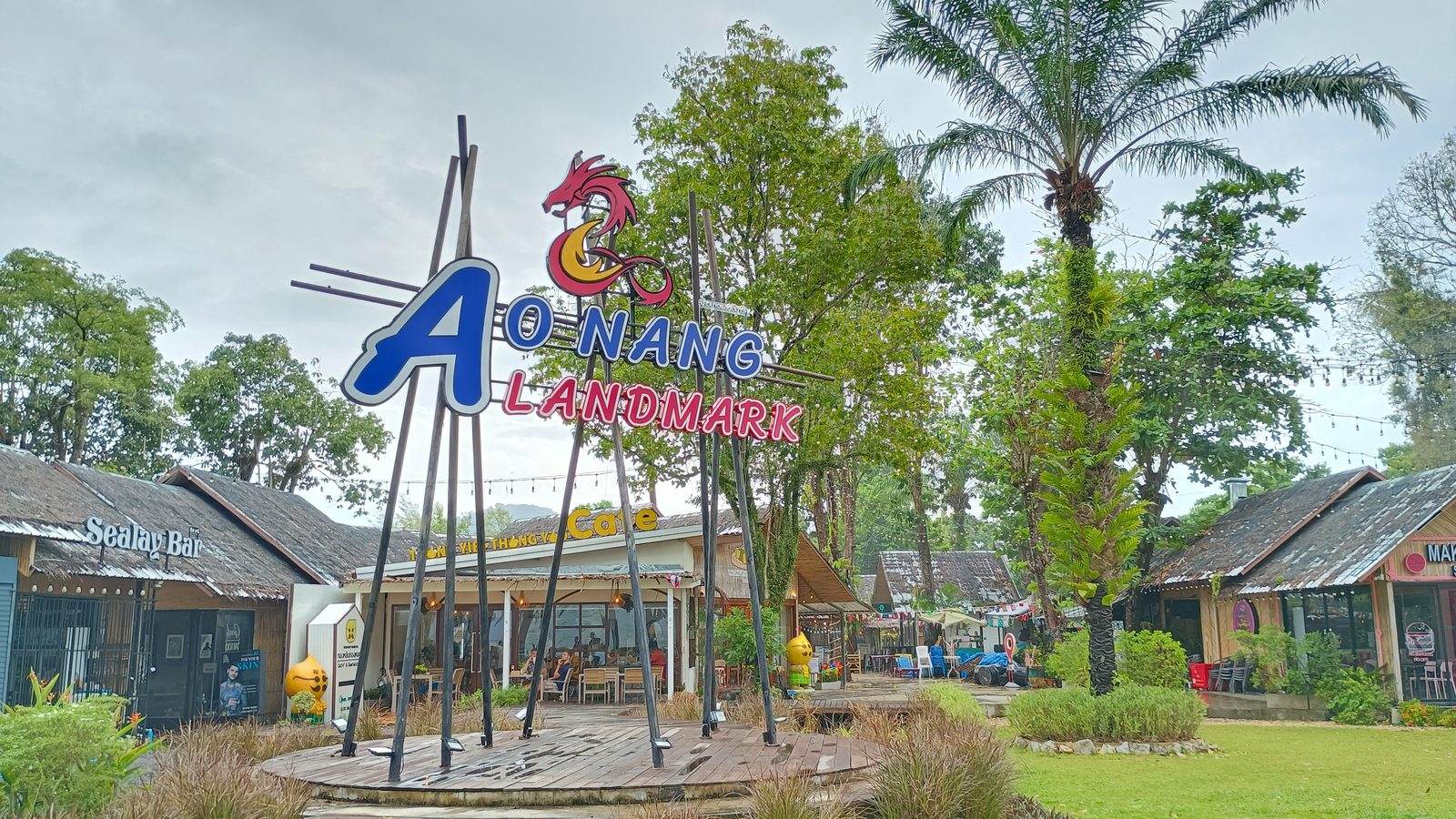
The Ao Nang Landmark Night Market operates within a beachfront complex of thatched-roof pavilions and open-air seating areas. Its roughly 80 stalls range from street food vendors to artisans selling handmade jewellery, clothing, and souvenirs. Live music — typically a band playing Thai and Western covers — provides the soundtrack, and the market peaks around 9 PM when the fire shows begin.
Fire dancing has deep roots in Southeast Asian and Pacific Islander cultures, though the tourist-oriented version seen at Ao Nang traces its lineage to the beach party culture that emerged in Thailand’s islands during the 1990s and 2000s. Performers spin flaming batons, staffs, and poi — weighted balls on chains that trace circles of fire through the night air — requiring significant skill and practice to execute safely. The spectacle of flames silhouetted against the dark Andaman Sea, with limestone karsts barely visible on the horizon, has become one of Krabi’s signature night-time experiences.
Day 3 — August 12: Trunks, Mud, and 85 Acres of Jungle
Krabi Elephant Sanctuary (Following Giants)
Krabi Elephant Sanctuary occupies 85 acres (approximately 34 hectares) of forest and mangrove in the Ao Luek area of the province, established specifically as a retirement home for elephants rescued from Thailand’s logging and riding industries. The sanctuary operates on a strict no-riding, no-chains, no-performance philosophy — a model that has gained traction across Thailand since the mid-2010s as awareness of elephant welfare has grown among international tourists.
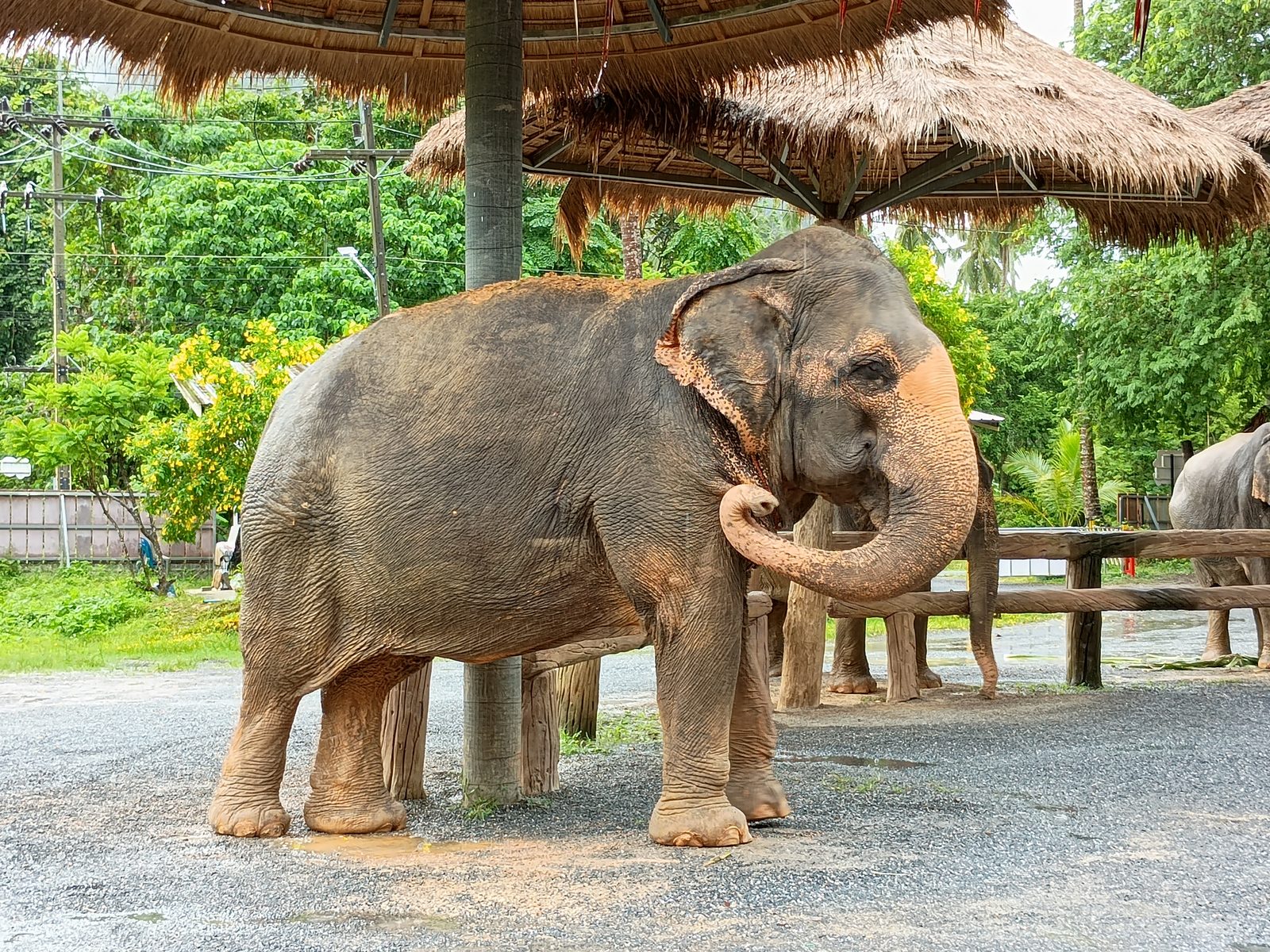
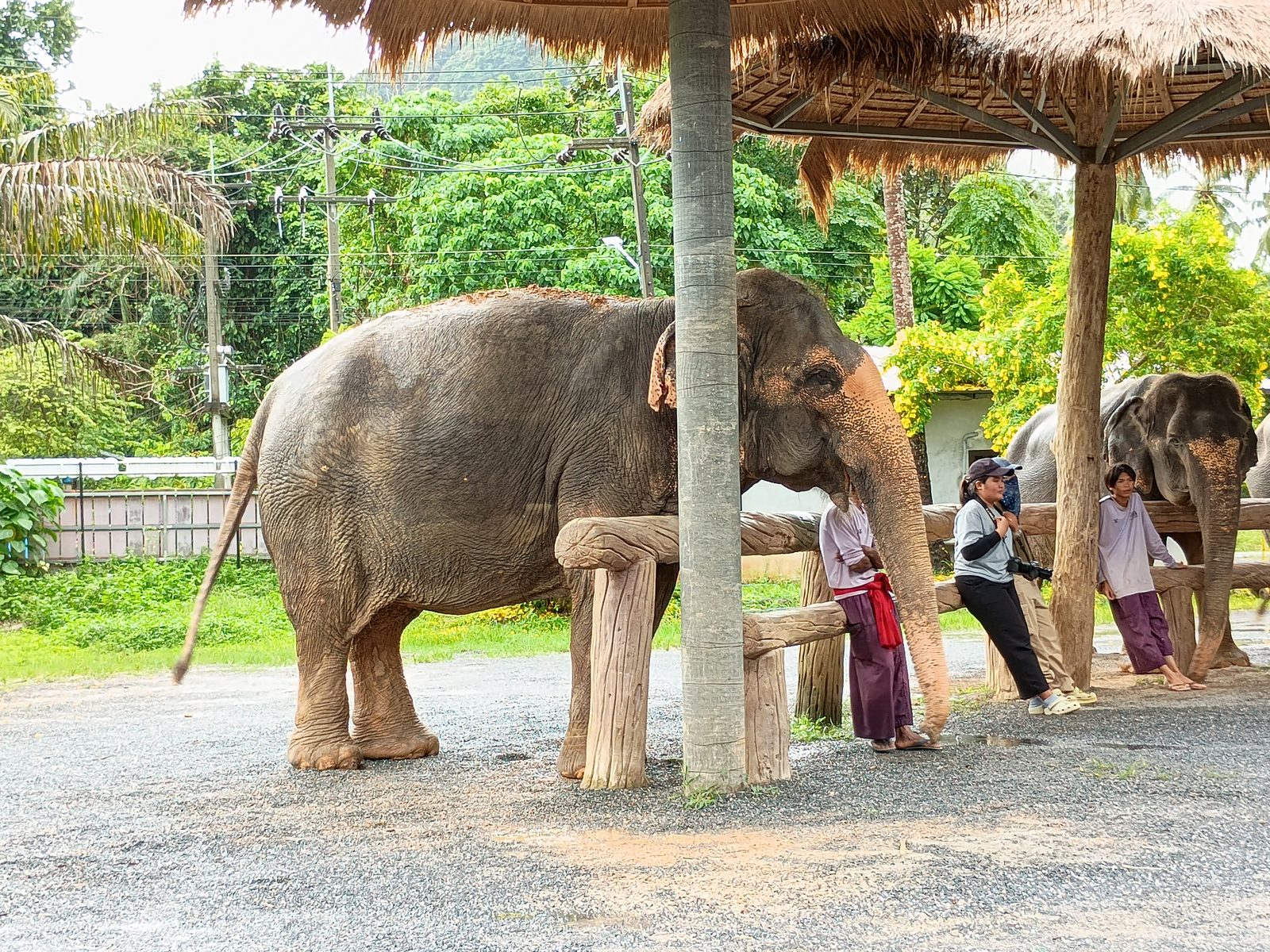
Thailand’s domestic elephant population has declined dramatically over the past century. In 1900, an estimated 100,000 elephants roamed the country, with nearly all employed in the teak logging industry. The 1989 logging ban, enacted after catastrophic floods in southern Thailand were attributed to deforestation, left thousands of elephants and their mahouts without work. Many were absorbed into the tourism industry — offering rides, performing in shows, or begging on city streets. As recently as 2020, conservation groups estimated that fewer than 3,800 elephants remained in Thailand, roughly half of them in captivity.
Sanctuaries like Following Giants represent a shift toward what is termed “ethical elephant tourism.” Visitors spend approximately three hours in the elephants’ world: chopping bananas and sugarcane in the preparation kitchen, feeding the animals by hand (an adult elephant consumes 150–200 kg of food per day), walking alongside them through the forest, and — perhaps most memorably — joining them in mud baths and river washes. The mud serves a practical purpose for the elephants, protecting their sensitive skin from sun and insects. The river wash afterwards is gentler: standing waist-deep in cool water, scrubbing an elephant’s flank while the animal closes its eyes and rumbles at frequencies felt as much as heard.
A half-day visit costs approximately 2,500 THB per person, including transport from the Ao Nang area, all activities, and a Thai lunch. Every baht goes back to elephant care — food, veterinary services, and land maintenance for the 85-acre sanctuary grounds.
Day 4 — August 13: Four Islands, A Sandbar From Nowhere, and Tropical Fruit Heaven
The Four Islands Tour
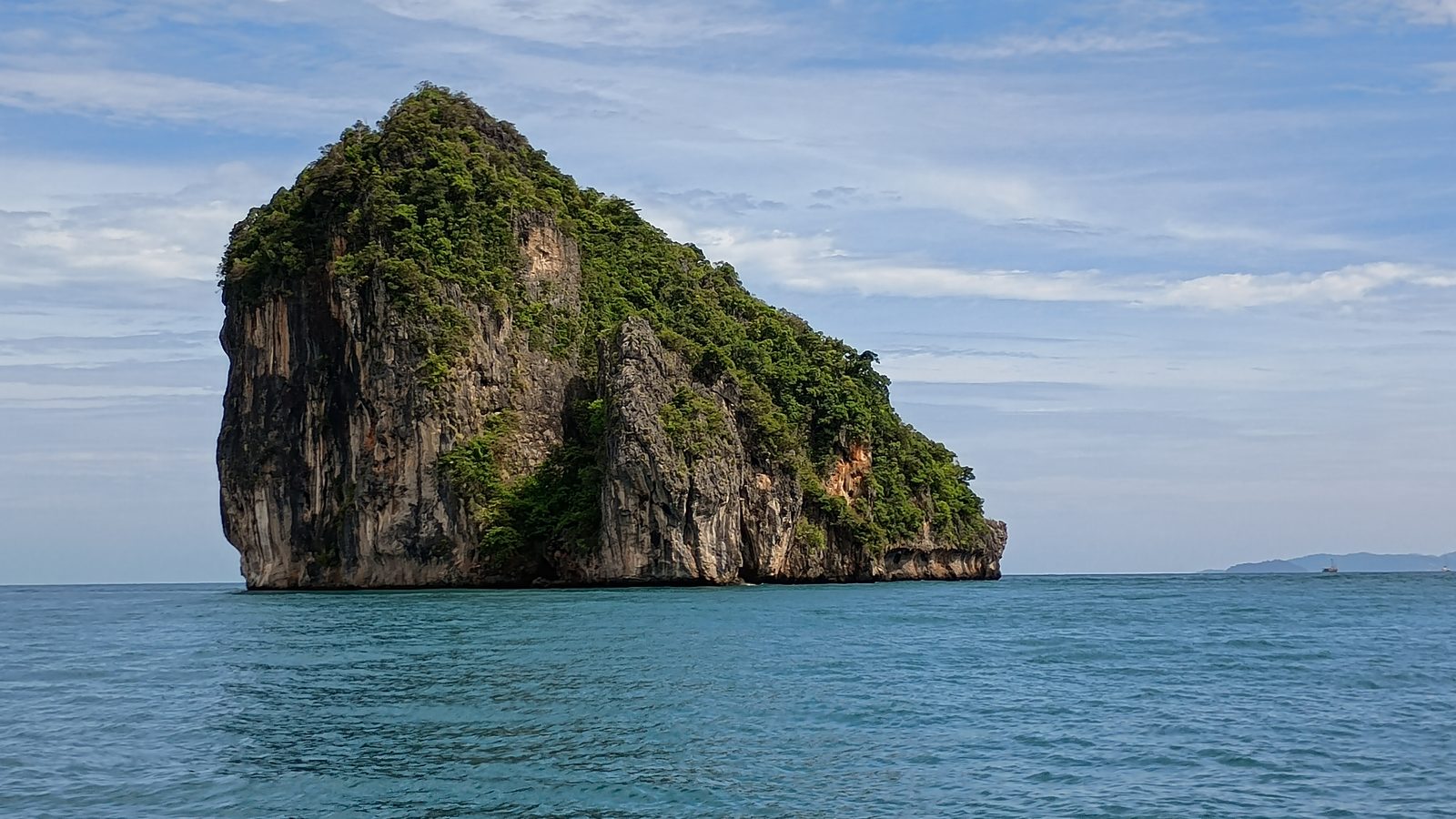
The Four Islands tour is Krabi’s signature day trip, operated by dozens of longtail boat captains departing from Ao Nang and surrounding beaches. The standard itinerary covers Koh Poda, Chicken Island (Koh Gai), Koh Tub and Koh Mor (which flank the famous Thale Waek sandbar), and Phra Nang Beach on the Railay Peninsula. The tour has been running commercially since the late 1980s and remains one of the most popular activities in Krabi.
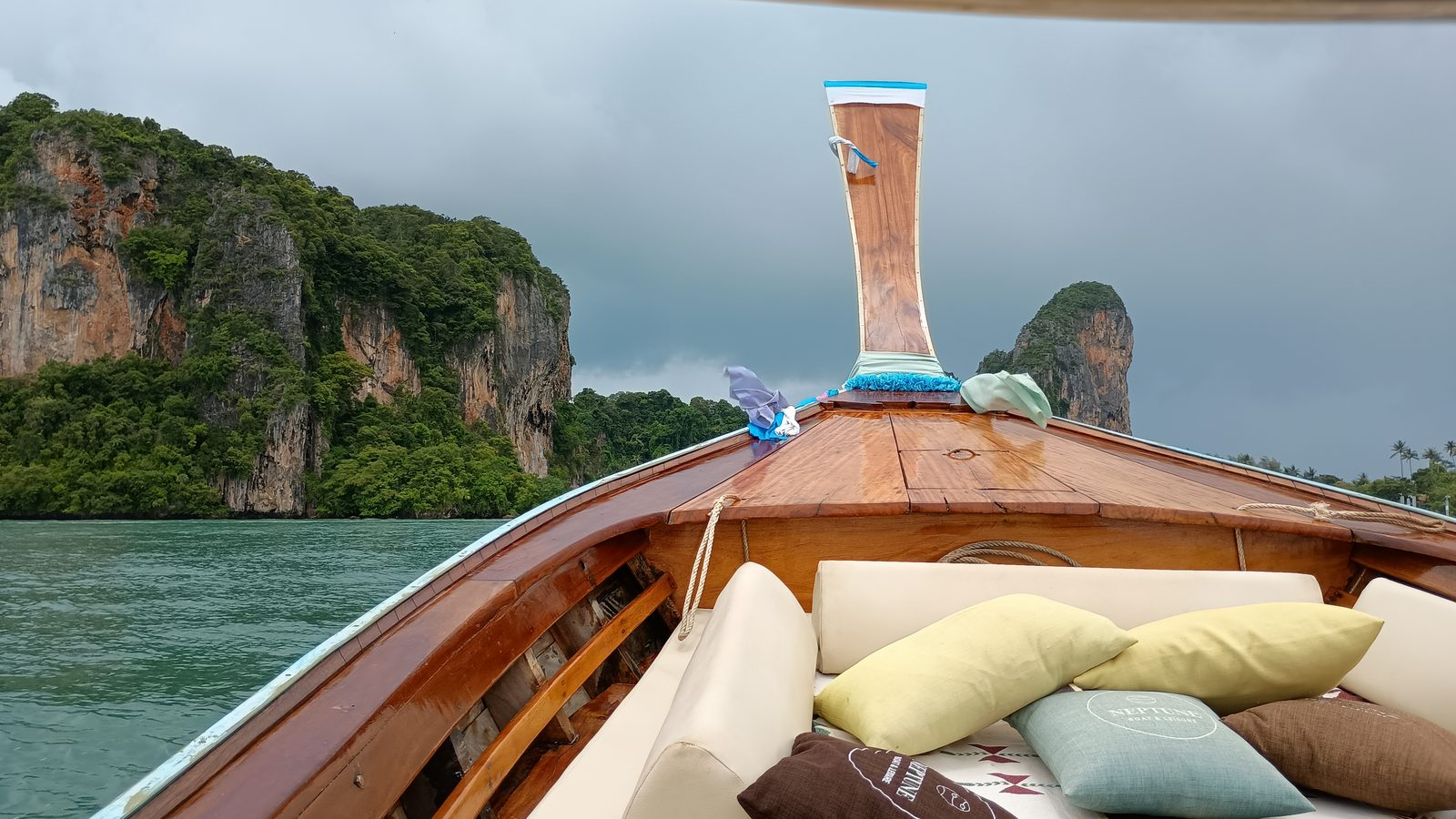
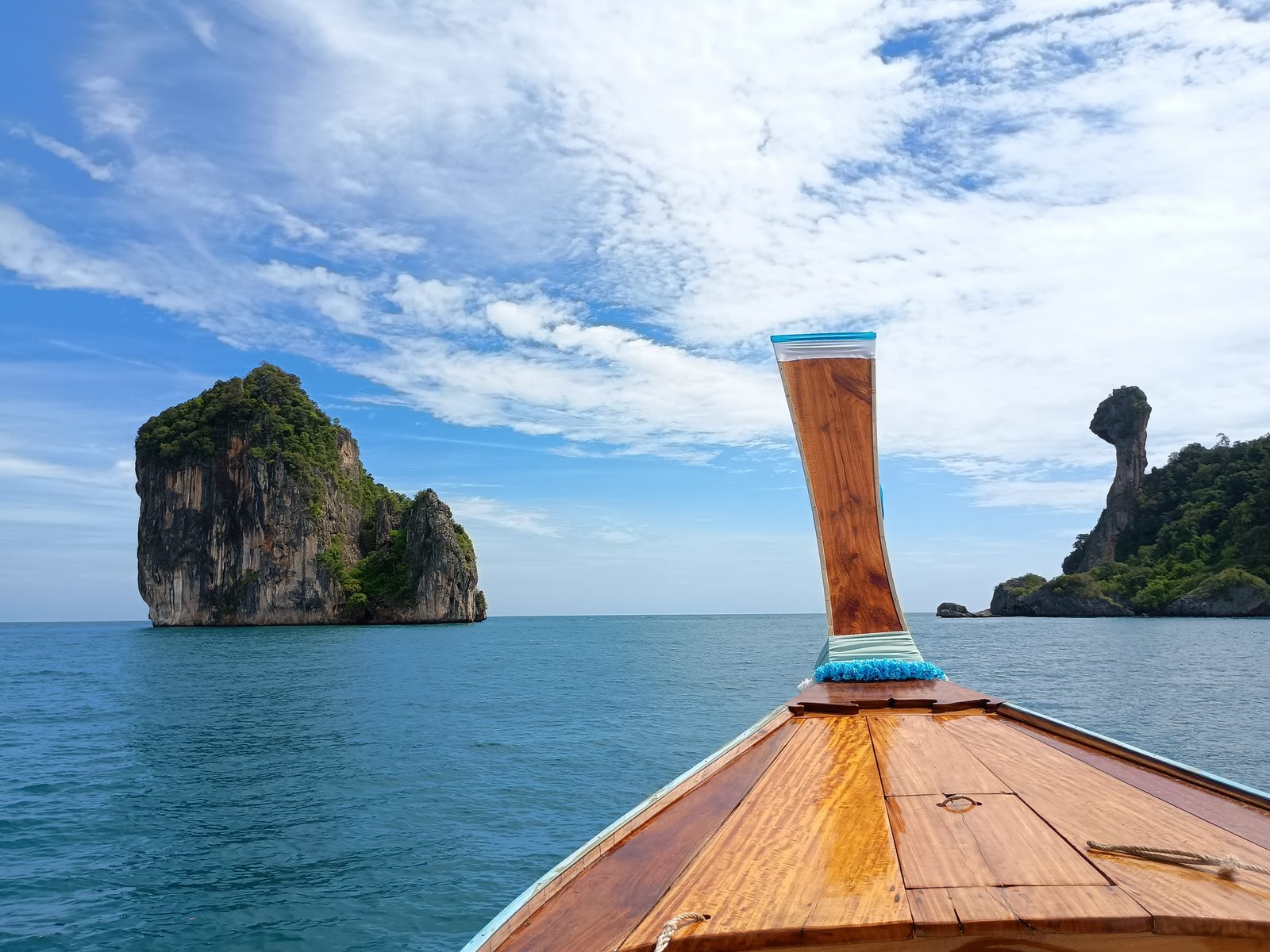
The boats themselves are a key part of the experience: traditional longtails (ruea hang yao in Thai) are wooden-hulled craft powered by converted car or truck engines mounted on a swivelling shaft with a propeller at the end — hence the “long tail.” Brightly painted ribbons tied to the bow serve as both decoration and, in Thai tradition, as offerings to the water spirits for safe passage.
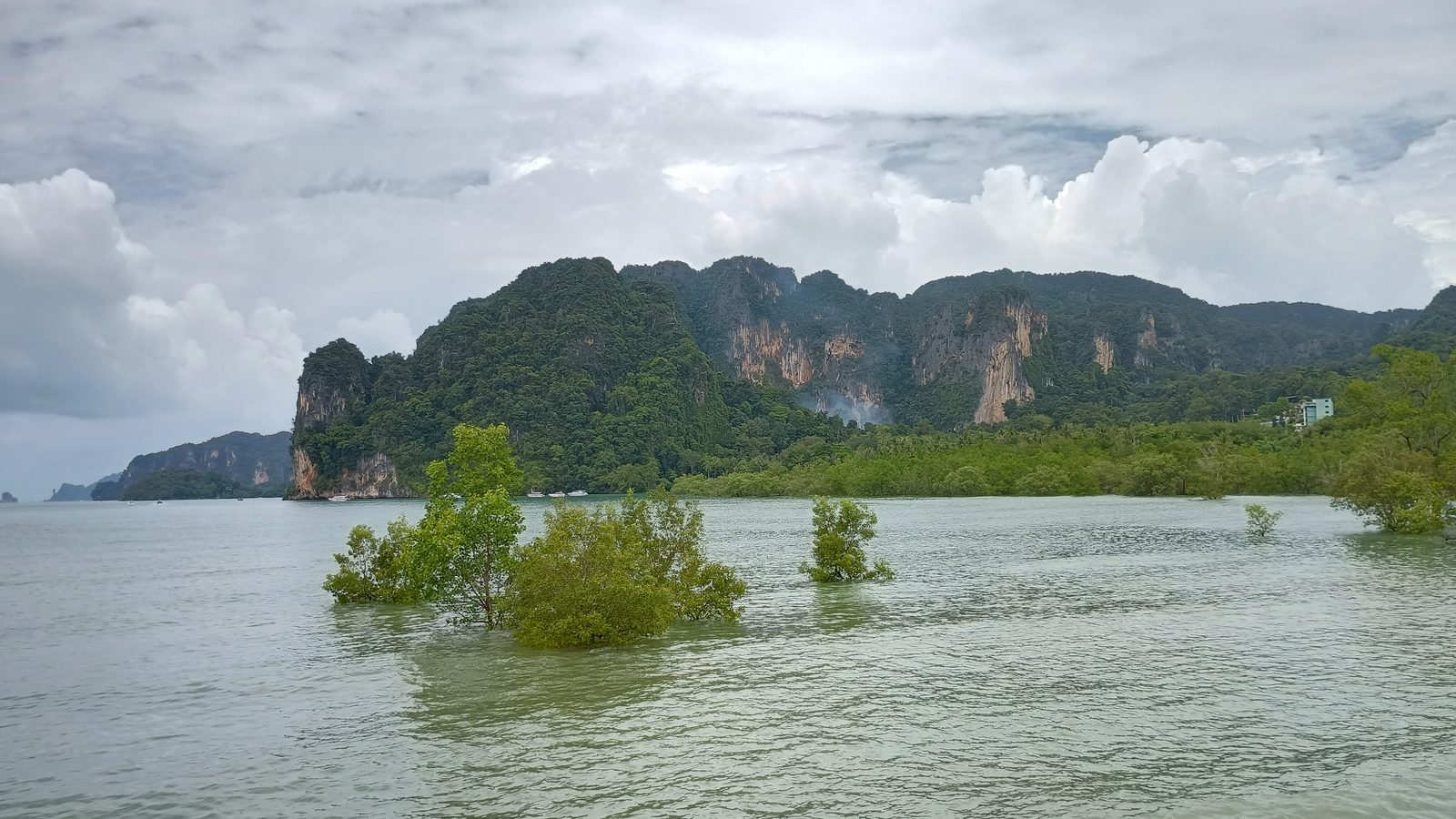
Thale Waek — The Separated Sea
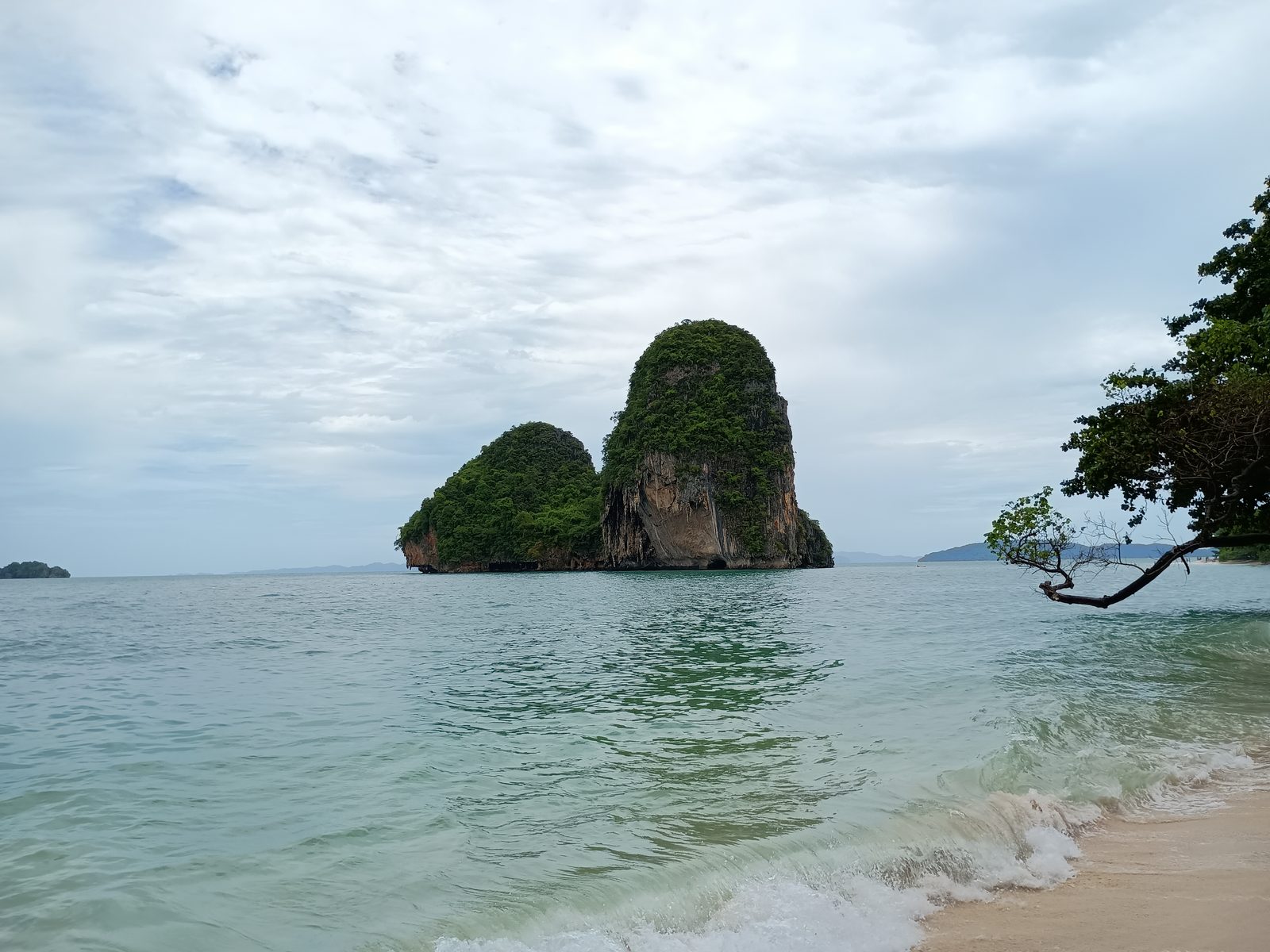
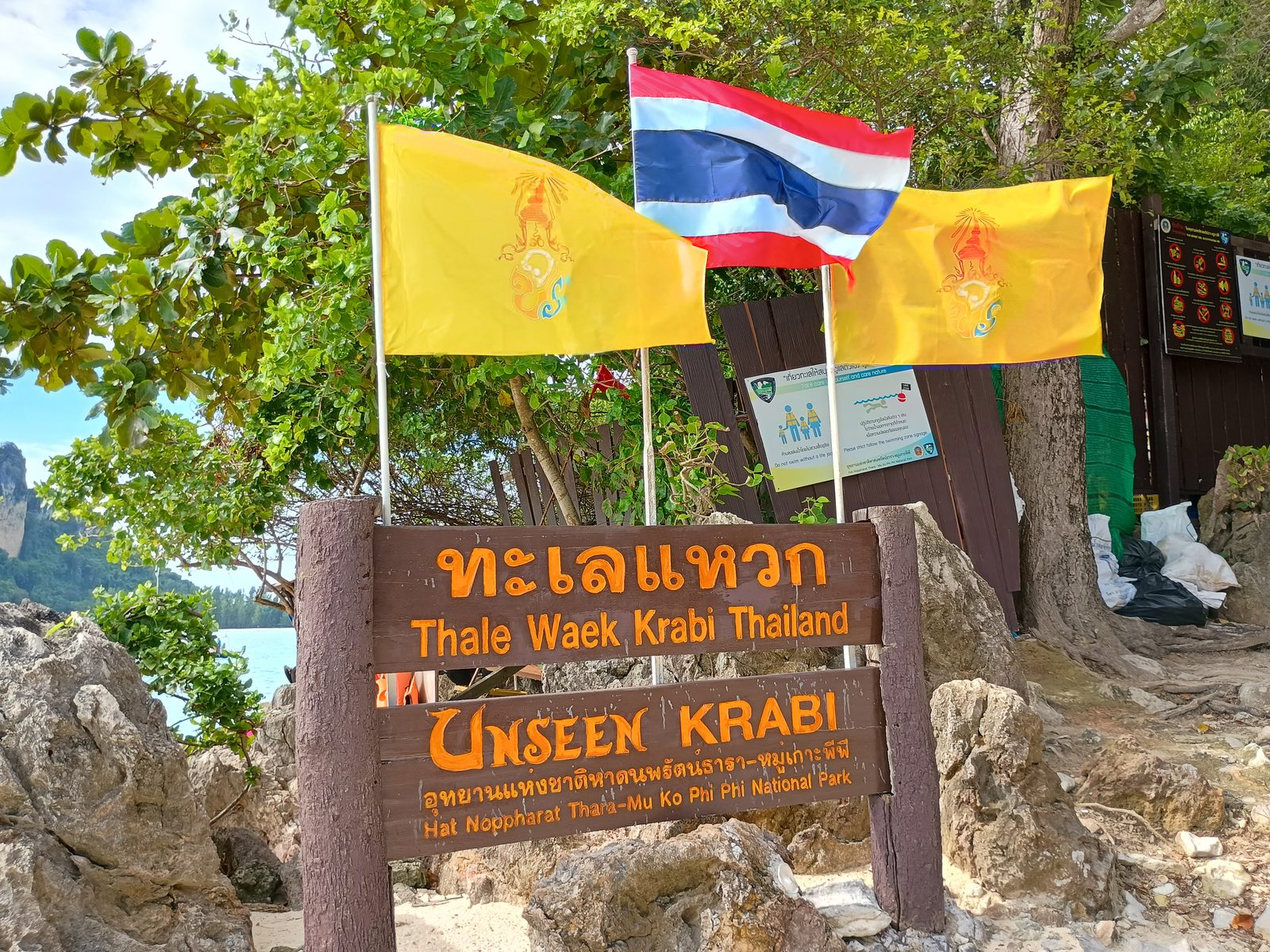
Thale Waek (ทะเลแหวก), literally “the divided sea,” is a natural phenomenon that occurs twice daily during low tide. As the Andaman Sea withdraws, a gleaming white sandbar emerges from the water, physically connecting the islands of Koh Tub, Koh Mor, and Koh Gai (Chicken Island). One moment the islands are separate; the next, a narrow pathway of sand appears, allowing visitors to walk from one island to another with clear water lapping at their ankles from both sides.
The phenomenon is driven by the tidal range of the Andaman Sea, which averages approximately 2 to 3 metres in this area. The most dramatic exposures occur during spring tides — those coinciding with the new and full moon, when the gravitational pull of the sun and moon align. The sandbar can be anywhere from a few metres to perhaps 20 metres wide depending on the tide height, and dozens of visitors scatter across it, taking photographs, wading, and experiencing what feels, however briefly, like walking on water.
Chicken Island, the largest of the three connected by the sandbar, is named for a rock formation at its southern tip that — with varying degrees of imagination — resembles a chicken’s head and neck. The island itself is uninhabited, covered in scrub vegetation and surrounded by coral reefs that support modest snorkelling.
Koh Poda
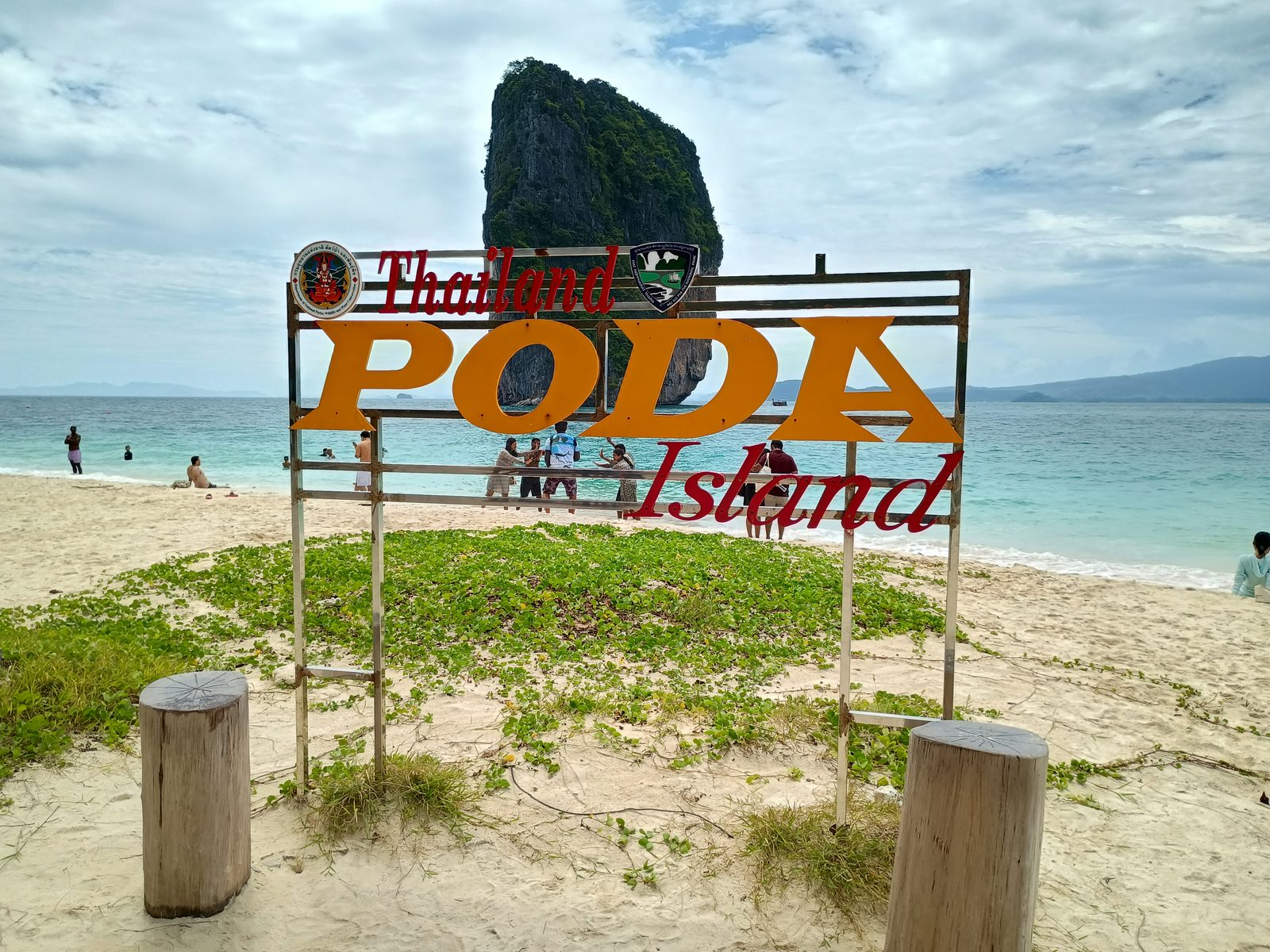
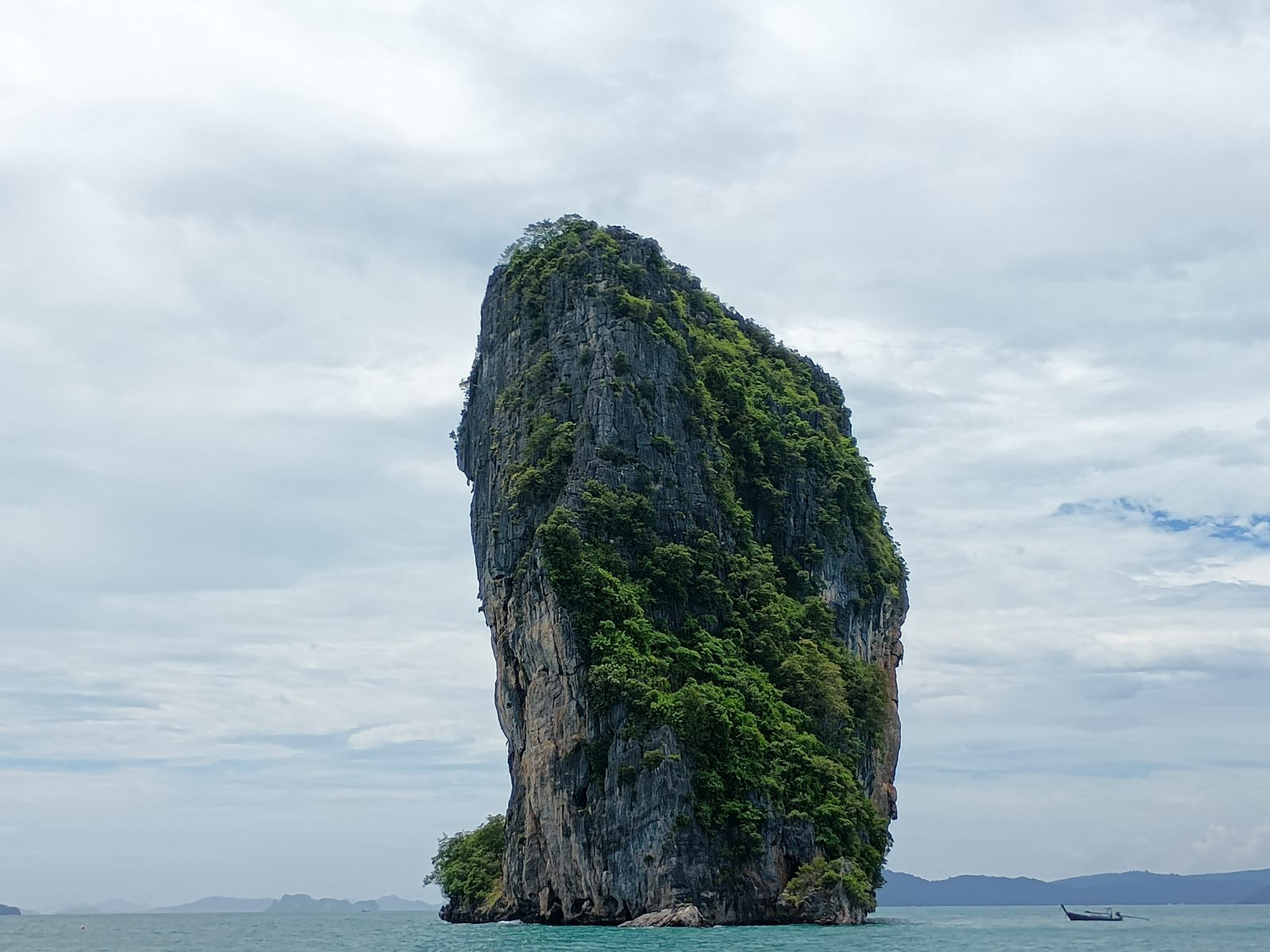
Koh Poda is the final stop on most Four Islands tours, and it is the island that appears on nearly every Krabi postcard: a roughly one-kilometre-wide disc of fine, squeaky white sand, backed by towering limestone karsts, surrounded by water that shifts from turquoise to deep blue depending on depth and angle. The sand here is composed primarily of finely ground coral and shell fragments rather than silica, which gives it a distinctive texture — soft underfoot and, when dry, producing the characteristic “squeak” that geologists attribute to the angular shape of the carbonate grains.
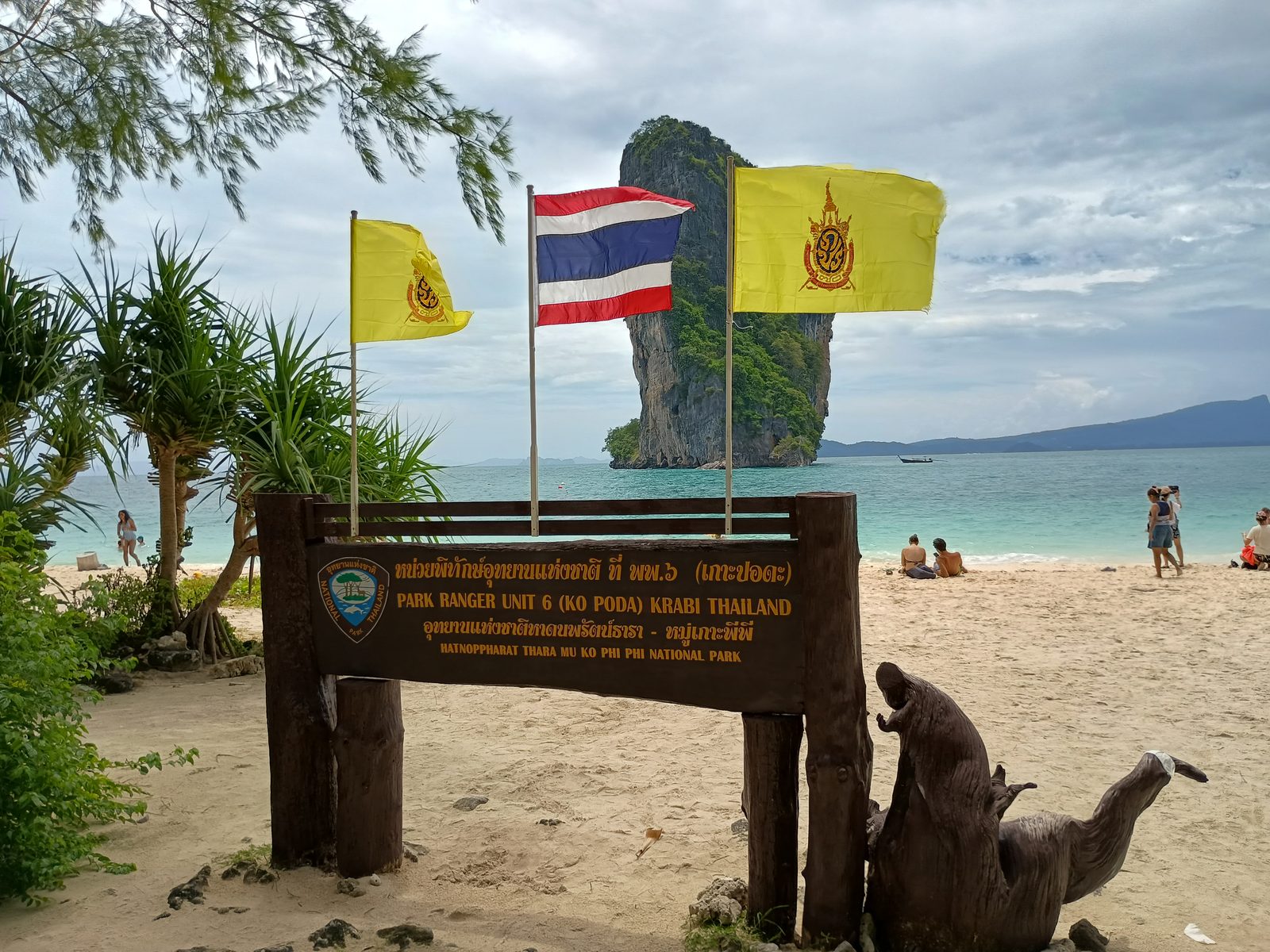
There is virtually nothing on Koh Poda beyond a small snack shack, a Park Ranger station flying the Thai flag, and the raw Andaman beauty that made it famous. The island falls under the jurisdiction of Hat Noppharat Thara–Mu Ko Phi Phi National Park, and a small entrance fee (typically 400 THB for foreign adults) is collected by rangers. The park was established in 1983 and is classified as IUCN Category II, encompassing 388 square kilometres of coastal waters, islands, and mangrove ecosystems.
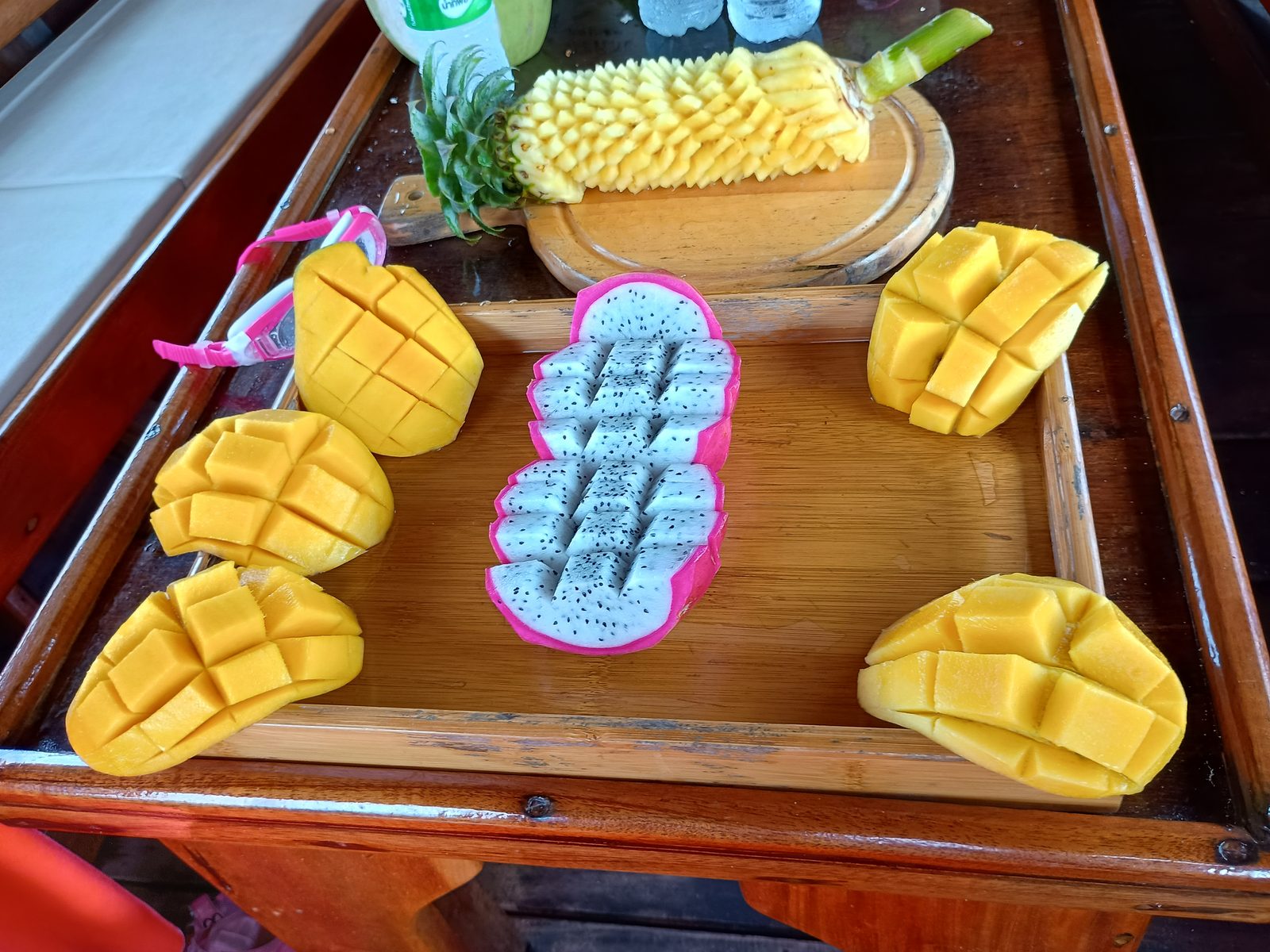
Phra Nang Beach & The Princess Cave
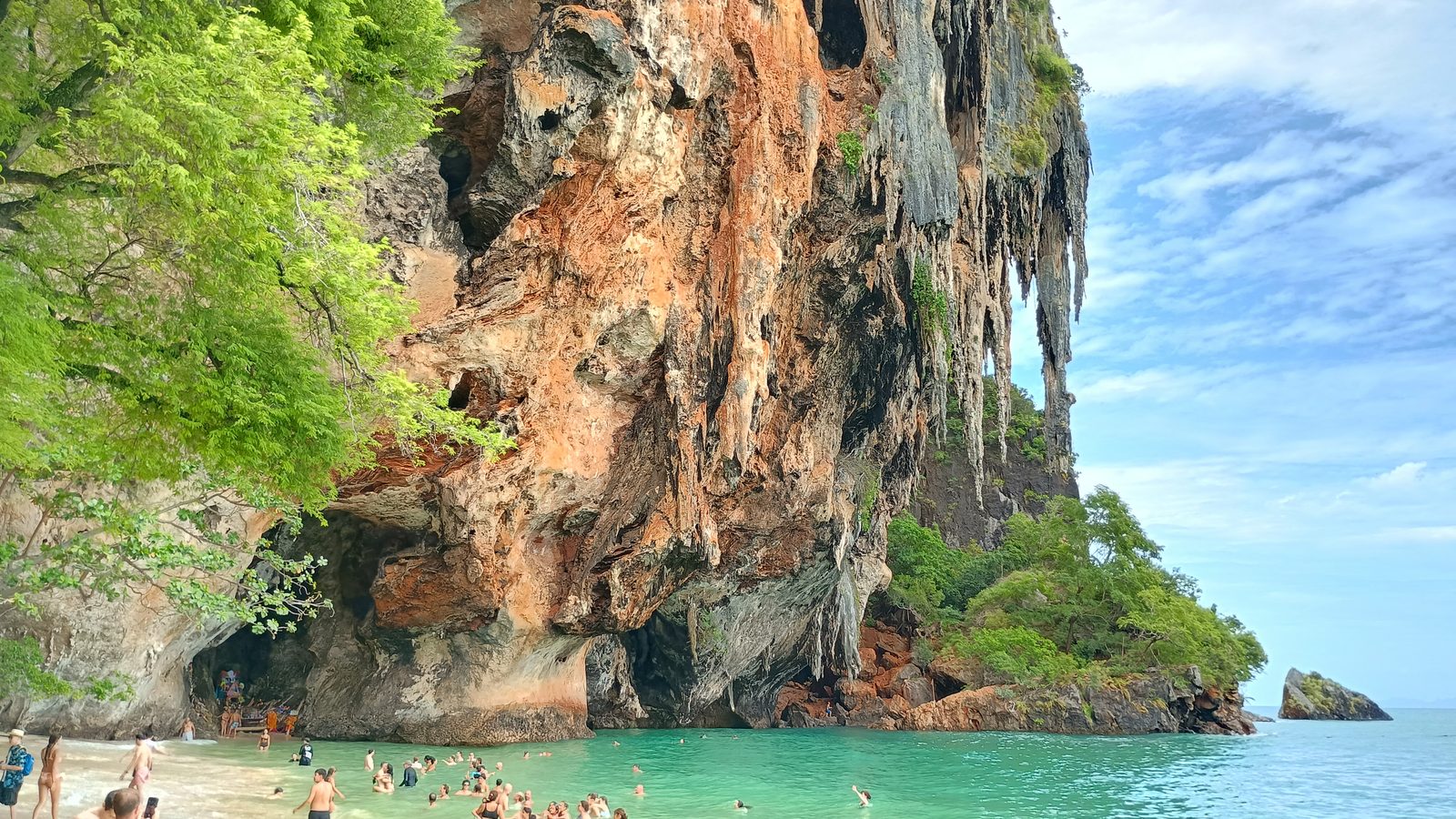
Phra Nang Beach, on the southern tip of the Railay Peninsula, is regularly ranked among the world’s most beautiful beaches. Accessible only by boat due to the limestone cliffs that cut Railay off from the mainland road network, it features a crescent of white sand backed by caves and climbing walls. The beach is named for a legendary princess (Phra Nang) whose spirit is said to inhabit the nearby cave — the Tham Phra Nang Nok (Princess Cave), also known as the “penis shrine.” Local fishermen, both Buddhist and Muslim, have for generations left offerings of carved wooden phalluses at the shrine, believing the princess’s spirit can ensure good catches and safe voyages. The shrine is one of the more unusual and culturally distinctive sites in the Krabi region.
The Railay peninsula itself is globally famous among rock climbers, with over 700 bolted routes on its limestone cliffs — ranging from beginner-friendly to some of the hardest sport climbs in Southeast Asia. The cliffs are composed of the same Permian limestone that defines the entire region, and their verticality and the quality of the rock make them unusually well-suited to climbing.
Day 5 — August 14: Cobras, Monkeys, Red Dirt, and a Golden Stupa at Sunset
Krabi Snake Park & King Cobra Show
The Krabi Snake Park, located along the road between Krabi Town and Ao Nang, is a long-established attraction that combines a live snake handling show with educational exhibits. The centrepiece is the King Cobra Show, featuring Ophiophagus hannah — the world’s longest venomous snake, capable of reaching lengths of 5.5 metres and delivering enough neurotoxic venom in a single bite to kill an adult elephant.
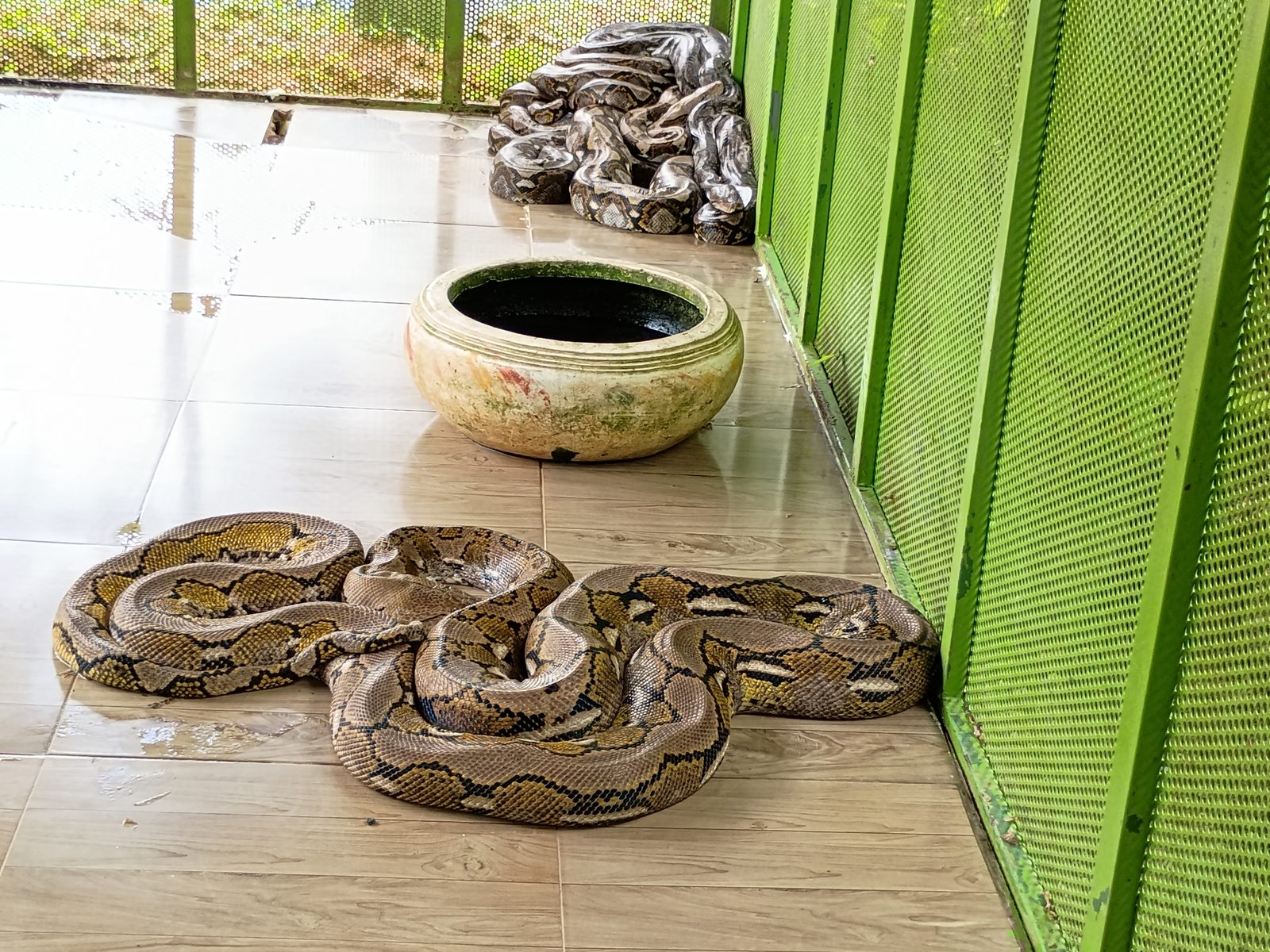
Thailand is home to approximately 200 species of snakes, of which roughly 60 are venomous. The king cobra holds a special place in Thai culture — it is revered as a symbol of power and protection, and snake charmers have performed with cobras in the kingdom for centuries. Traditional snake handling (known in the southern dialect as ngu phao) is passed down through generations within specific families, with handlers learning to read the snake’s body language and maintain a precise distance — close enough to demonstrate control, far enough to stay alive.
The park houses multiple species beyond the king cobra, including Burmese pythons, monocled cobras, Malayan pit vipers, and various non-venomous snakes native to the region. The show format has drawn criticism from some animal welfare advocates in recent years, part of a broader debate about wildlife tourism in Thailand, though the park maintains that its snakes are captive-bred and that the shows serve an educational purpose about snake safety and conservation.
Wat Tham Sua (Tiger Cave Temple)
Wat Tham Sua, the Tiger Cave Temple, is one of the most significant Buddhist sites in southern Thailand, located approximately eight kilometres northeast of Krabi Town in a forested valley surrounded by limestone cliffs. It was founded in 1975 by Ajahn Jumnien Silasettho, a highly respected meditation master known throughout Thailand for his teachings blending Theravada Buddhism with elements of tantric practice.
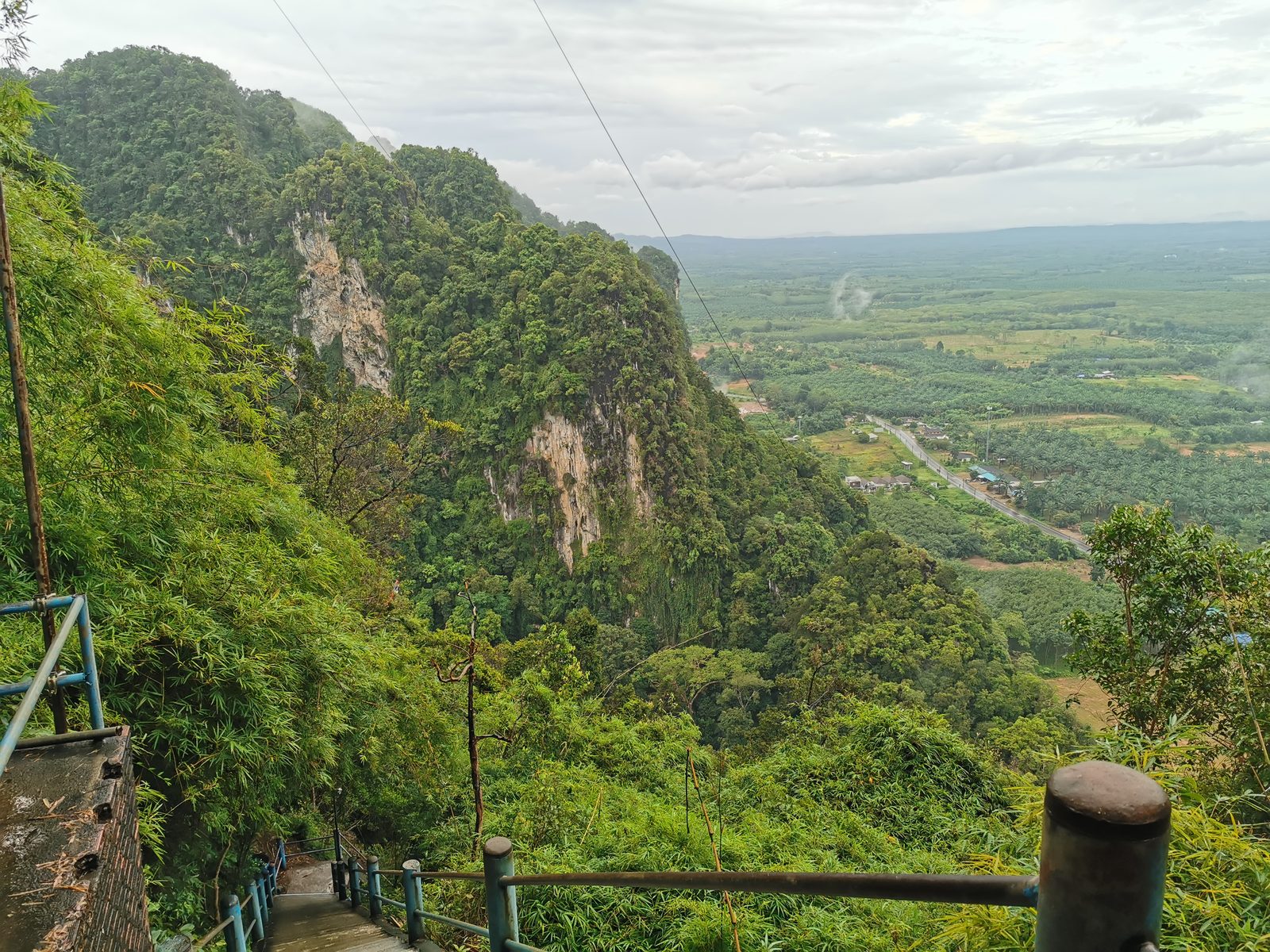
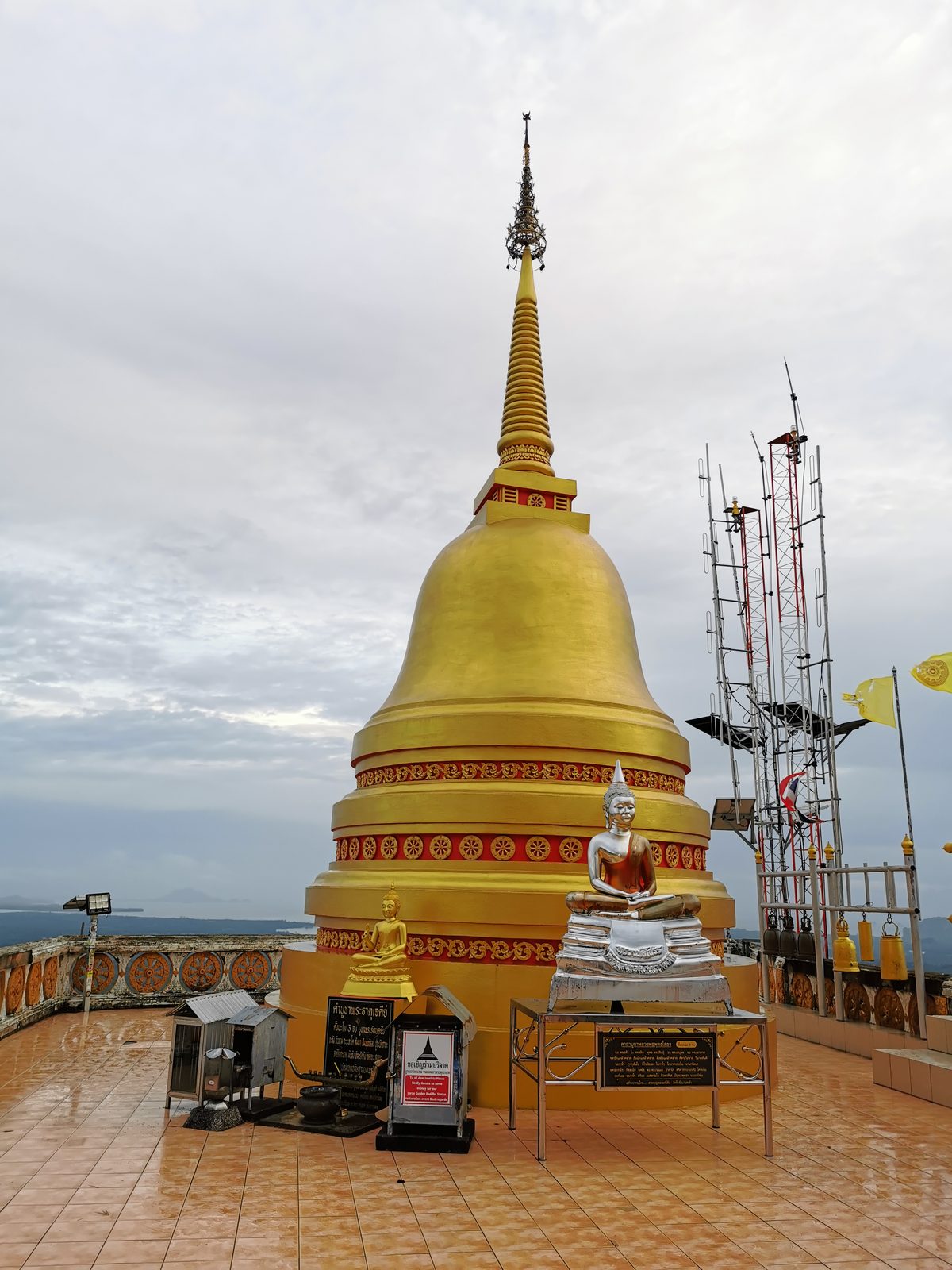
The name “Tiger Cave” derives from a natural cave within the temple complex where, according to local tradition, a tiger once lived and roamed — the rock formations inside are said to resemble tiger paw prints. Archaeological excavations within the caves have uncovered stone tools, pottery shards, and the remains of ancient hearths, indicating human occupation dating back thousands of years. The temple complex sprawls across approximately 200 acres (80 hectares) of forest, and is both an active monastery and a major pilgrimage site.
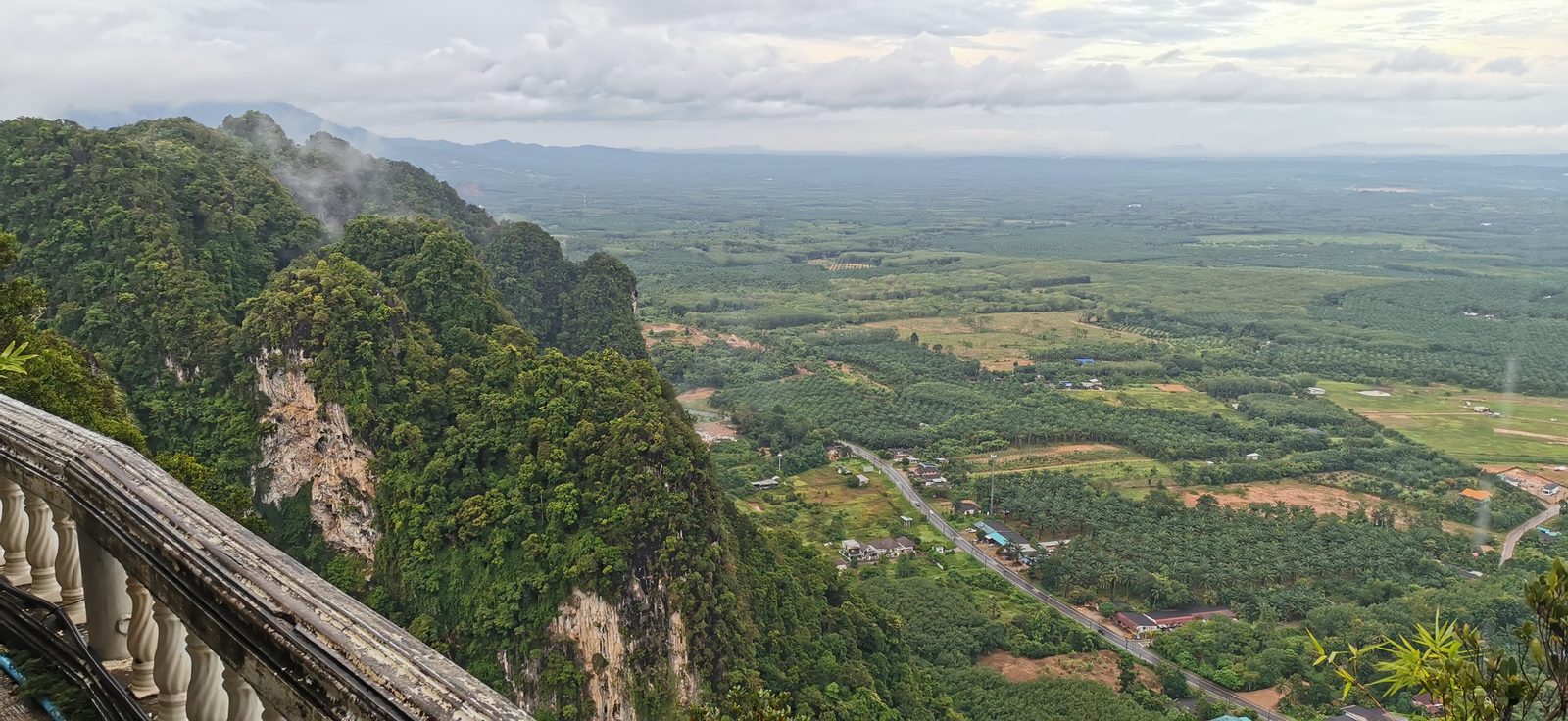
The temple’s defining physical feature is the 1,260-step concrete staircase that ascends 600 metres to the summit of a limestone karst. The climb is steep, exposed, and genuinely demanding — the steps are irregular in height and width, some requiring a near-vertical step up. Monkeys, primarily long-tailed macaques, line the staircase and have learned to relieve climbers of unattended water bottles and snacks. The ascent takes most visitors 20 to 40 minutes.
At the summit sits a giant golden Buddha statue, visible from kilometres away, alongside a gleaming chedi (stupa) containing relics. The Buddha footprint — a symbolic representation of the Buddha’s presence rather than a literal relic — is enshrined here, making the temple significant on the Buddhist pilgrimage circuit. The view from the summit is panoramic: the entire Krabi River delta, the Andaman Sea, and the surrounding karst landscape stretching to the horizon. The temple is particularly popular at sunrise and sunset, when the golden stupa catches the low-angled light.
Din Daeng Doi
Din Daeng Doi (“Red Soil Mountain” — from Thai din = soil, daeng = red, doi = mountain in the Northern Thai dialect) is a hilltop viewpoint in Nong Thale Subdistrict offering a 180-degree panorama that combines inland karst peaks with sea views — a rare perspective in Krabi, where coastal and inland viewpoints typically offer one or the other but not both.
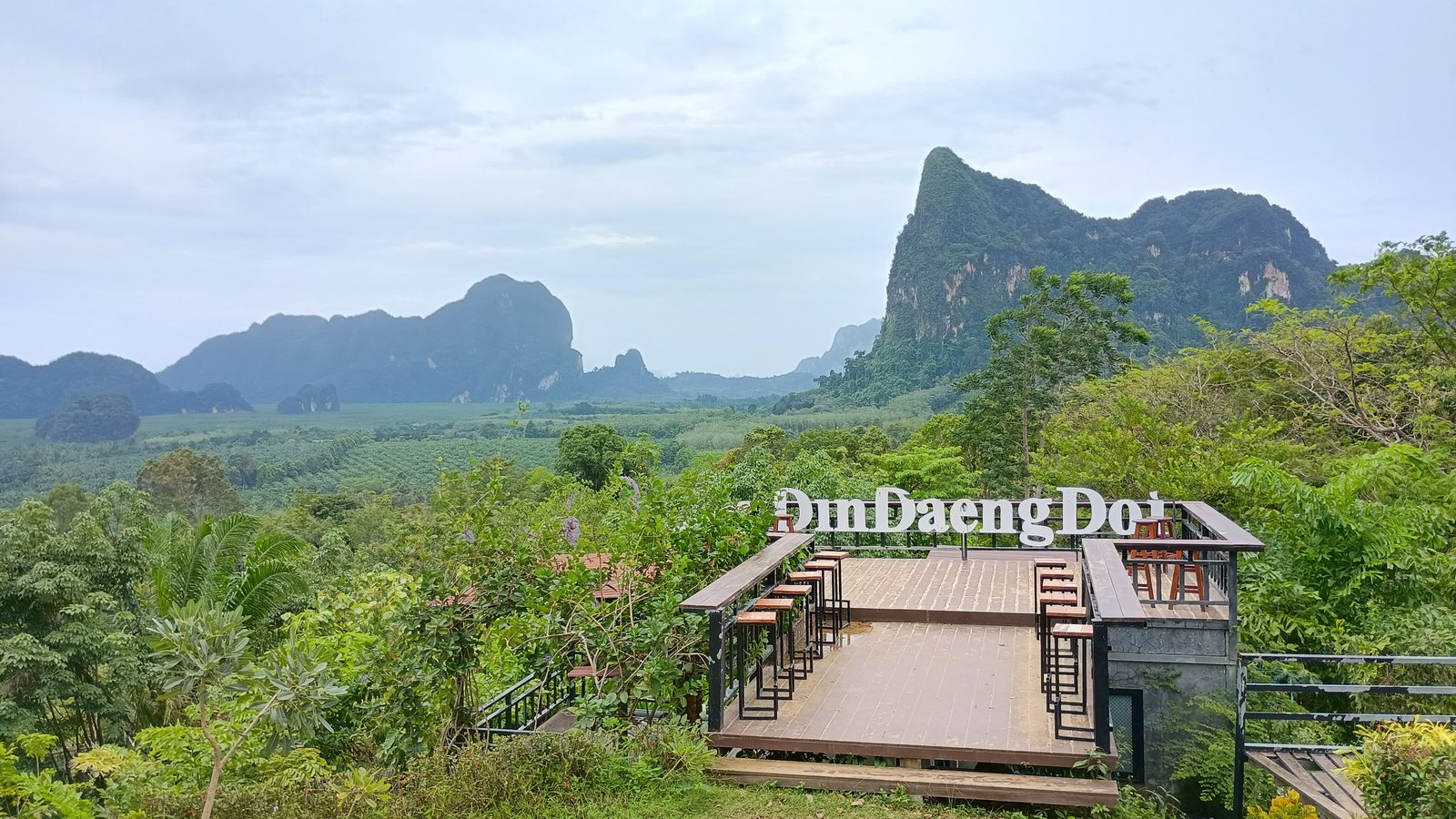
The red soil that gives the viewpoint its name is laterite, formed by intense chemical weathering of iron-rich parent rock under tropical conditions over millions of years. The iron oxide content gives the soil its distinctive rusty hue, visible on the access road and paths. Visitors park at the base and either walk the roughly 500-metre path to the summit or take a 4WD truck shuttle included in the modest entrance fee (70 THB for adults). At the summit, a small café serves coffee, cold drinks, and simple Thai dishes from wooden platforms facing the view. The site has gained significant social media attention in the 2020s, with its netted hammocks and wooden deck chairs providing a photogenic foreground to the karst-and-sea panorama.
Dragon View Restaurant
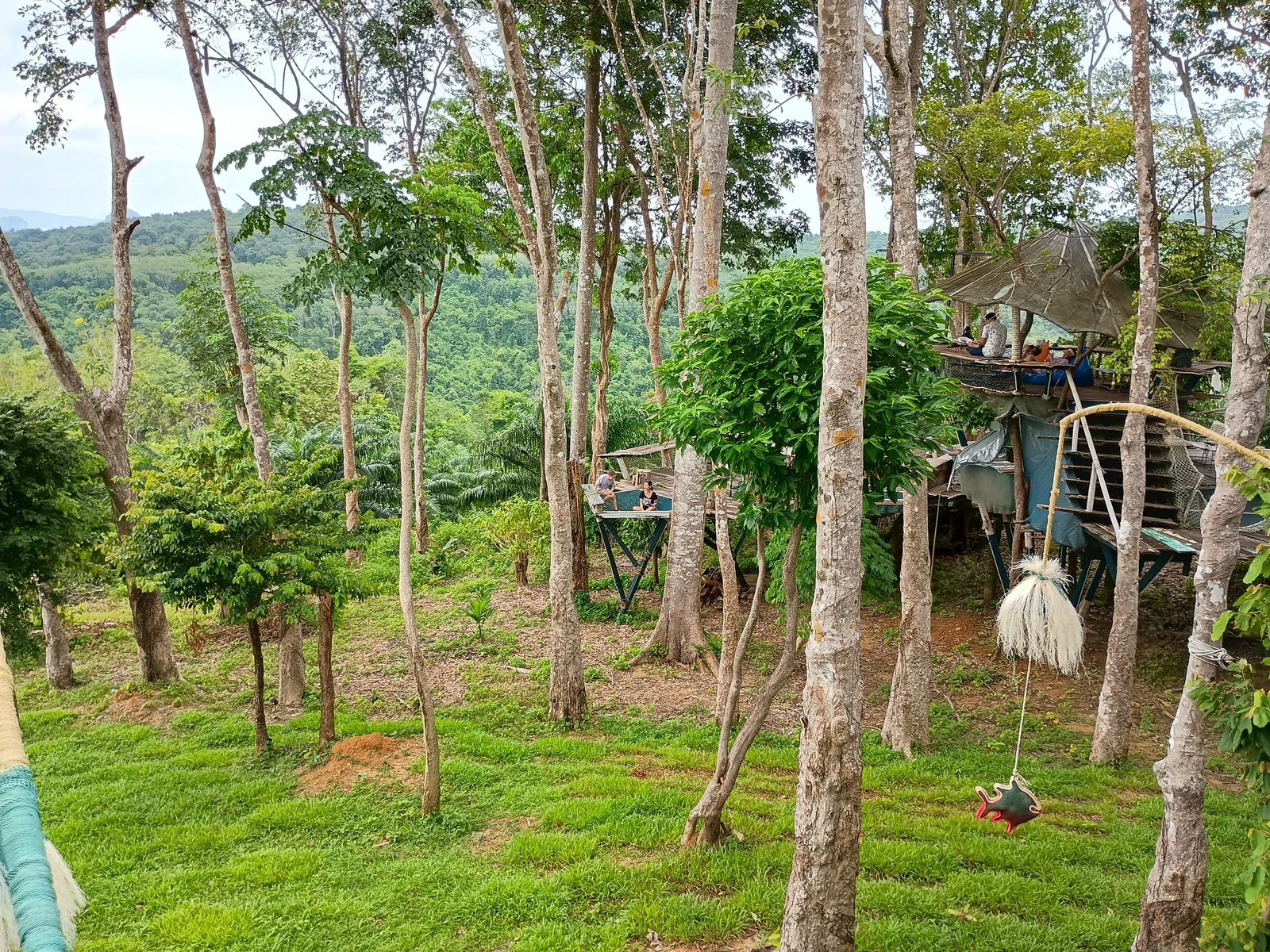
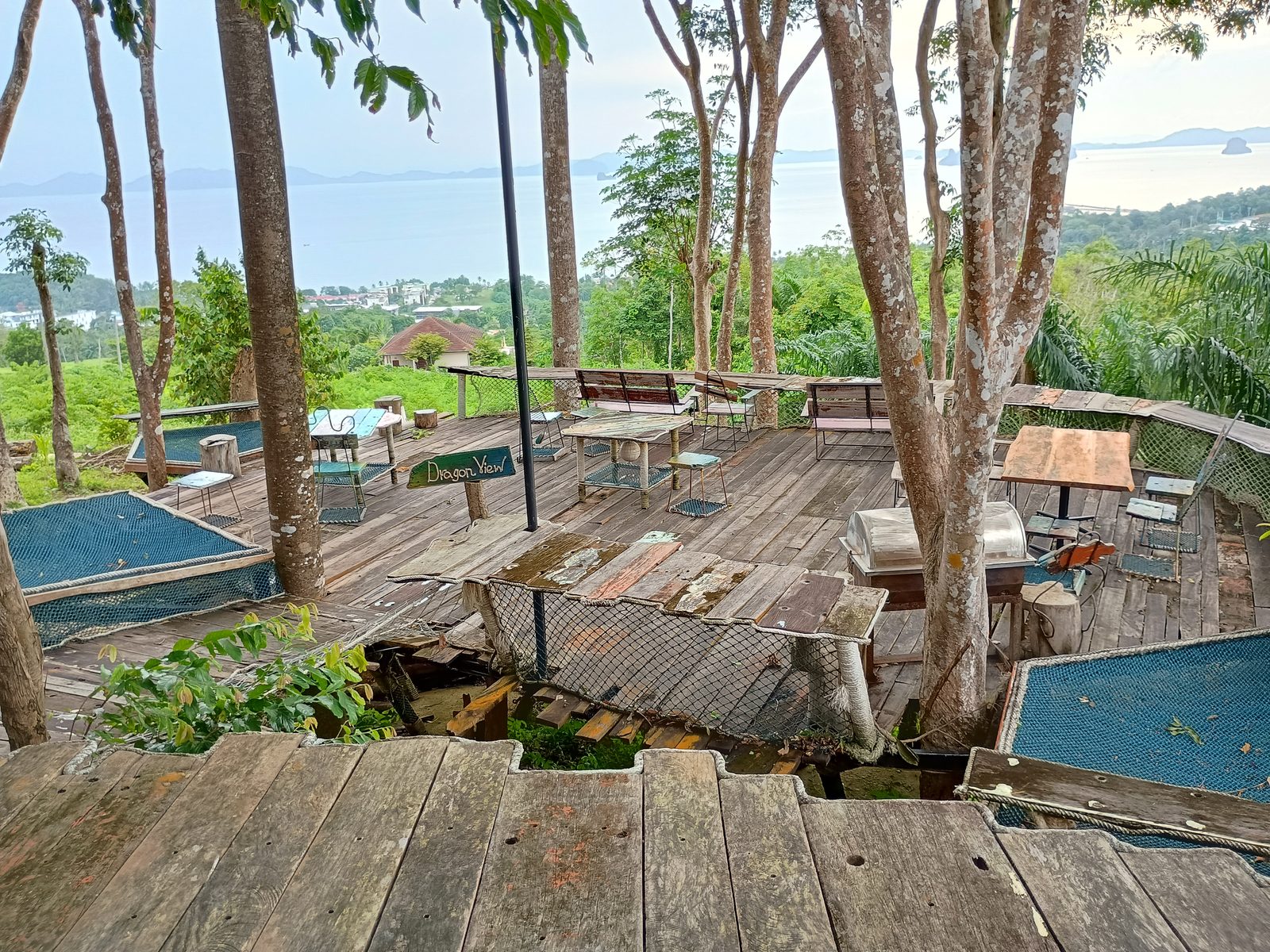
Dragon View Bar & Restaurant, located in Nong Thale near the Dragon Crest trailhead, occupies a hilltop within an old rubber plantation approximately 20 minutes from Ao Nang. The restaurant is built primarily from recycled wood and bamboo in a treehouse-inspired aesthetic, with multi-level decks and pavilions that maximise the westward views of Phang Nga Bay and the Dragon Crest ridgeline itself.
The menu spans Thai and international cuisine, with notable dishes including sea bass, chicken with cashew nuts, fried prawns, and vegetarian spring rolls. The dessert menu features mango sticky rice, sometimes provided complimentary to diners. A full bar serves cocktails, beers, and coffees. Most evenings feature a live pianist. The combination of rainforest, mountain, and ocean views from a single vantage point, paired with dinner as the sun sets over the Andaman, has established Dragon View as one of Krabi’s more distinctive dining destinations. Prices are mid-range by Thai standards — approximately 300–400 THB per person for a full meal.
Day 6 — August 15: Emerald Pool, Blue Pool & The Rarest Bird on Earth
Emerald Pool (Sa Morakot) & Blue Pool
The Emerald Pool (Sa Morakot) and Blue Pool (Blue Lagoon) are natural mineral spring pools located within Khao Phra-Bang Khram Wildlife Sanctuary in Khlong Thom District, approximately 55 kilometres east of Krabi Town. The sanctuary covers 183 square kilometres of lowland tropical rainforest — one of the few remaining virgin lowland evergreen forests in southern Thailand, a habitat type severely depleted by the expansion of rubber and oil palm plantations.
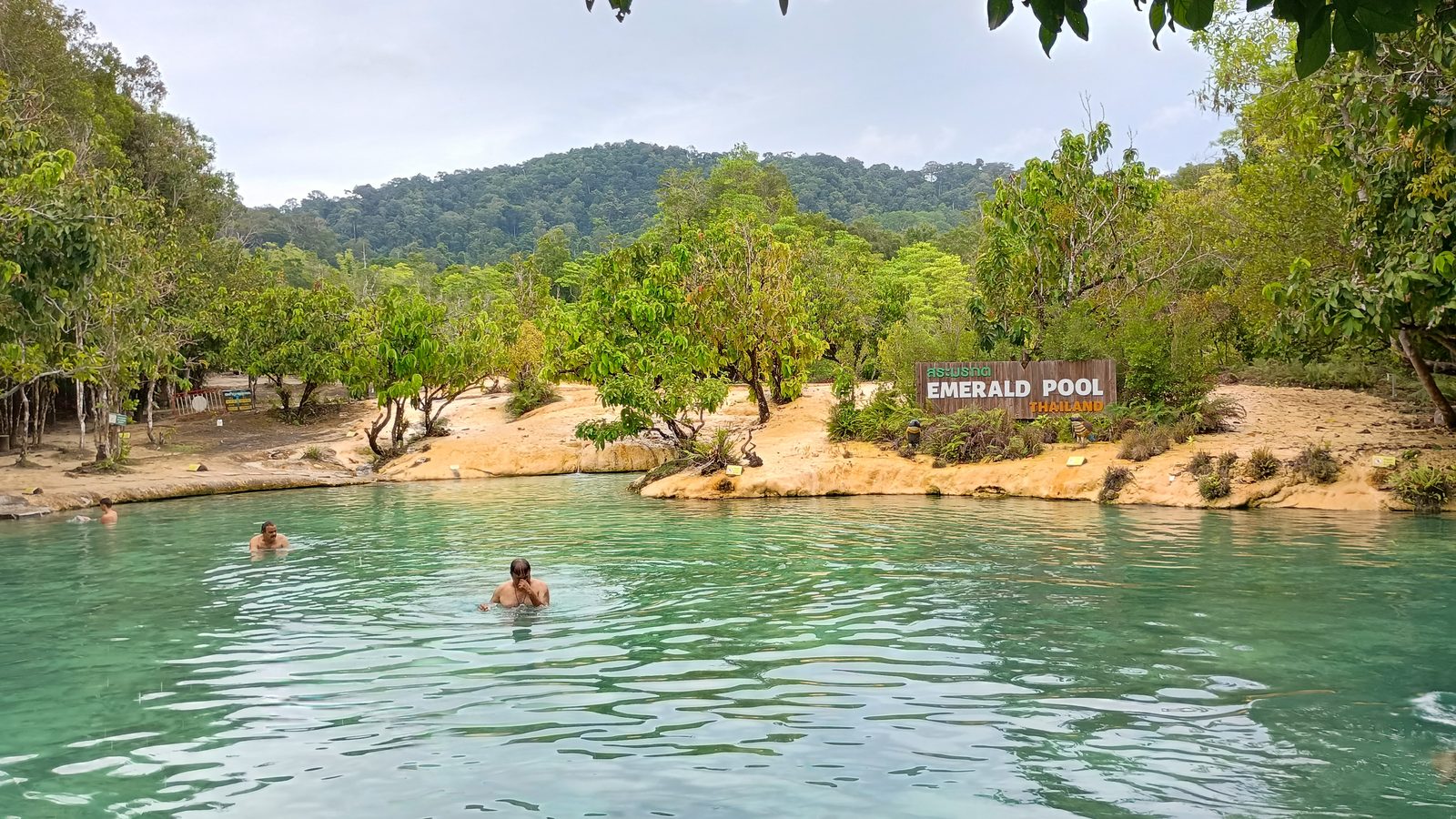
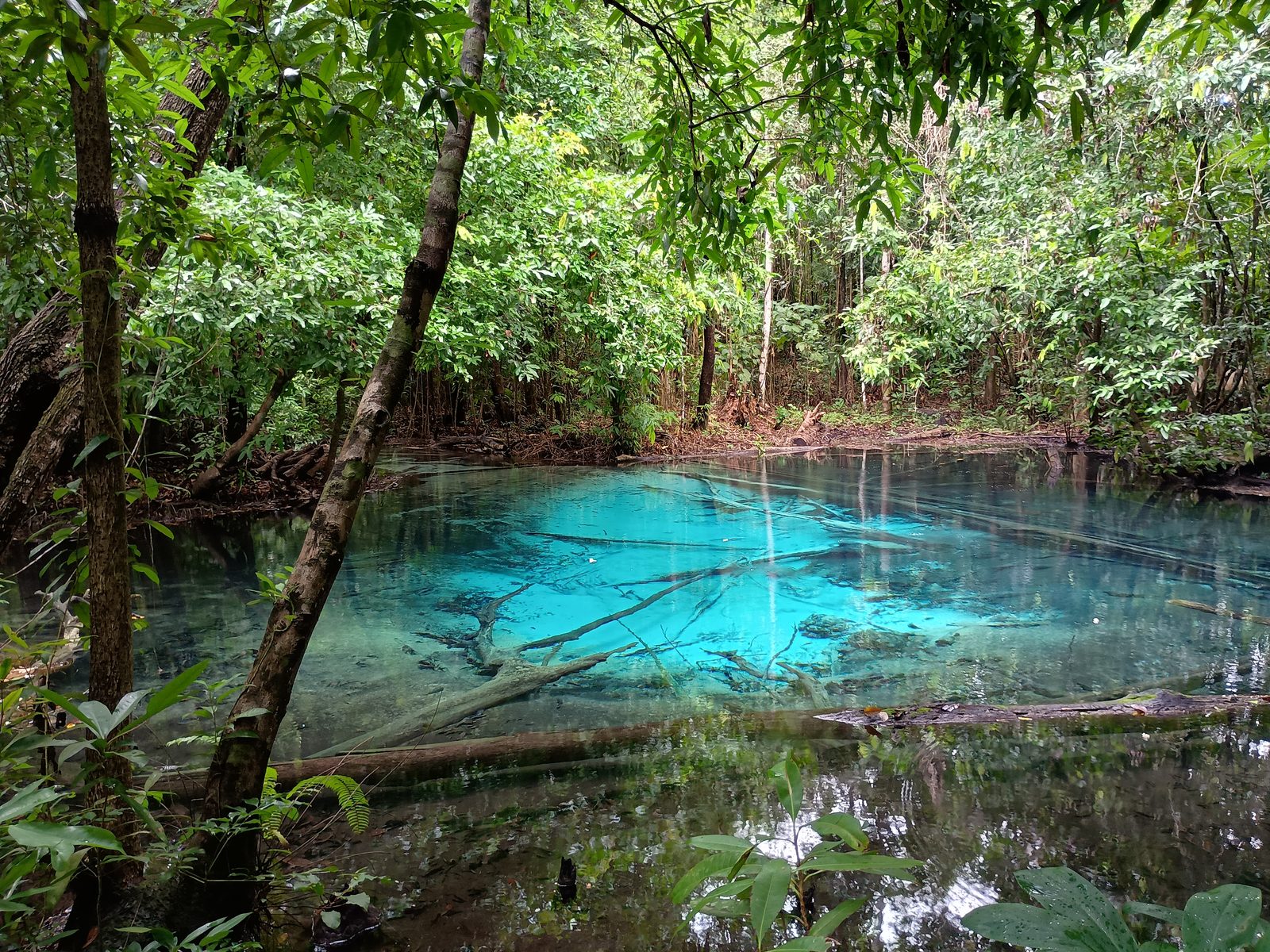
The Emerald Pool’s distinctive colour is the product of mineral deposits — primarily calcium carbonate leached from the surrounding limestone — combined with the refraction of sunlight through warm, crystal-clear water. The pool temperature hovers between 30 and 35°C, fed by underground thermal springs. An 800-metre boardwalk leads through dense rainforest to the main swimming area, where visitors can swim in the shallow, family-safe waters.
The Blue Pool lies a further 600 metres deeper into the reserve. It is visually more dramatic — a sapphire-blue natural spring of striking intensity — but swimming is strictly prohibited. The reason is not aesthetic but geological: quicksand on the pool bottom makes entering the water extremely dangerous, and the water temperature is both higher and less stable than the Emerald Pool, being closer to the thermal source. The Blue Pool is also closed entirely from May through October each year to protect the breeding season of the reserve’s most famous resident: the Gurney’s Pitta.
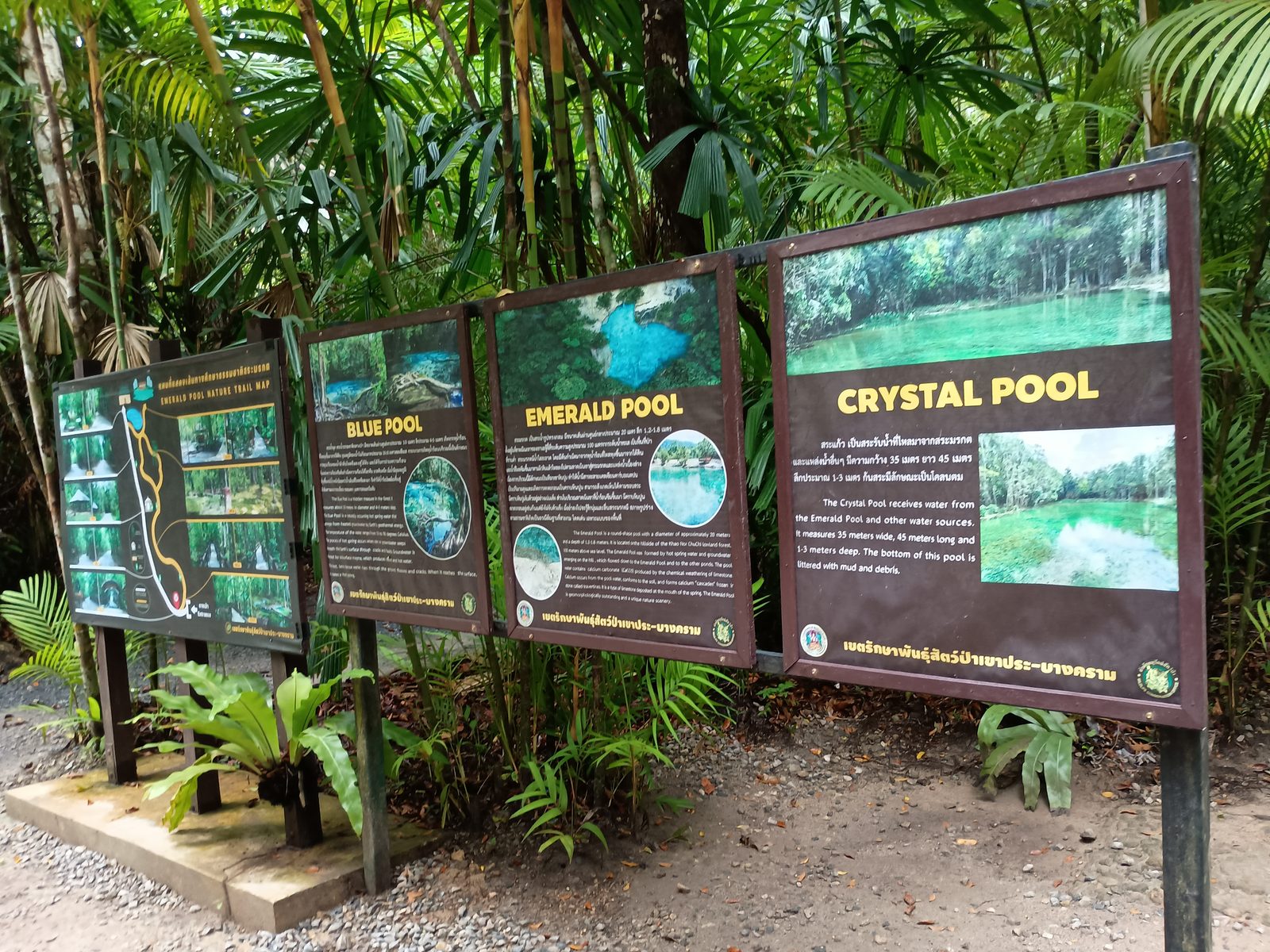
Pitta gurneyi, a medium-sized passerine bird with striking blue, yellow, and black plumage, was believed extinct after 1952 — no confirmed sightings were recorded for over three decades. In 1986, researchers from the International Council for Bird Preservation discovered approximately 45 pairs living in Khao Nor Chu Chi (as the sanctuary was then known), making it, at that moment, the rarest bird on Earth. The species remains critically endangered, with its lowland forest habitat continuing to shrink under pressure from agricultural expansion. The sanctuary’s 2.7-kilometre nature trail winds through the forest with interpretive signage about the local flora and fauna, including the Pitta’s story.
The sanctuary is also home to the Krabi Hot Springs (Namtok Ron Khlong Thom), located nearby, where water emerges at 40–50°C and cascades over smooth rock formations into natural bathing pools. A combined ticket covering both the Emerald Pool and the hot springs is often available. Entrance fees follow the standard Thai national park dual-pricing system: approximately 400 THB for foreign adults and 30 THB for Thai nationals.
Day 7 — August 16: Muay Thai, Goats, and The Dragon’s Spine
Krabi International Boxing Stadium
Krabi International Boxing Stadium, located approximately five minutes inland from the Ao Nang beachfront, is — by its own billing — the largest Muay Thai venue in southern Thailand. Opened in the early 2020s, it was built to international standard and regularly hosts fight nights on Wednesdays, Fridays, and Sundays, with doors opening at 8 PM and the first bout around 9 PM.
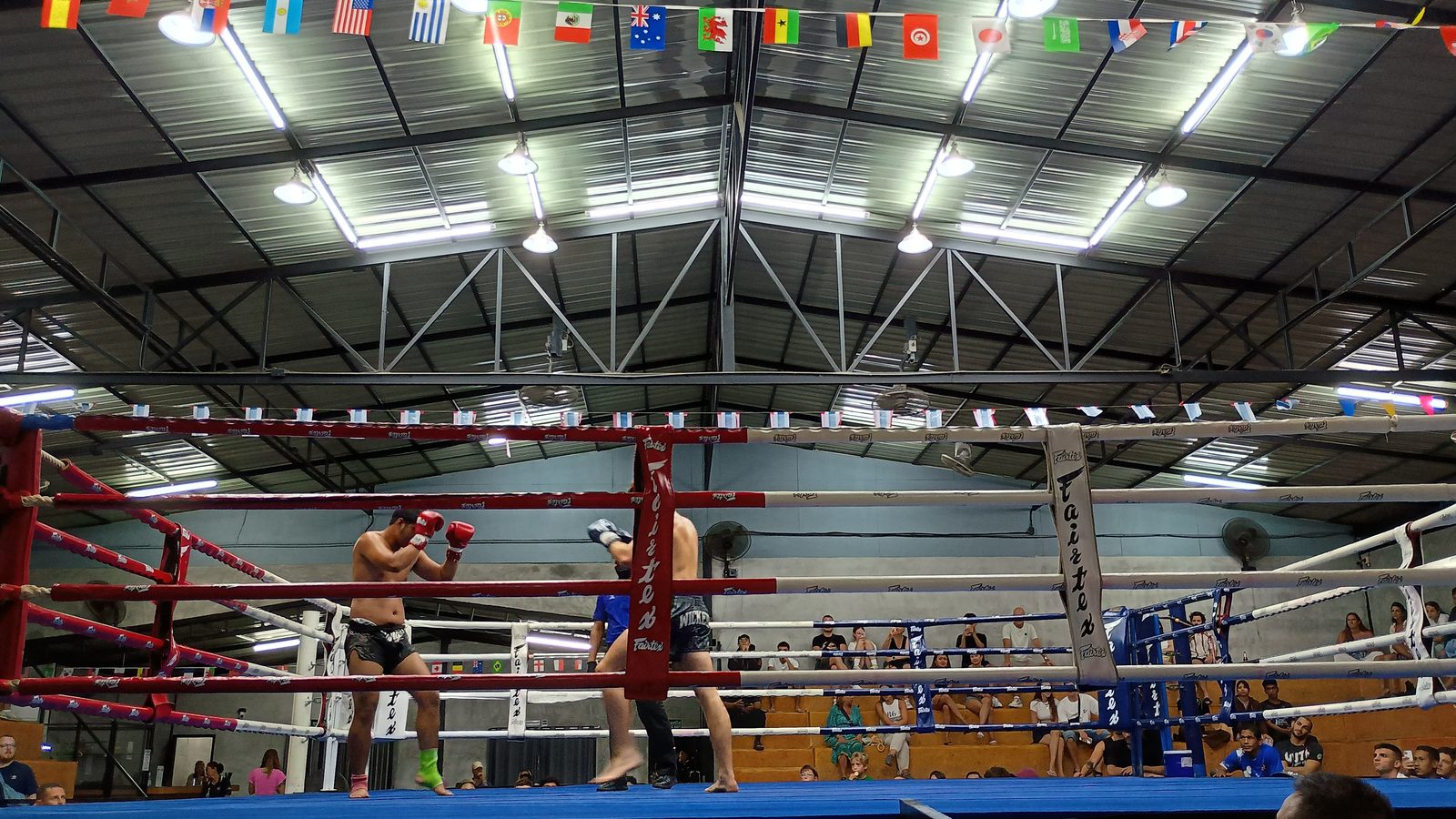
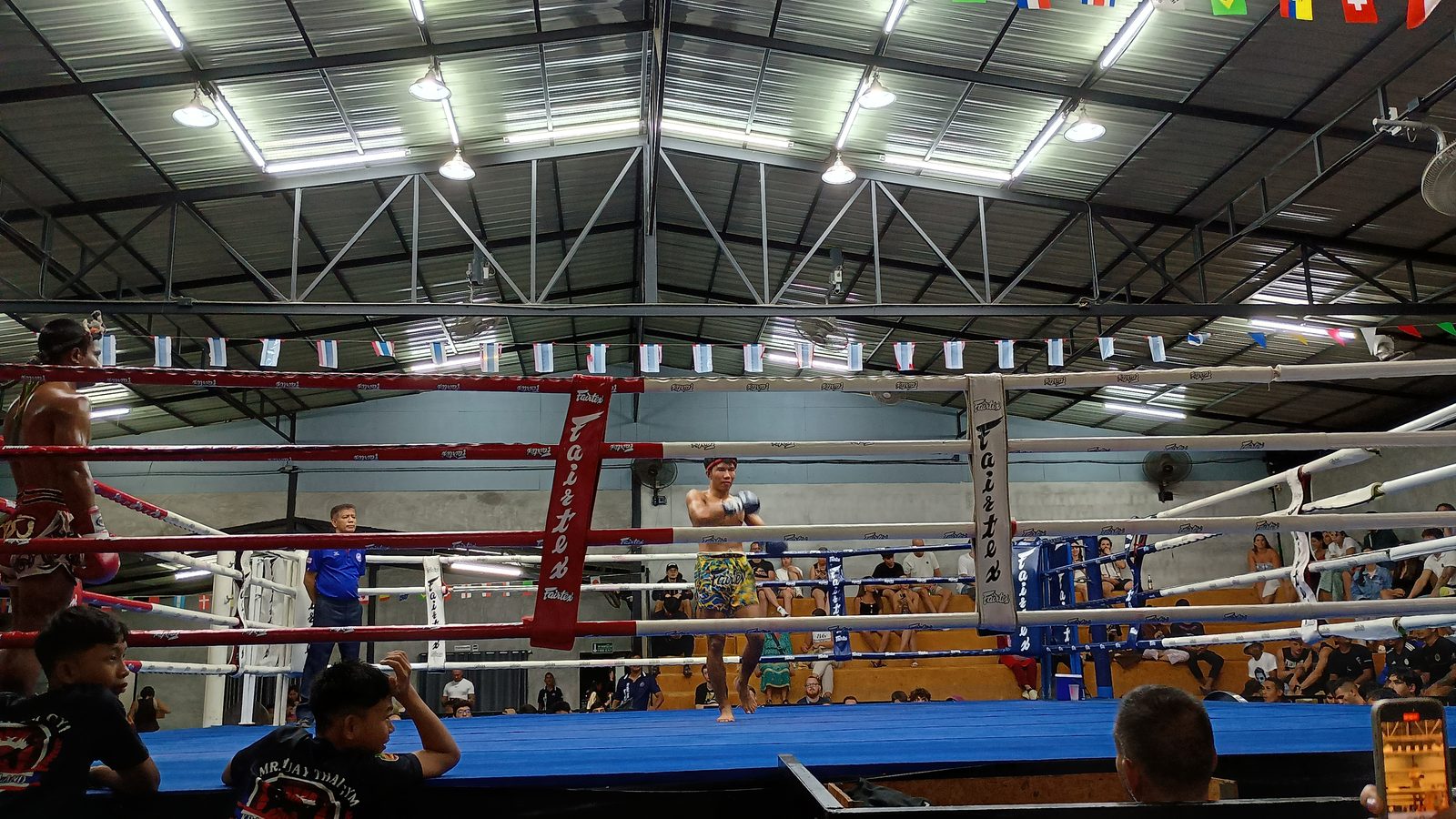
Muay Thai — known as “The Art of Eight Limbs” for its use of fists, elbows, knees, and shins — traces its origins to at least the 7th century AD, when a hermit named Sukatanata is said to have established a school of martial arts in the Haripuñjaya kingdom that included what would become Muay Thai. Each modern fight begins with the Wai Khru Ram Muay — a ceremonial dance performed to show respect to teachers (khru, from Sanskrit “guru”), parents, and ancestors. The fighter wears the Mongkhon, a sacred headband blessed by a teacher, which is removed before the fight commences. Traditional Sarama music, played on the pi chawa (a Javanese reed instrument), glawng khaek (drums), and ching (cymbals), accompanies the action, its tempo rising and falling with the intensity of the fight.
A typical fight night features five to seven bouts, ranging from young up-and-comers in the opening matches to professional main events. Both Thai and international fighters compete, and ticket prices range from approximately 990 THB for standard seats to 1,500 THB for VIP ringside positions.
Ao Nang Goat Farm
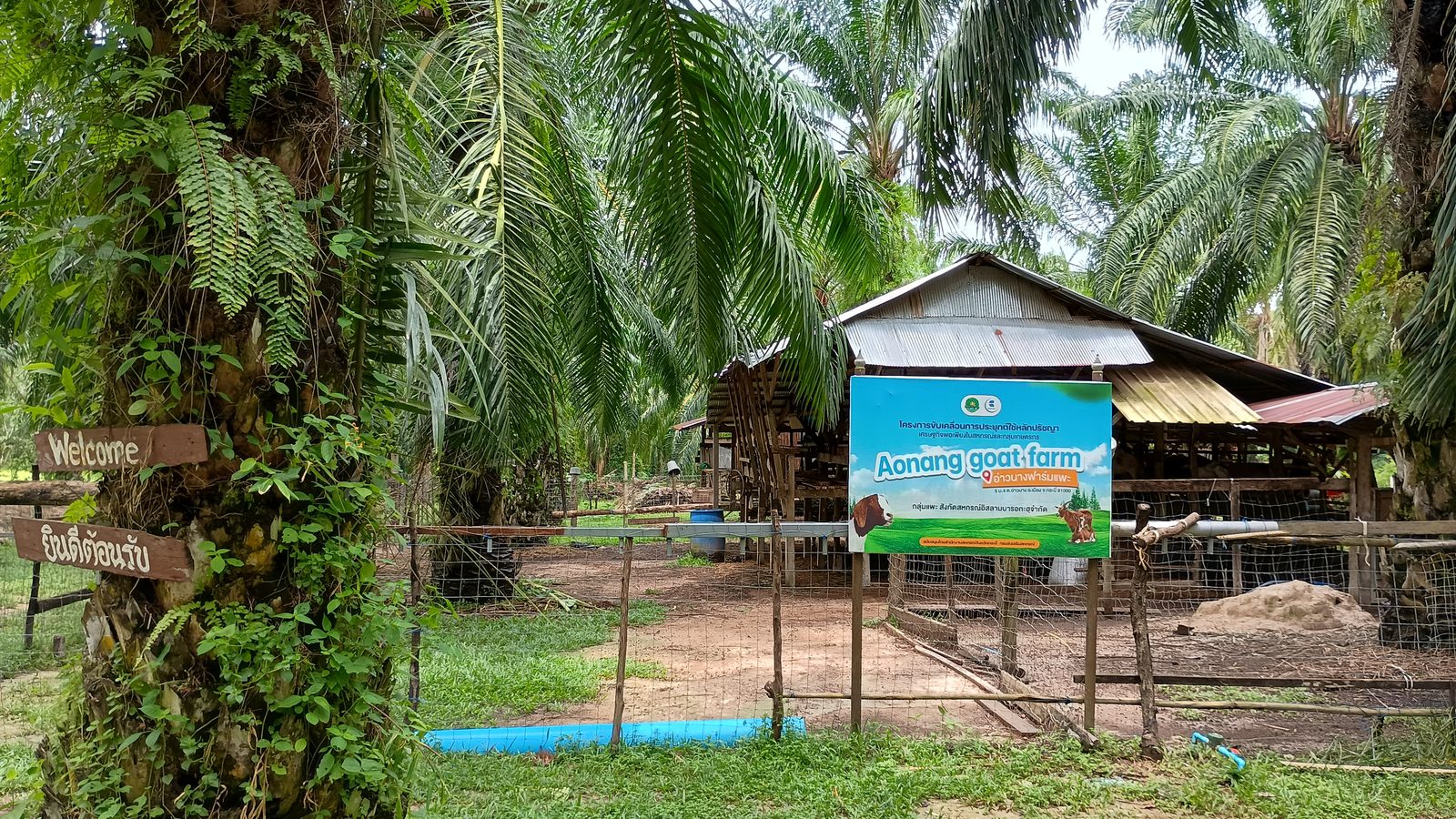
The Ao Nang Goat Farm is a small, family-operated agricultural attraction that offers a rare glimpse of rural life in an area overwhelmingly dominated by tourism. There is no admission fee — visitors are encouraged to leave a donation in a tip box — and the main activity is feeding the goats: banana leaves, special dry food, and bottles of milk for the kids. One goat, nicknamed “The Receptionist” by visitors, is known for greeting new arrivals with unusual sociability.
The farm is a genuine working operation, not a tourist-trap petting zoo. During the COVID-19 pandemic, when Krabi’s tourism economy collapsed, the family continued caring for their animals — a story replicated across small agricultural holdings in the province. Goat farming has a centuries-old tradition in southern Thailand’s Muslim communities, where goat meat is halal and forms part of the culinary heritage of the region.
Dragon Crest Mountain (Khao Ngon Nak)
Khao Ngon Nak — Dragon Crest Mountain — rises to 565 metres above the Andaman Sea in the Nong Thale area, with its trailhead near Tubkaek Beach, approximately 20 kilometres north of Ao Nang. The name derives from the shape of the ridgeline, which, when viewed from certain angles, resembles the spine of a dragon — a motif common across Southeast Asian landscape naming.
The hiking trail is 3.7 kilometres one-way, ascending approximately 500 vertical metres through tropical rainforest. It is rated as challenging: steep sections, rustic wooden stairs, and stretches that require hauling on ropes fixed to trees. The ascent takes two to three hours, the descent about one, and the recommended start time is before 7 AM to beat both the tropical heat and the afternoon clouds that often obscure the summit views. The trail passes through multiple micro-climates — from dense lowland rainforest at the base to more open, wind-scoured vegetation near the summit.
From the peak, the panorama encompasses Ao Nang, the Andaman Sea, the islands of Phang Nga Bay, and — on clear days — the distant outline of the Phi Phi archipelago. The mountain is sometimes referred to by its alternative names: Hang Nak Hill Nature Trail or Ngon Nak Mountain. It forms part of a protected forest area adjacent to the Hat Noppharat Thara–Mu Ko Phi Phi National Park system.
Tubkaek Beach, near the trailhead, is one of Krabi’s quieter stretches of coastline: a west-facing beach approximately one to two kilometres long of well-preserved white sand, backed by a cluster of luxury resorts including the Phulay Bay Ritz-Carlton Reserve and the Banyan Tree Krabi. Its seclusion is a function of geography — located north of the main Ao Nang–Railay tourism corridor and less accessible by public transport — and of economics, with most accommodation in the luxury tier. The beach is protected from monsoon winds by a 13-island archipelago offshore, making it swimmable year-round.
Krabi Province, with its 154 islands, 183 square kilometres of wildlife sanctuary, and limestone karsts that predate the dinosaurs by roughly 50 million years, rewards visitors who venture beyond the obvious. The intersection of Permian geology, tropical monsoon climate, and a cultural tapestry that weaves together Buddhist, Muslim, and Sea Gypsy traditions has produced a destination that is, in ecological and cultural terms, far richer than its beach-brochure reputation suggests. The province sees approximately six million tourists annually, yet its protected areas — national parks, wildlife sanctuaries, and the forest monasteries that dot the karst landscape — ensure that much of Krabi remains, for now, untamed.