# Phayao: The Lake Kingdom of Northern Thailand
Where an ancient alliance was forged, a 500-year-old temple rests beneath the water, and dinosaurs once walked the hills above Thailand’s largest northern lake.
The Journey from Chiang Mai to Phayao
The 150-kilometre route from Chiang Mai to Phayao town follows Highway 118 northward, climbing through the forested mountains that separate the Ping River basin from the Ing River watershed. This road, once a trade artery connecting the Lanna heartland with towns to the northeast, now serves as the primary overland link between two of northern Thailand’s most culturally distinct provinces.
Mae Kachan Hot Springs
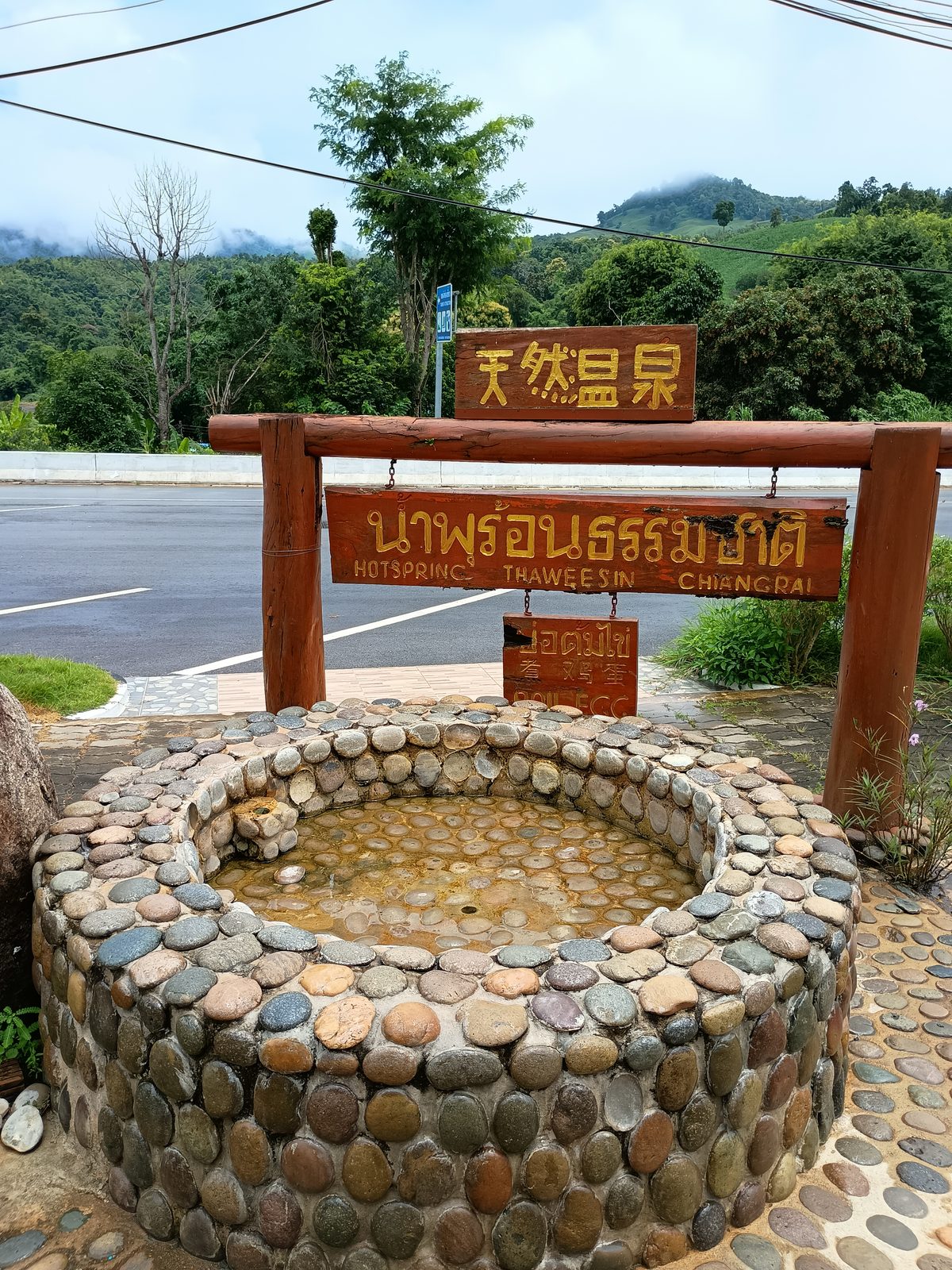
The first notable stop on the journey north is the Mae Kachan Hot Springs, situated at kilometre marker 64–65 on Highway 118 in Wiang Pa Pao District of Chiang Rai Province. The springs emerge from fractured granite at the surface, geothermally heated to temperatures reaching 90°C — sufficient to boil an egg in under two minutes, a popular pastime for travellers who purchase eggs from vendors stationed at the site.
Three main pools, each roughly three metres wide, form the centrepiece of the facility. A geyser near the intersection reportedly erupts every seven seconds. The surrounding area, originally known to locals as “Pong Din” — meaning “salt lick earth” — had no permanent settlement in earlier times. Wild animals came to feed on the mineral deposits, and the springs served as a rest point on the trade route between Chiang Mai and Chiang Rai.
Today the site is managed as a commercial rest area, with foot-soaking pools, private mineral bath rooms, coffee shops, and souvenir stalls. For travellers heading to Phayao, the hot springs mark the last major stop before turning east onto Route 120 — the scenic mountain road that winds through forested hills and marks the provincial boundary.
For those continuing toward Phayao, the turnoff lies just past Mae Kachan village. Route 120 climbs for approximately nine kilometres through increasingly dense forest, the road narrowing as it ascends the ridgeline that separates the Chiang Rai and Phayao watersheds.
The Dinosaur Viewpoint: First Glimpse of Kwan Phayao
At the crest of the pass, where Route 120 crosses into Phayao Province at Mae Na Ruea Subdistrict, sits the Rajamangalaphisek Rest Area — known more commonly as the Kwan Phayao Viewpoint, or simply the “Dinosaur Viewpoint” for the cluster of large sauropod statues that dominate the overlook.
The dinosaurs are no arbitrary decorative choice. Phayao Province holds a significant place in Thai palaeontology: between 2002 and 2009, a team led by the Department of Mineral Resources unearthed sauropod fossils in Chiang Muan District, approximately 80 kilometres south of the viewpoint. The fossilised bones, at least 15 metres in length and estimated at over 100 tonnes in life, date to the Early Cretaceous — roughly 130 million years ago. These were the first dinosaur fossils discovered in northern Thailand, and the species, a long-necked herbivore of the Sao Khua Formation, remains one of the country’s most important palaeontological finds.
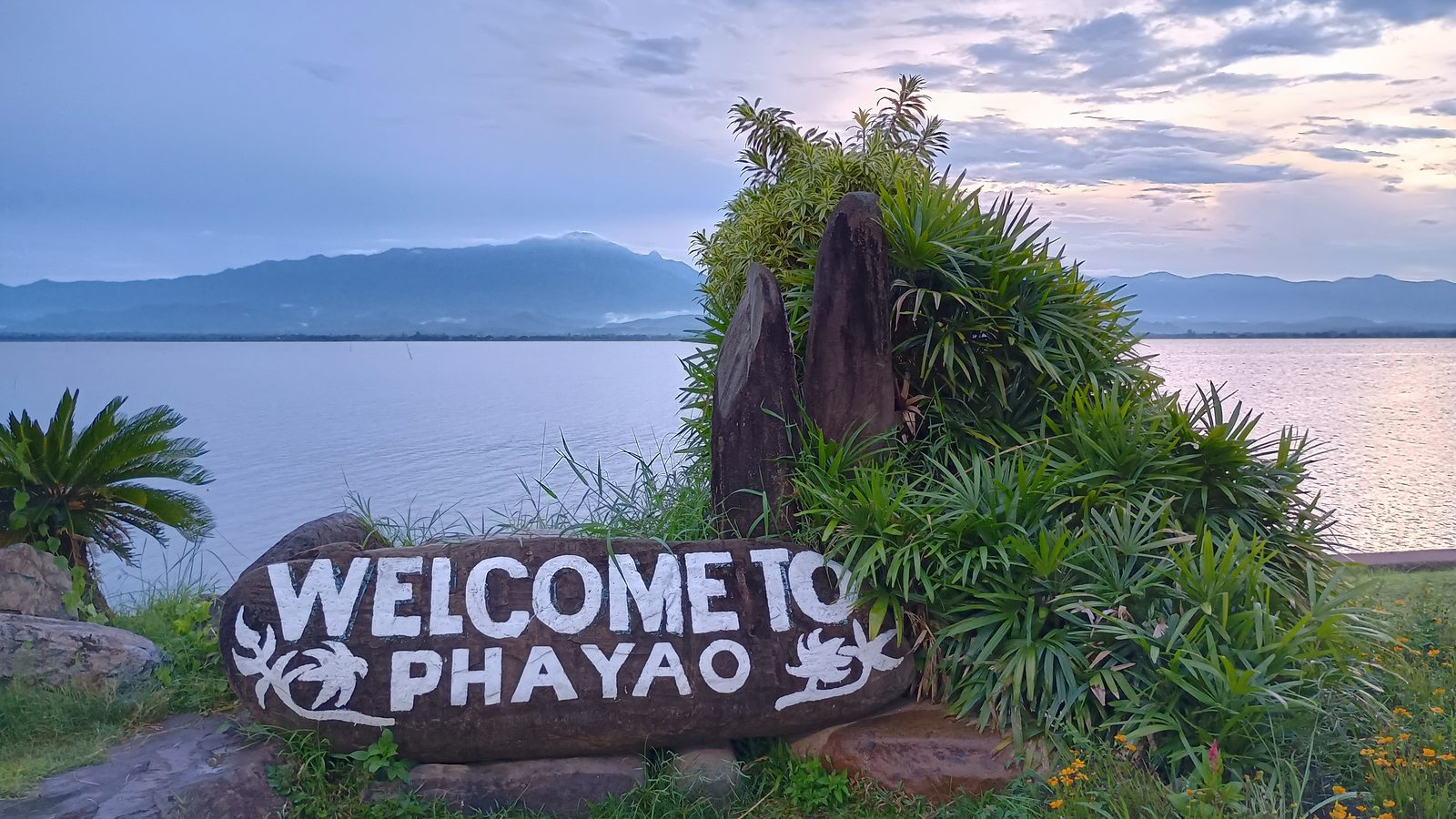
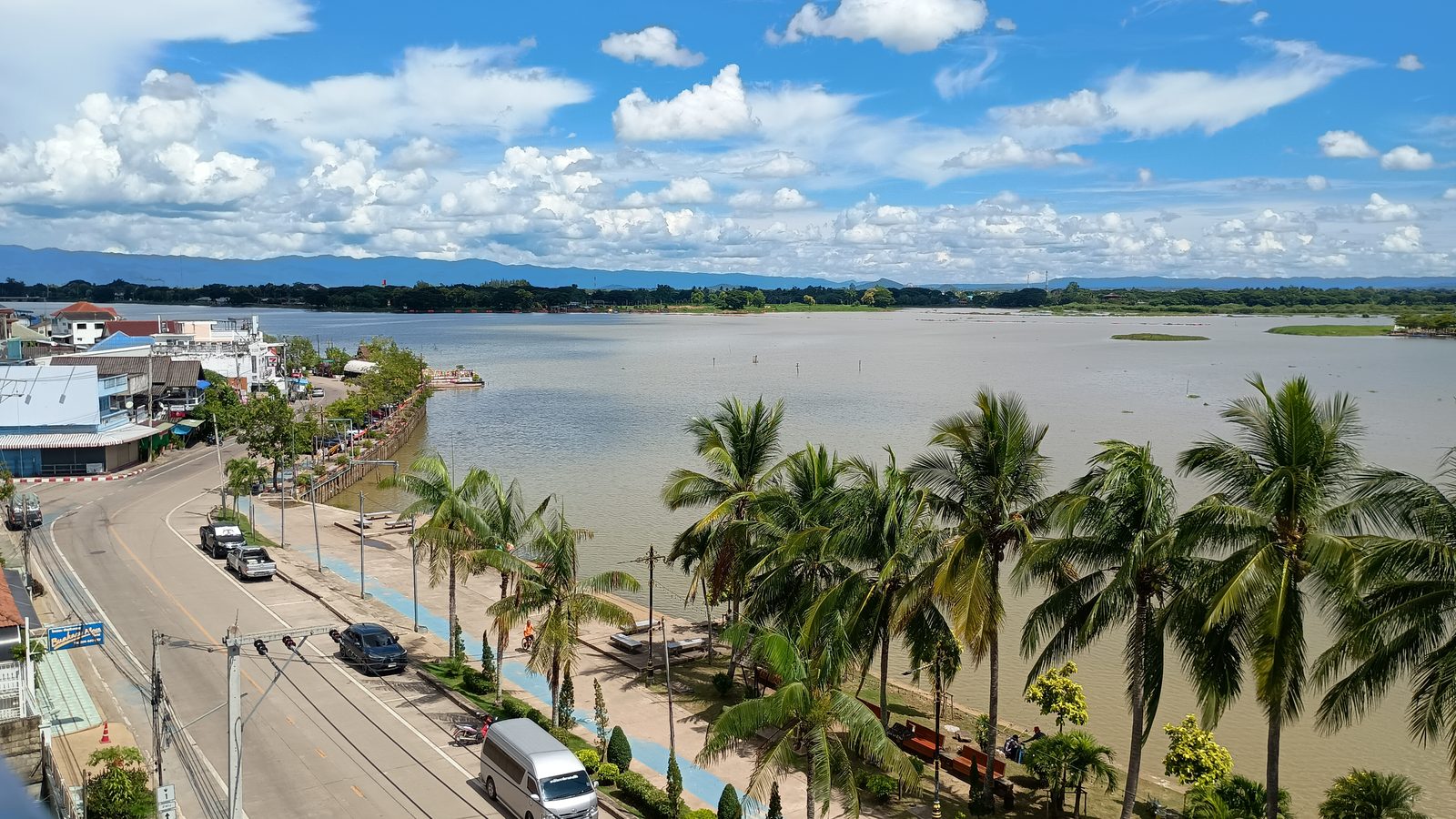
From the viewpoint, the panorama unfolds dramatically. Kwan Phayao — Thailand’s largest freshwater lake in the north — spreads below in a crescent shape, its surface catching the afternoon light against a backdrop of mountains. At 19.8 square kilometres, the lake dominates the landscape. Below, Phayao town sits at its southeastern shore, a settlement whose history reaches back nearly a millennium.
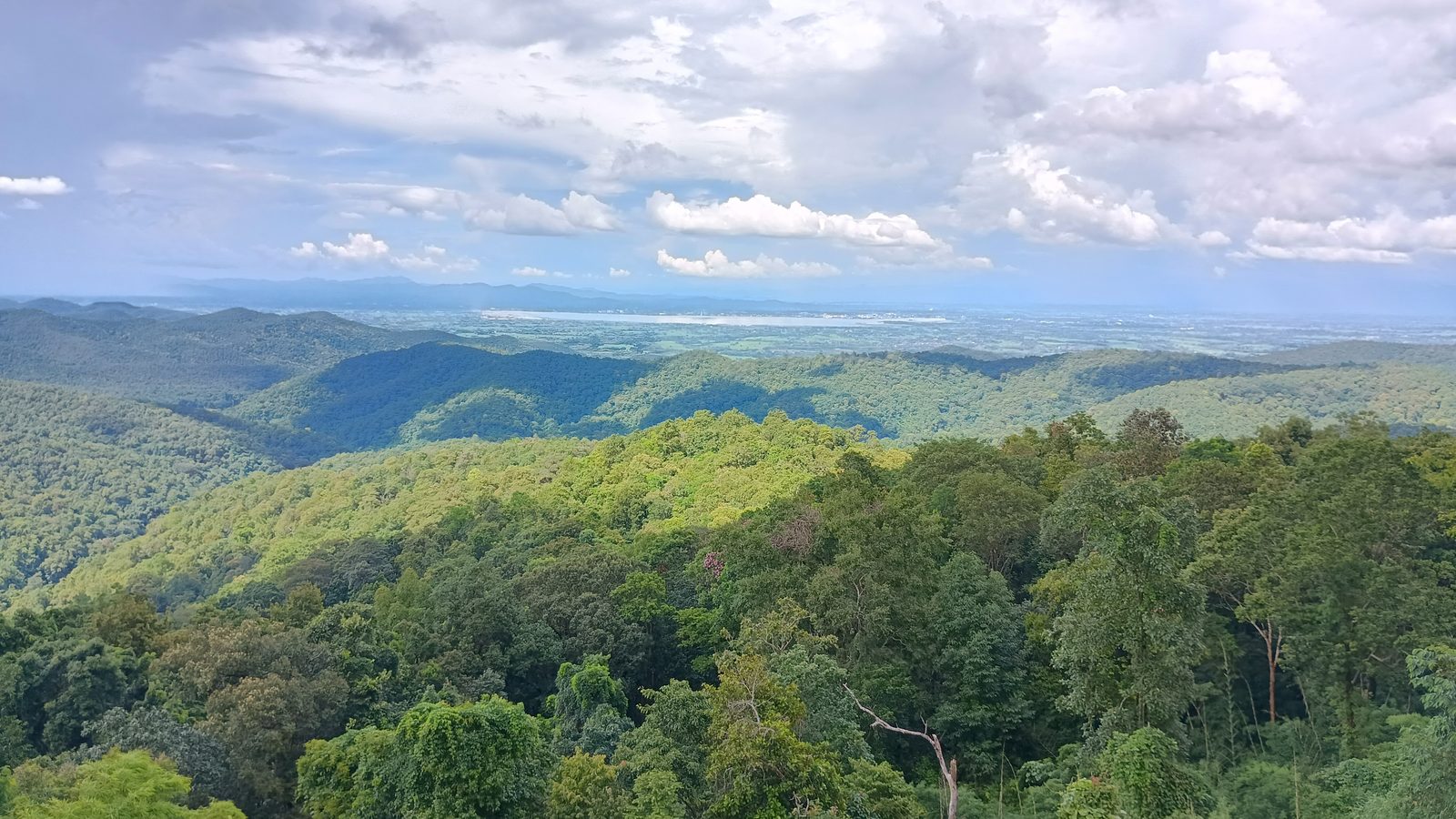
From the viewpoint, the road descends through Mae Na Ruea toward the lakeshore. The transition from mountain forest to lakeside plain happens quickly — within 20 minutes, the waters of Kwan Phayao appear at close range, and the modest but vibrant town of Phayao reveals itself along the shore.
Phayao: Heart of the North
A History Forged in Alliance
Phayao was founded in 1096 CE as an independent city-state, initially known as Phukamyao. Its first ruler, Phor Khun Jomtham, established the settlement on high ground near the Ing River. For two centuries, the small kingdom maintained its autonomy between the rising powers of Lanna to the west and Sukhothai to the south — no small feat for a modest realm in the competitive geopolitics of 13th-century mainland Southeast Asia.
The defining moment in Phayao’s early history came in 1287, when three northern Thai kings — Mangrai of Lanna, Ramkhamhaeng of Sukhothai, and Ngam Mueang of Phayao — formed a tripartite alliance. This pact, commemorated today by the Three Kings Monument in Chiang Mai, brought a generation of stability to the region and acknowledged Phayao as an equal among considerably larger powers. Ngam Mueang, the ninth ruler of the Phukamyao dynasty who reigned from approximately 1258 to 1298, is remembered as the kingdom’s greatest king — a wise and benevolent ruler whose bronze statue now stands in a lakeside park on the shore of Kwan Phayao.
Following Ngam Mueang’s death, Phayao’s independence gradually eroded. By approximately 1338, the kingdom had been absorbed into the Lanna Kingdom. Centuries later, during the period of Burmese suzerainty over Lanna (1558–1775), the town was largely abandoned. It was re-established in 1843 under King Rama III, alongside Chiang Rai, to serve as a frontier settlement against any remaining Burmese presence at Chiang Saen.
Phayao’s modern administrative identity is surprisingly recent. From 1897 until 1977 — a span of eighty years — it was administered as a district of Chiang Rai Province. On 28 August 1977, Phayao was formally separated and declared Thailand’s 72nd province. Today the province covers approximately 6,335 square kilometres across nine districts and is home to roughly 470,000 people, predominantly of Tai Yuan (Northern Thai) ethnicity, with significant Tai Lue communities known for their handwoven textiles.
Kwan Phayao: The Lake of Life
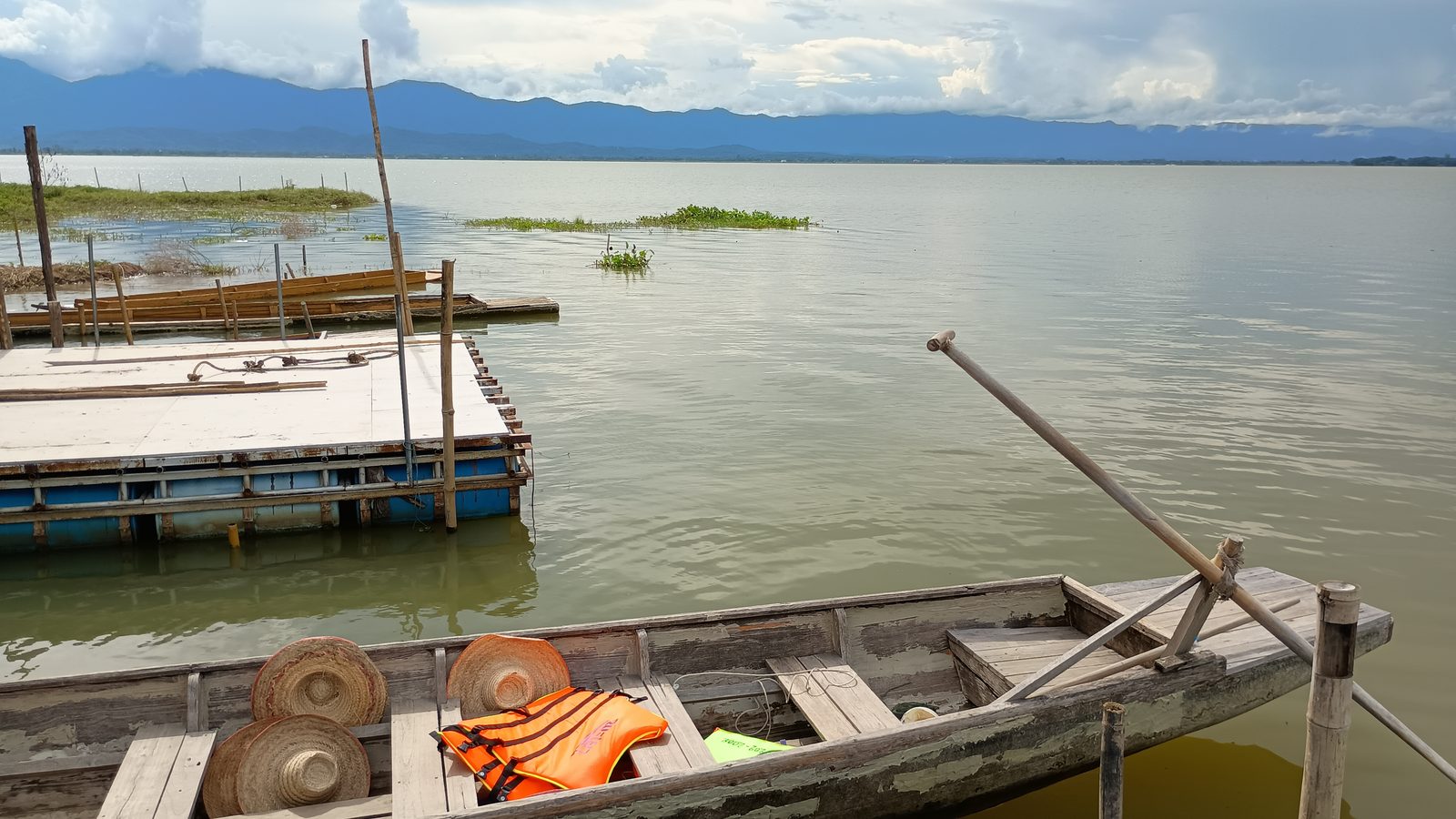
Kwan Phayao is both the geographical and cultural centre of the province. The word kwan (กว๊าน) is a Northern Thai term for a large lake or marsh, and Phayao’s is the largest freshwater lake in northern Thailand and the fourth largest in the entire country. Its surface area of roughly 19.8 square kilometres stretches in a crescent shape across the valley floor, with an average depth of just 1.5 metres — shallow enough that, in places, wading fishermen can be seen far from shore.
The lake as it exists today is largely a product of 20th-century engineering. What was historically a natural wetland known as Nhong Aiang was transformed in 1939–1941 when the Department of Fisheries constructed a floodgate on the Ing River. The intention was to create a permanent fishing area; the result was the flooding of fields, homes, archaeological sites — and several temples, including the 500-year-old Wat Tilok Aram. The water level is now artificially controlled.
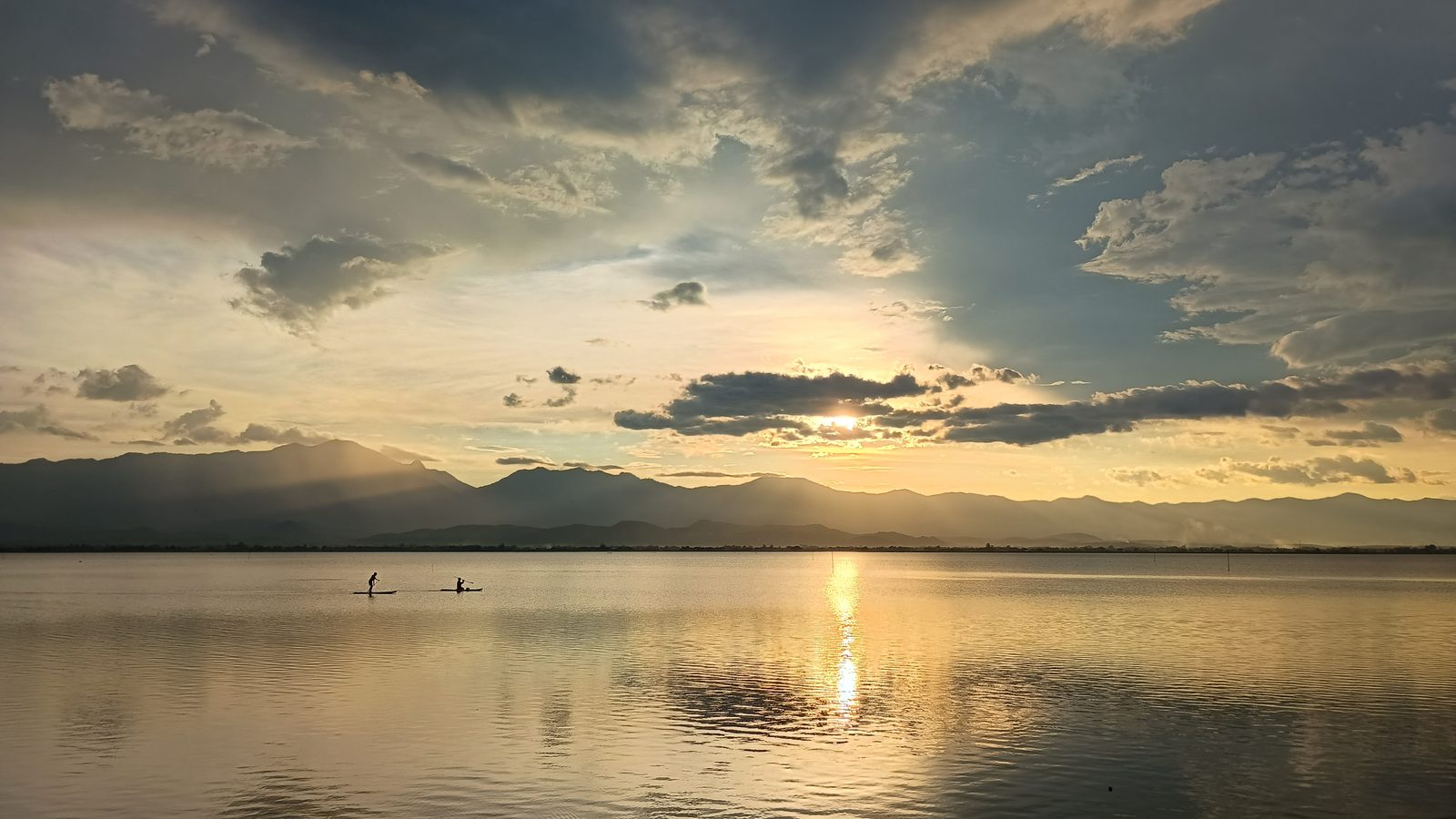
Ecologically, the lake is one of northern Thailand’s most productive freshwater systems. Between 48 and 50 species of fish inhabit its waters, including iridescent shark, tilapia, catfish, and snakehead. Aquatic plants number at least 36 recorded species. The estimated fish harvest — approximately 159 kilograms per hectare — sustains a community of small-scale fishermen who paddle out daily in wooden boats to cast their nets, a livelihood largely unchanged for generations.
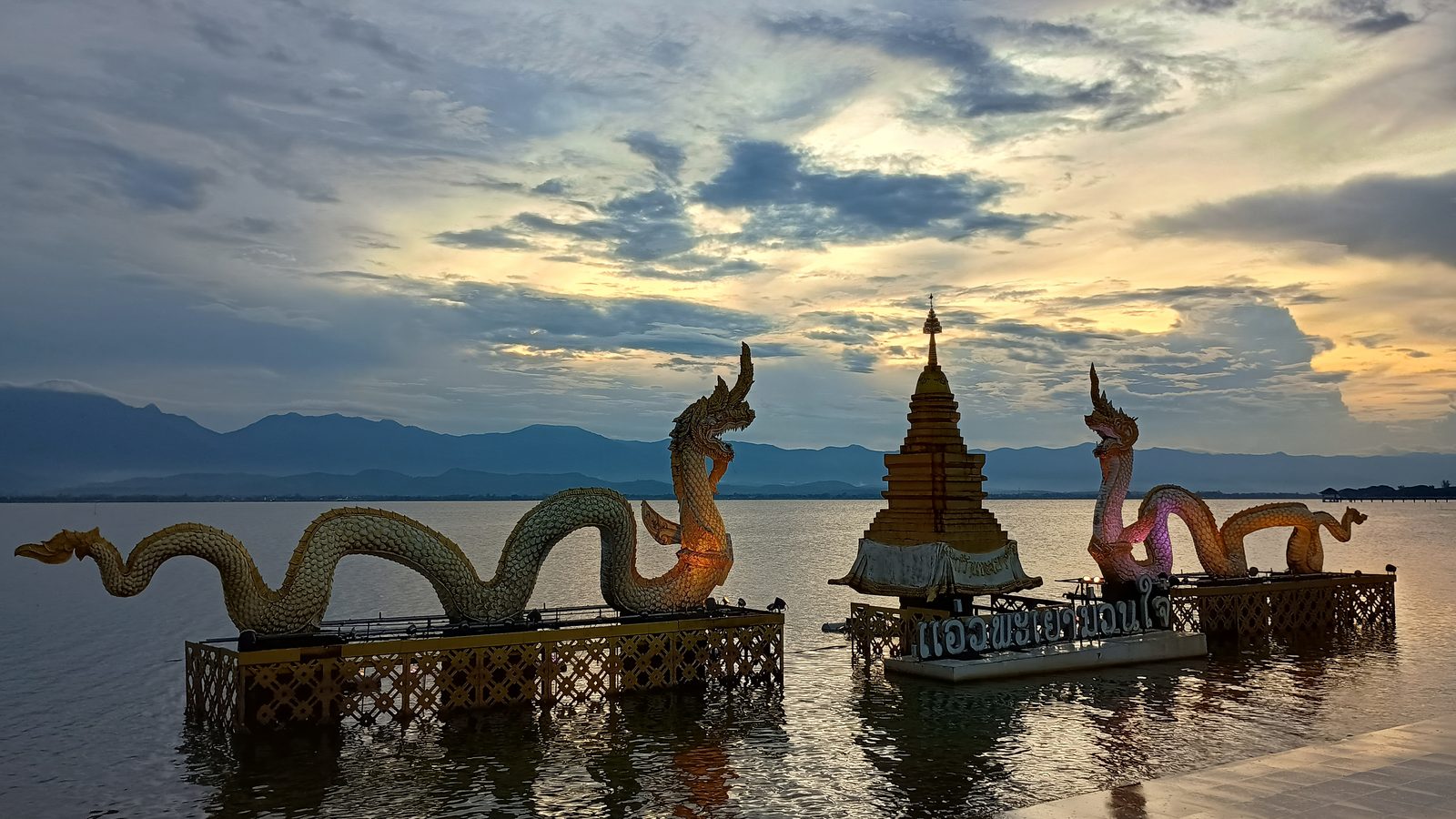
The lake’s most prominent visual landmark sits near the shore: a pair of golden Naga statues, their serpentine forms rising from the water against the mountain backdrop. The Phaya Naga is a mythical serpent deity deeply embedded in Thai Buddhist folklore and Southeast Asian spirituality. In Buddhist cosmology, Nagas are semi-divine guardians of the Buddha’s teachings, temples, and bodies of water. Local legend connects the Naga directly to Phayao: according to one account, a Naga brought gold from its subterranean realm to an elderly couple, instructing them to use it to cast a great Buddha image — a story associated with the Phra Chao Ton Luang statue at Wat Si Khom Kham.
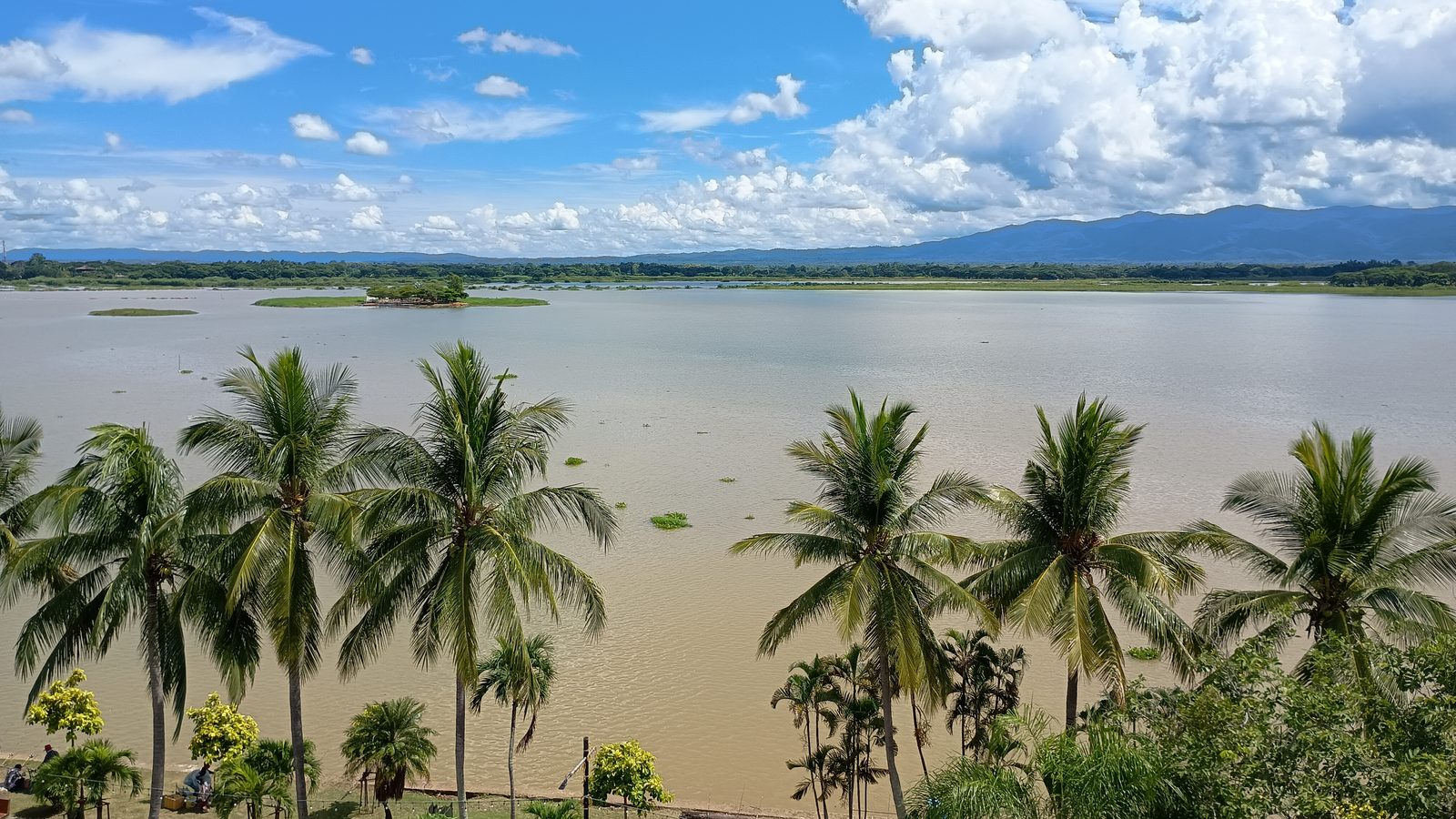
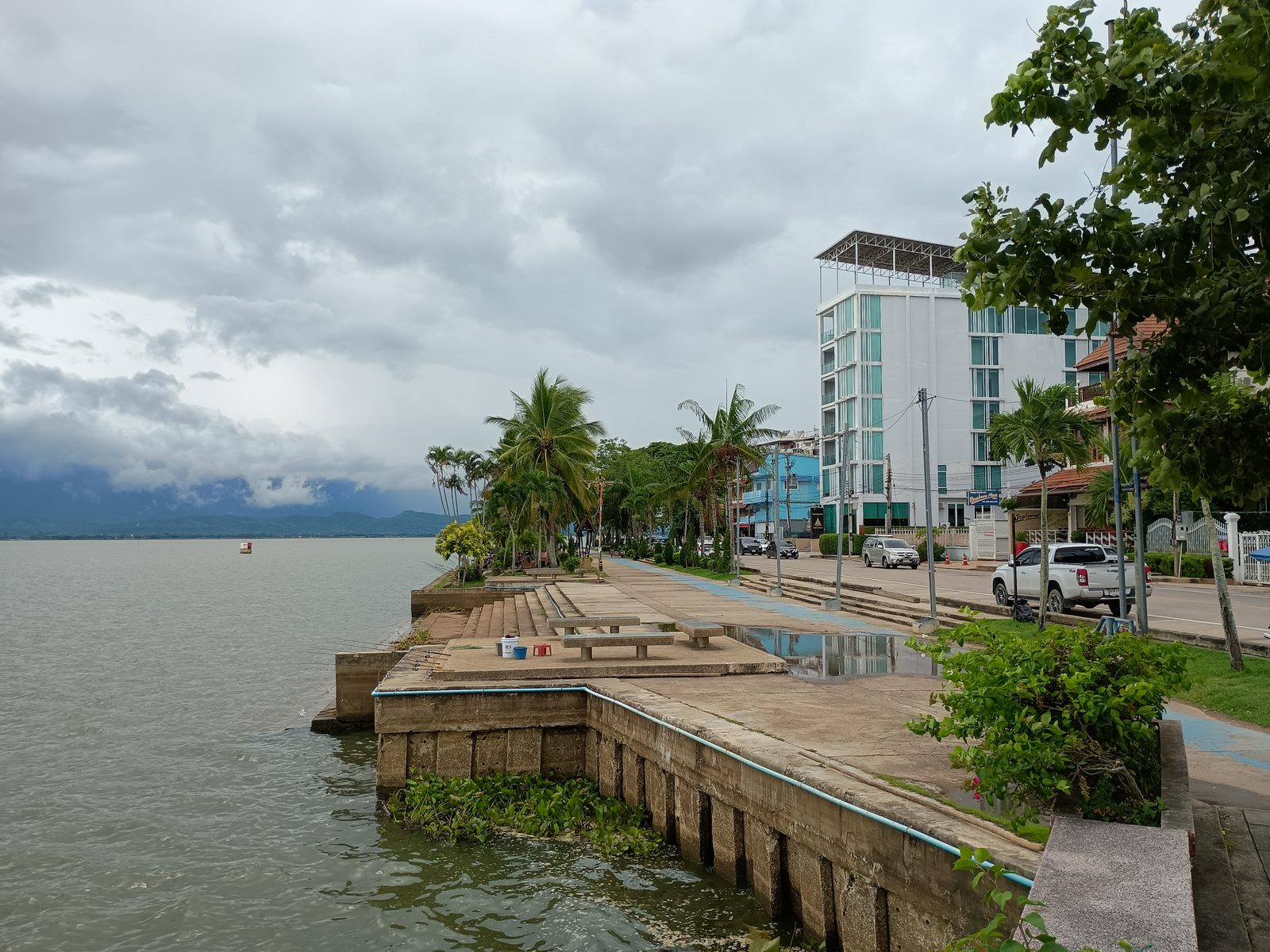
The lakeside promenade, Chai Kwan Road, stretches for roughly one kilometre along the southeastern shore. In the early morning, the road fills with joggers and cyclists. By dusk, families gather on the grass, aerobics classes assemble near the water, and the sky over the lake transforms into the pastel oranges and pinks for which Phayao sunsets are quietly famous. On Sunday evenings, the area near Lan Anekprasong — the municipal grounds — transforms into the Phayao Walking Street, a night market where vendors sell northern Thai snacks (notably khaep mu, crispy pork skin), local handicrafts, and OTOP products from across the province.
Wat Tilok Aram: The Sunken Temple
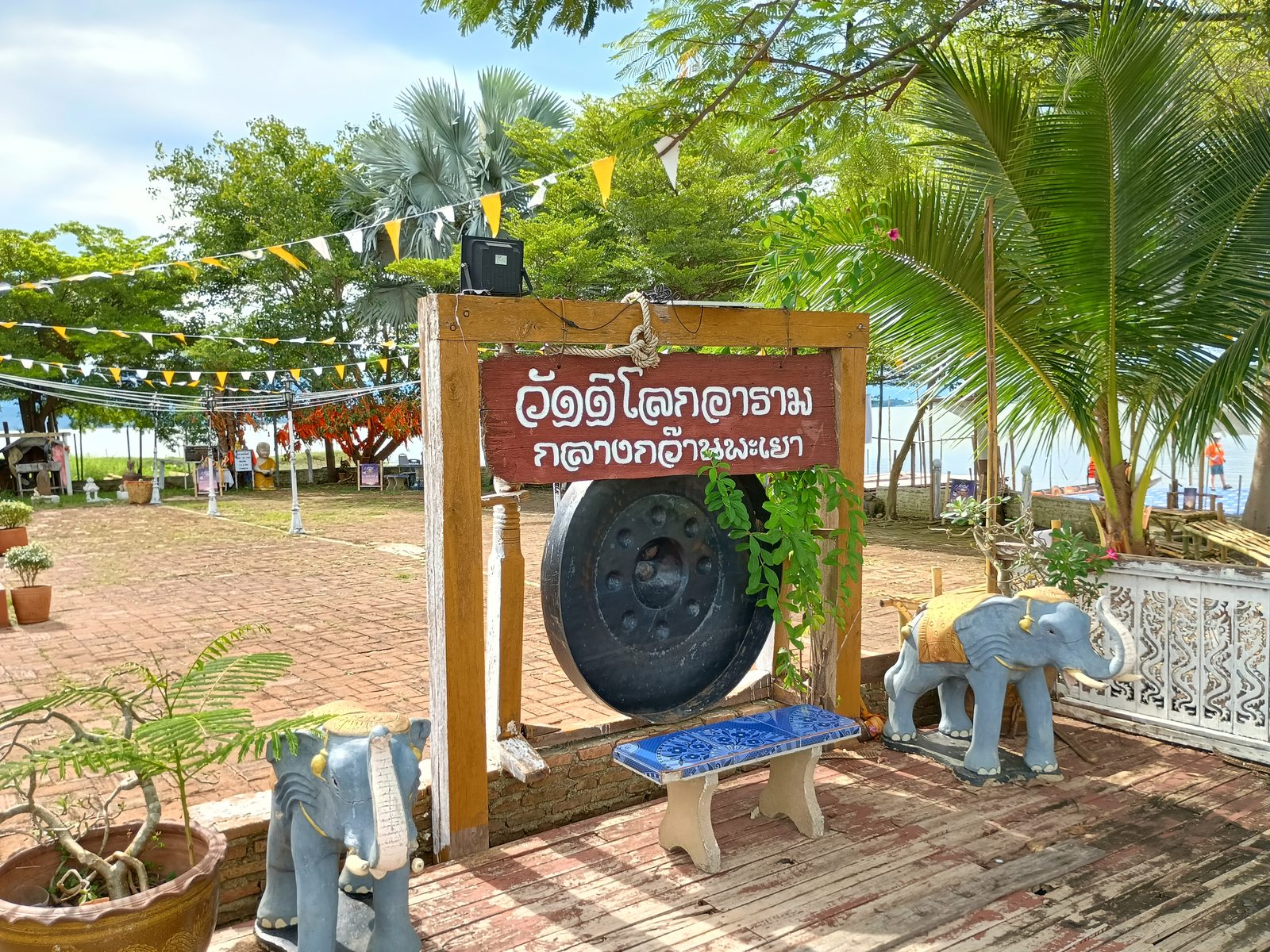
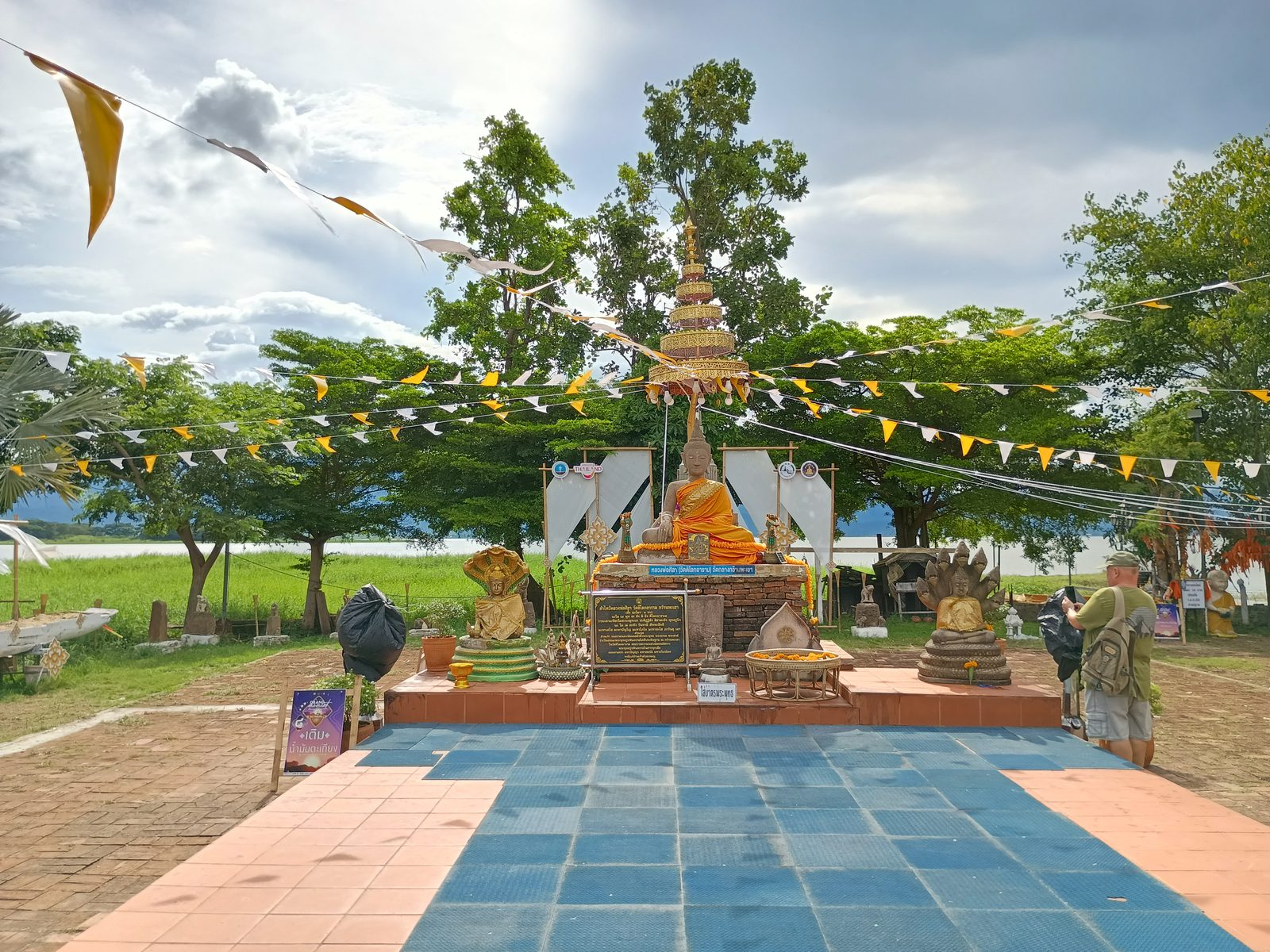
Among the structures submerged by the 1941 flooding of Kwan Phayao, none carries more historical weight than Wat Tilok Aram. A stone inscription discovered at the site, carved in the ancient Fak Kham alphabet, records that the temple was constructed between 1476 and 1486 CE — over 500 years ago — during the reign of King Tilokkarat (Tilokaraj) of the Lanna Kingdom. The king commanded Chao San Hua, ruler of Muang Phayao, to build the temple as a grand offering.
For nearly five centuries, Wat Tilok Aram stood intact on dry land. Its submersion — along with more than ten other archaeological sites — was an unintended consequence of the dam that created modern Kwan Phayao. Today, portions of the chedi and viharn remain visible above the waterline on a small island approximately 200 metres from shore. The site is reachable by boat and remains an active place of worship.
Wat Tilok Aram is the focal point of one of Thailand’s most unusual religious ceremonies: the Wian Thian Klang Nam, or Candlelight Procession on Water. On Visakha Bucha Day (usually in May), worshippers board approximately fifty boats and circle the sunken temple three times — on water — carrying lit candles, incense, and flower offerings. A special floating platform is erected above the temple ruins. This is the only ceremony of its kind anywhere in the world and draws participants from across Thailand.
Wat Si Khom Kham and the Giant Buddha
On the northwestern shore of the lake stands Wat Si Khom Kham, a third-class royal temple and the home of Phra Chao Ton Luang — the largest Buddha image in the Chiang Saen (Lanna) artistic style. The massive seated Buddha measures approximately 16 metres wide and up to 18 metres high. It was cast over 33 years, from 1491 to 1524, during the reign of Phraya Mueang Yi. At over 500 years old, it was once considered the largest Buddha image in the entire Lanna Kingdom.
The statue is intimately connected with Phayao’s Naga folklore. According to legend, a serpent deity brought gold from the Naga realm to enable the casting. Whether or not one credits the mythology, the statue’s scale and age are undeniable: it required generations of artisans working across three decades to complete. The present viharn structure was erected in 1923 when the famous monk Kruba Chao Sri Wichai was invited to establish the building. An annual celebration honouring the statue takes place in the sixth lunar month, around May.
Wat Analayo Thipphayaram: The Mountain Sanctuary
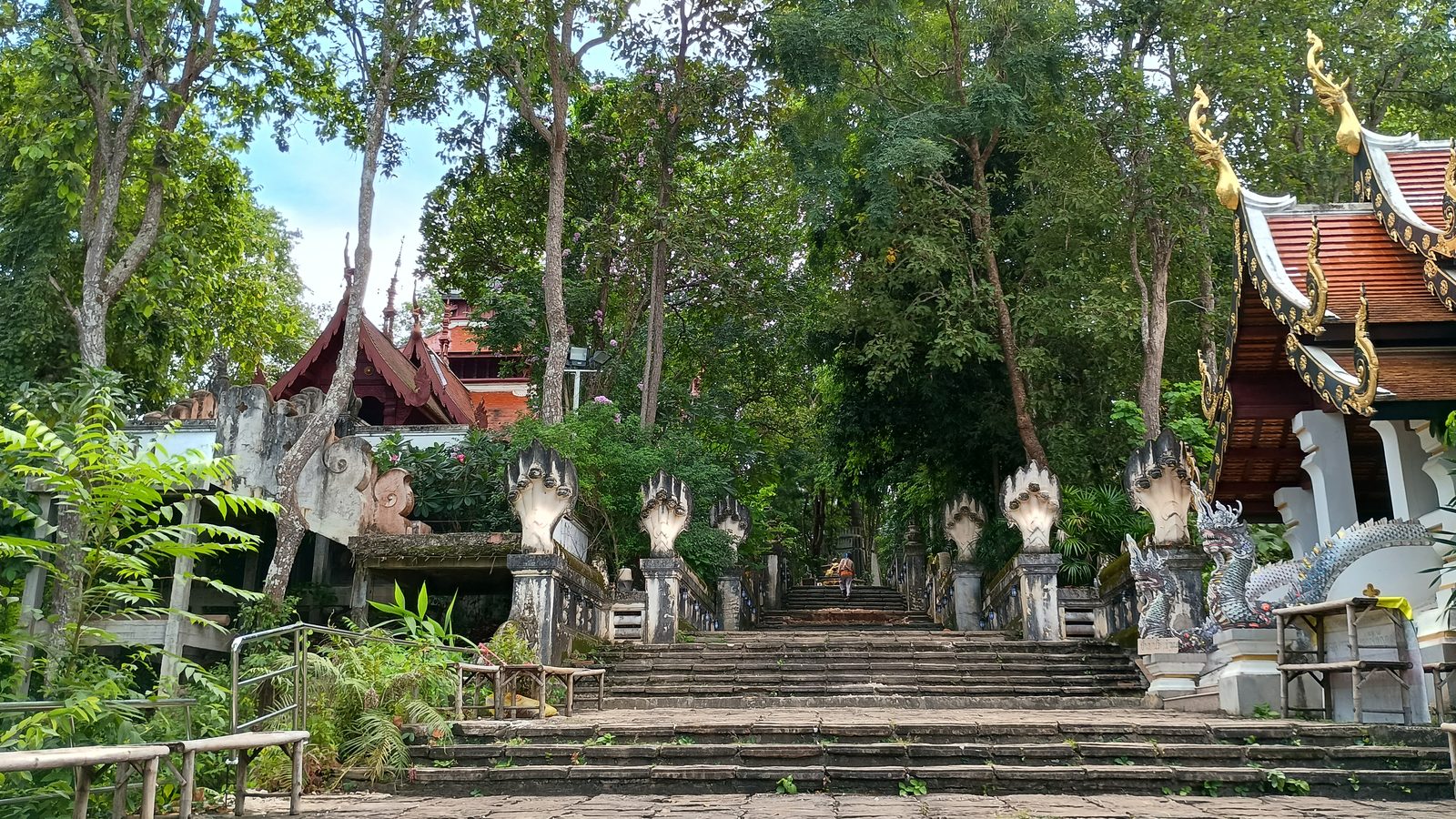
Approximately 20 kilometres north of Phayao town, along Highway 1 toward Chiang Rai, a side road at kilometre 743 leads into the hills of San Pa Muang Subdistrict. After nine kilometres of climbing, the road reaches Wat Analayo Thipphayaram, a sprawling temple complex that covers 2,800 rai (approximately 448 hectares) across multiple hillsides on Doi Butsarakham mountain.
The temple was constructed under the direction of the revered monk Phra Kru Phaiboon Sumangkalo (Luang Pu Phaiboon), who had a vision while residing at Wat Rat Wanaram. The complex contains Buddha images in numerous artistic styles and postures: a graceful Sukhothai-style seated Buddha, walking and reclining figures, and a striking image of the Buddha sheltered by a seven-headed Naga. One hilltop features an abandoned Chinese-style shrine to Guanyin, the Bodhisattva of Compassion, from which the view extends across the entire valley to Kwan Phayao far below.
Wat Analayo functions as both a place of worship and a meditation centre, with dedicated areas for Buddhist instruction and retreat. The scale is remarkable — visitors can spend hours exploring the interconnected hills, discovering shrines tucked into forested slopes and panoramic viewpoints at unexpected turns.
University of Phayao: A City of Students
The University of Phayao is one of Thailand’s newer independent public universities, but its roots run deeper than its 2010 founding date suggests. It began in 1995 as a satellite information technology campus of Naresuan University in Phitsanulok, opening its doors to students in 1999. In 2007, the Thai Cabinet approved its promotion to independent status, and on 16 July 2010, a Royal Decree formally established the University of Phayao.
Today the university comprises 17 faculties, two colleges, and a medical school with its own teaching hospital. Its student body numbers approximately 20,000, supported by roughly 1,000 staff. The main campus occupies a sprawling site in Mueang Phayao District, set against a mountain backdrop with views toward the lake. The university also maintains a campus in Chiang Rai, inherited from the former Naresuan University Chiang Rai Campus.
The university’s presence has reshaped Phayao. Thousands of students — many from other provinces — contribute to the town’s economy and cultural energy. The university positions itself as a “frontier area-based university,” emphasising community engagement, sustainability research, and regional development. For a provincial town of roughly 125,000 residents, a 20,000-student university exerts an outsized influence — turning Phayao into a genuine educational centre and injecting a youthful vibrancy into its lakeside streets and night markets.
Lakeside Dining: From Too Good to the Night Market
Phayao’s restaurant scene is concentrated along Chai Kwan Road, where a string of eateries, cafes, and bars face the water. The local cuisine reflects the lake’s centrality: freshwater fish from Kwan Phayao is the defining ingredient, complemented by northern Thai (Lanna) specialities.
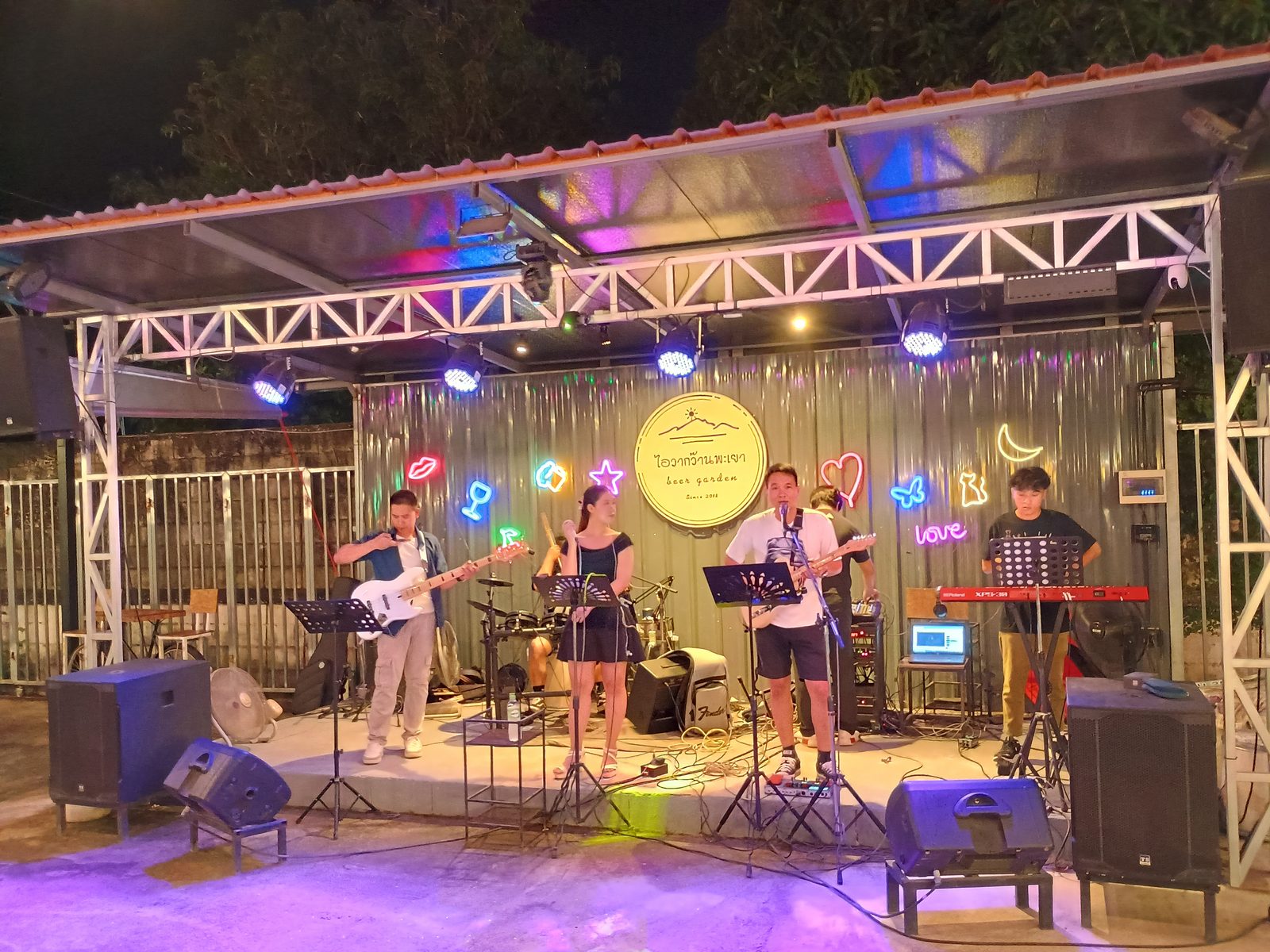
*Too Good (ร้านตู้กู๊ด) occupies a prime lakeside position at 222 Moo 17, Ban Tom Subdistrict. Open daily from 10:00 to midnight, the restaurant has earned its name through consistent quality — generous portions of Thai food served under shade trees with live music in the evenings. Signature dishes include the creamy tom yum pla kang nam khon (spicy catfish soup) and kung foi tod grob* (crispy fried small shrimp). With over 12,500 Facebook followers and 71,000 check-ins, Too Good is the kind of place where locals bring visiting relatives and where a meal can stretch easily into an evening by the water.
*Saeng Chan Restaurant (ร้านแสงจันทร์) — “Moonlight Restaurant” — sits at 17/4 Chai Kwan Road. Its menu spans the Thai repertoire, from pla krapong tod nam pla (fried sea bass with fish sauce) to the intriguing kung ten* (“dancing shrimp” — fresh shrimp tossed in spicy lime dressing). A TripAdvisor rating of 4.1 out of 5 places it firmly in Phayao’s top tier.
A short distance along the same road, *Paksa House (ร้านปักษา)* at 625/1 offers Thai food with outdoor seating. Less prominent than its neighbours but a reliable stop for those working their way along the lakeside strip.
Further north, near the intersection with Phahon Yothin Road, *Chidlom Phayao (ชิดลม ชมกว๊าน) occupies a quieter stretch of the shoreline at 684/5 Wiang. The name is a wordplay: “Chidlom” — literally “close to the wind” — evokes Bangkok’s upscale Chidlom district while describing the lakeside breeze, and “Chom Kwan” means “admiring the lake.” The restaurant offers both indoor and outdoor seating, with subtle live music complementing a menu that features seafood dishes such as hor mok thalay* (steamed seafood curry custard). Reviewers consistently praise the peaceful atmosphere and attentive service (4.3 stars on Google Maps, open daily until 23:00).
Other notable options include *Baan Ing Kwan Bar & Cafe, an atmospheric lakefront bar operating daily until 22:00; Jantip Restaurant, popular with guests of the nearby Phuglong Hotel; and Ancharoen Noodle Soup, a morning institution at 168 Moo 3, Tha Wang Thong (07:00–15:00). For coffee, the Lake Cafe Phayao and Himta Garden Cafe* provide pleasant alternatives.
On Sunday evenings, the dining scene shifts to the *Phayao Walking Street (ถนนคนเดินพะเยา) at Lan Anekprasong on Tha Kwan Road. Operating from approximately 17:00 to 22:00, the market fills with food stalls offering northern Thai snacks. The star attraction is khaep mu — crispy pork skin, a beloved regional snack — alongside namphrik num (green chili dip), namphrik ong* (tomato chili dip), and fresh fruit. Between the food, the handmade crafts, and the cooling evening air off the lake, the walking street captures Phayao at its most convivial.
Phu Klong Hotel
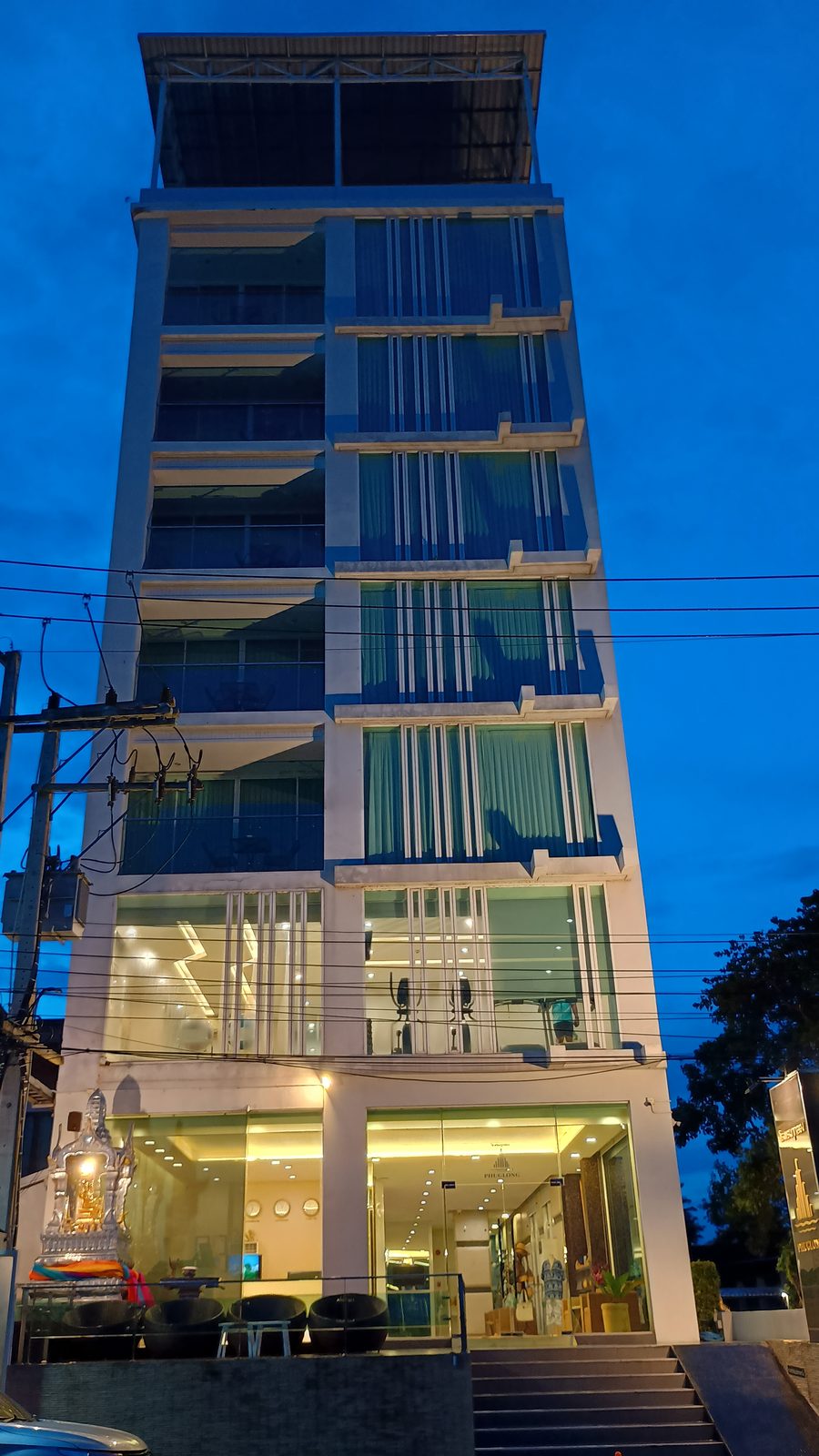
Set directly on Chai Kwan Road with views across Kwan Phayao, Phu Klong Hotel (ภูกลางโฮเต็ล) is a contemporary three-star property whose name translates to “Central Mountain.” The hotel’s defining feature is its lakefront location: rooms face the water, many with private balconies from which the Naga statues and mountain silhouettes are visible. Inside, the rooms are recently renovated, bright, and modern, with floor-to-ceiling glass maximising the natural light.
The hotel includes a fitness centre, an on-site restaurant (well-reviewed for its breakfast), and bicycle rentals for exploring the lakeside promenade. At approximately 1,000–1,300 THB per night, it occupies the sweet spot between Phayao’s budget guesthouses and luxury options — comfortable, well-located, and unpretentious.
Day Trips from Phayao: The Chiang Rai Temple Circuit
Phayao’s position — roughly 90 kilometres south of Chiang Rai — makes it a natural base for exploring Chiang Rai’s trio of extraordinary contemporary temples. The route south from Phayao along Highway 1 passes through the Phan District, where a lesser-known but equally distinctive temple sits just off the main road.
Wat Huay Sai Khao: The Temple of Stucco Dreams
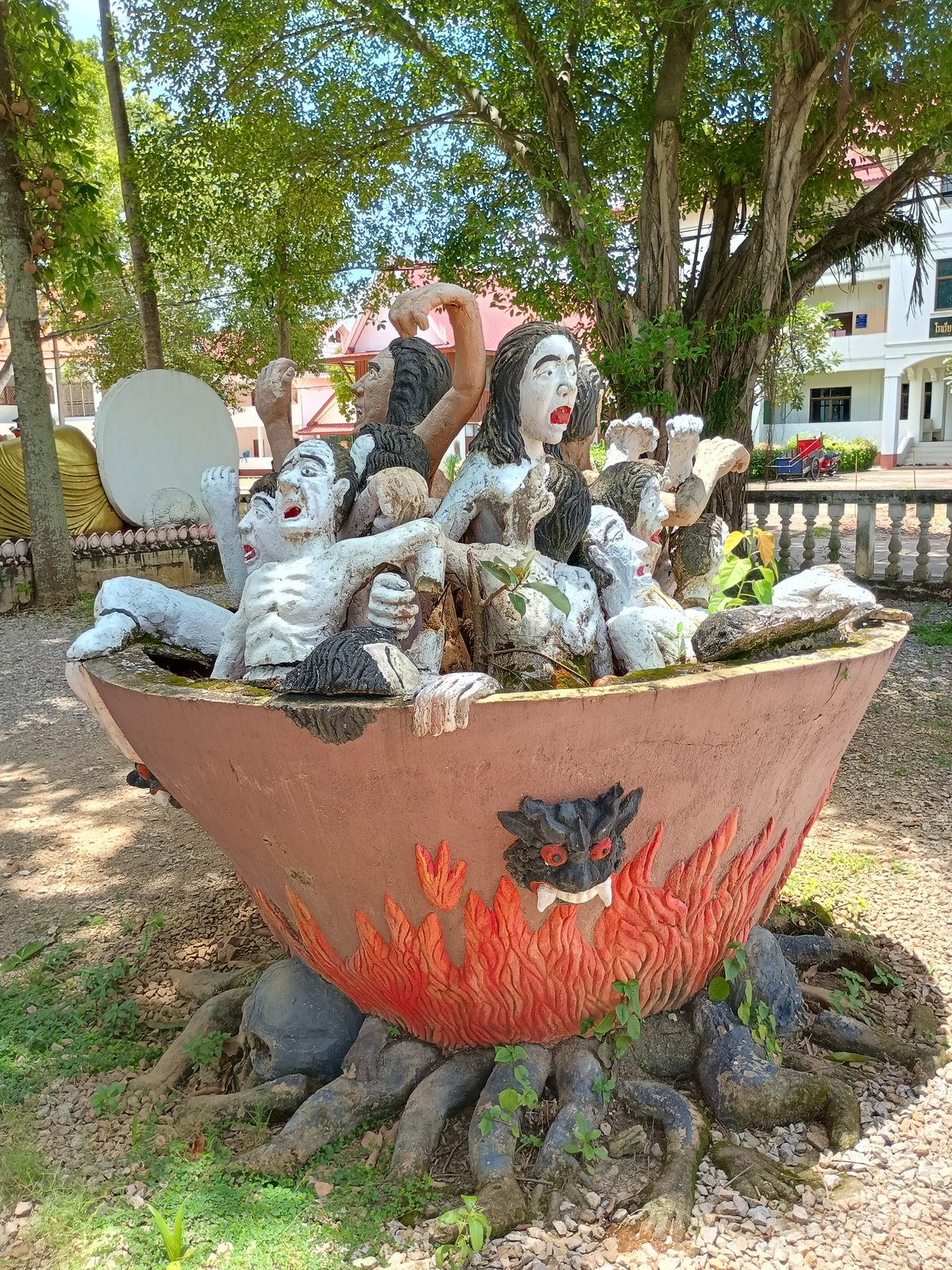
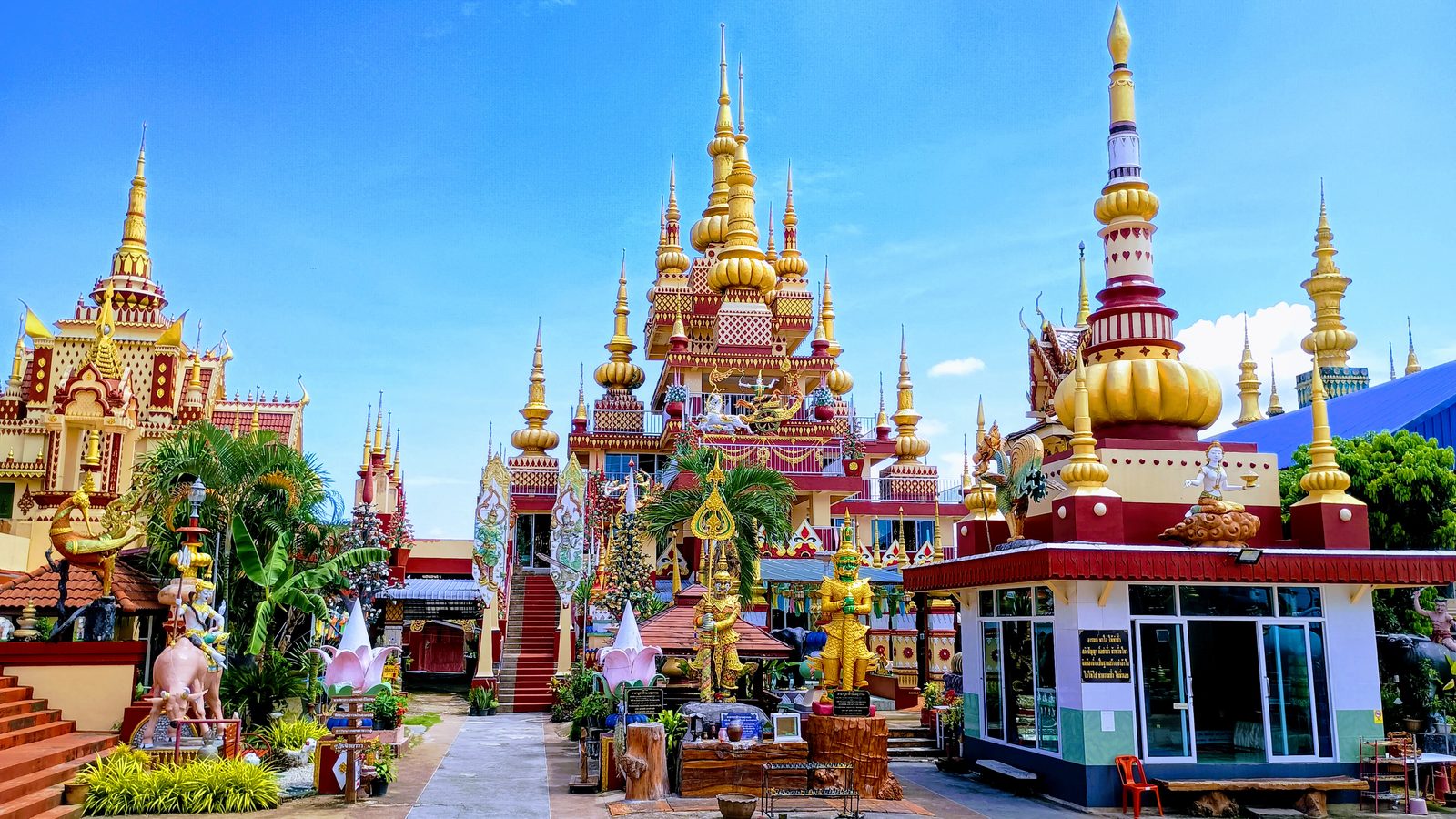
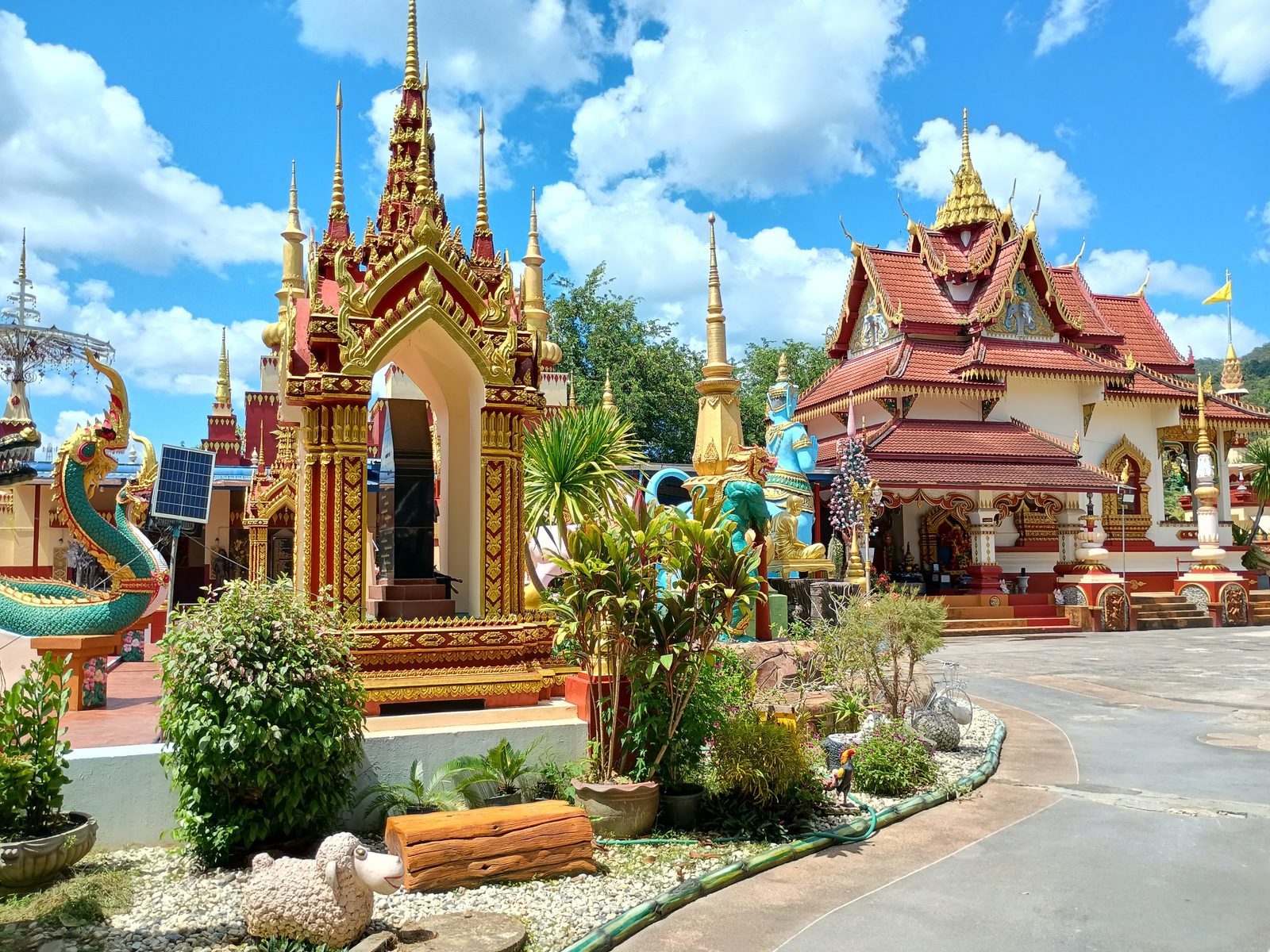
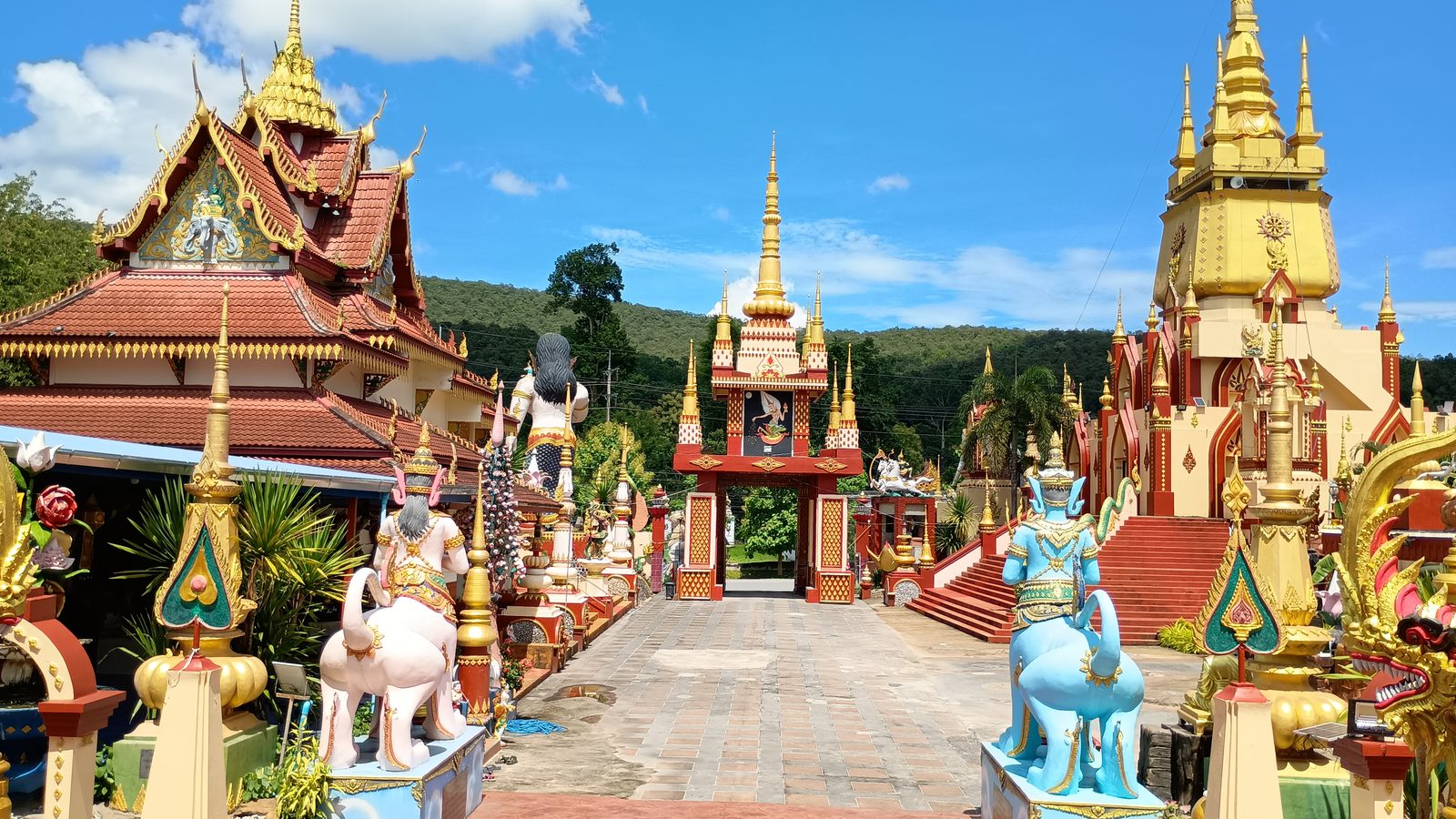
Approximately 40 kilometres south of Chiang Rai town, on the west side of Highway 1, Wat Huay Sai Khao rises from the flatlands of Phan District in an explosion of colour. The temple’s defining characteristic is its elaborate stucco artwork — brightly painted reliefs covering nearly every surface of the ubosot, chedi, and shrine structures. Buddhist deities, mythological creatures, guardian giants, elephants, Garuda figures, and detailed floral motifs compete for attention across the compound.
The temple has a layered history. An earlier structure on the site dates to at least the mid-20th century; a viharn was constructed between 1956 and 1960 under the patronage of a local noble. At some point, a road was built through the temple grounds, physically dividing the complex. The modern incarnation — the one with the vivid stucco — was re-established in the late 1990s by Phra Ajarn Juthat, who envisioned it as a meditation centre with an artistic character entirely its own.
Among the temple’s most photographed features is a statue of Nang Phisuea Samut, the female giantess from the Thai literary epic Phra Aphai Mani by Sunthorn Phu. In the story, she is a human-eating ogress who falls in love with the hero — her presence at the temple entrance is both startling and characteristically Thai in its blending of literary, folk, and Buddhist traditions. Sculptures of bison and farmers at ground level add a folk-art dimension, grounding the fantastical architecture in rural northern life.
Despite its visual drama, the temple remains peaceful, visited primarily by local worshippers and school groups. Many foreign tourists pass it on their way between Chiang Rai and points south without stopping — an oversight, given the temple’s singular fusion of Lanna architectural forms with an aesthetic that has drawn comparisons to both Disneyland and fairy-tale illustration. It is, unequivocally, a working Buddhist temple — not a theme park — but one where the boundary between sacred space and artistic expression blurs in memorable ways.
Wat Rong Khun: The White Temple
If Wat Huay Sai Khao is an explosion of colour, Wat Rong Khun — the White Temple — is its polar opposite: a vision in stark white and mirrored glass, conceived as a single artist’s spiritual statement. The temple was designed, financed, and largely built by Chalermchai Kositpipat, a Chiang Rai-born painter who rose to national prominence in the 1980s for his temple murals blending traditional Buddhist imagery with contemporary pop-culture references.
Chalermchai began construction of Wat Rong Khun in 1997 on the site of a dilapidated temple. He purchased the land with his own funds and committed to building a structure that would be entirely white — symbolising the purity of the Buddha — and embedded with mirrored glass to reflect the Buddha’s wisdom. The artist has described the project as his life’s work and has stated that construction will continue until his death, after which the temple will be maintained as a completed work. Estimates suggest it may take another 50 to 60 years to finish.
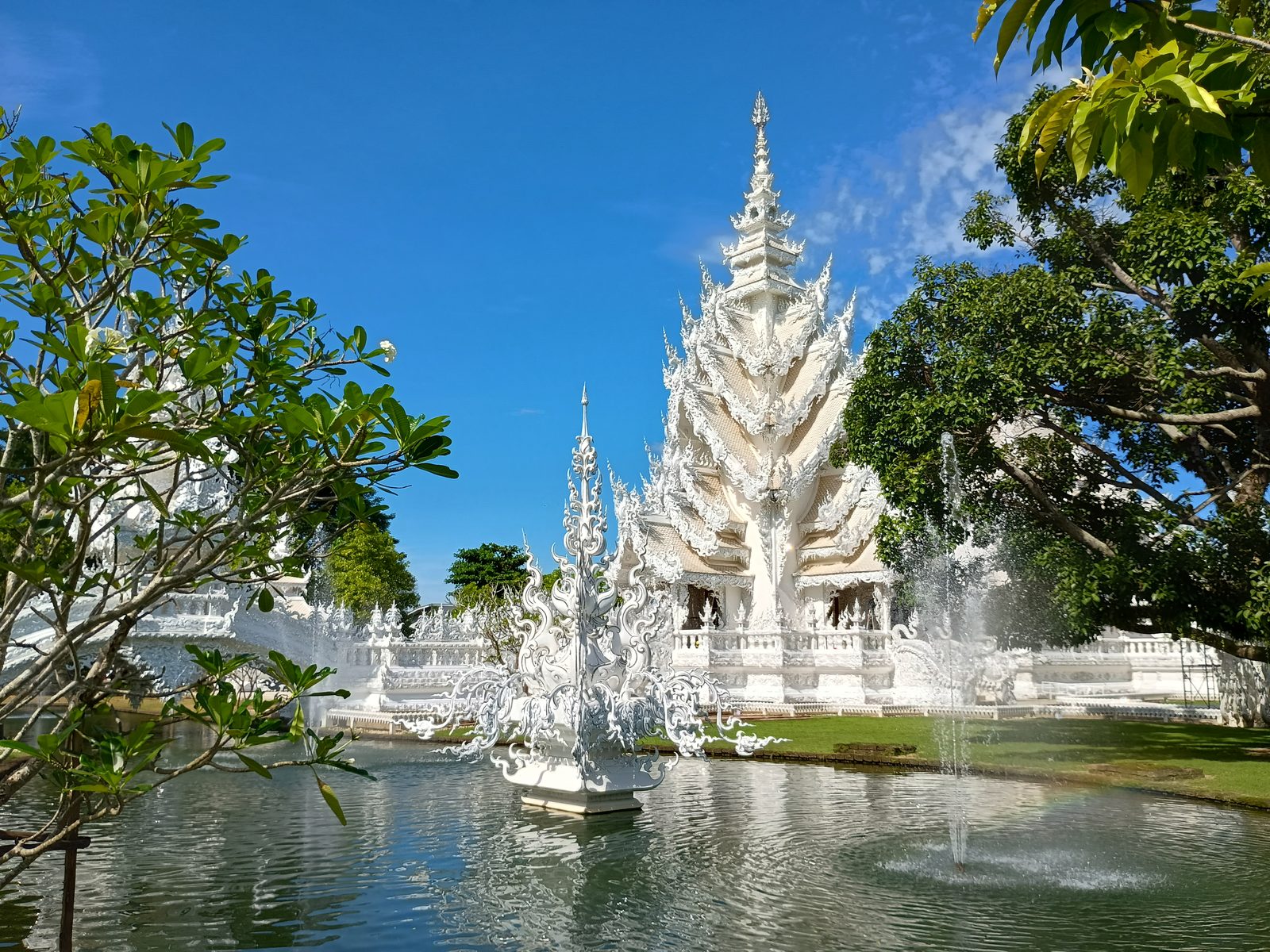
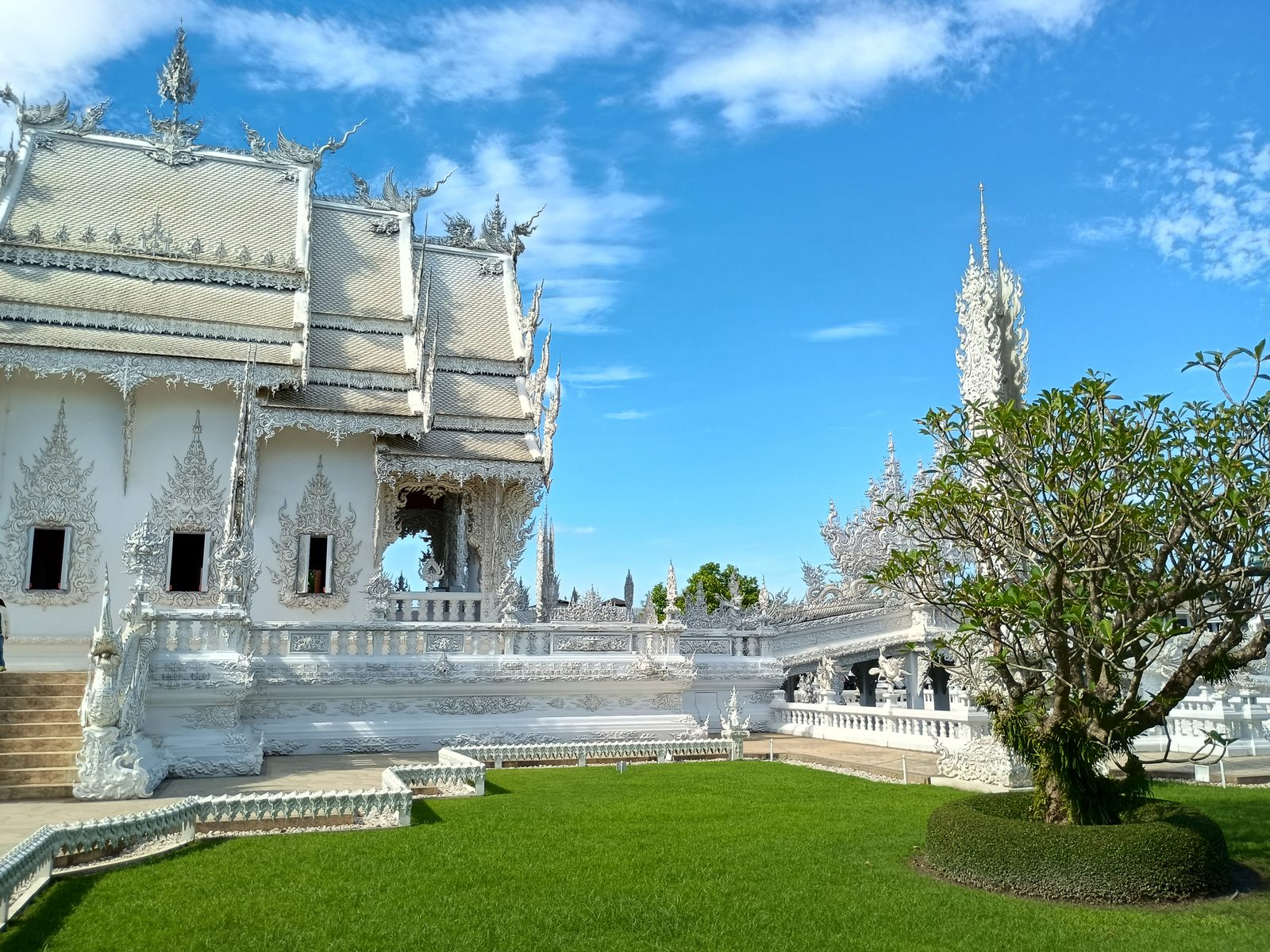
The temple’s iconographic programme is elaborate and deliberately accessible. Visitors enter by crossing a bridge over a sea of sculpted hands — representing desire and suffering — before reaching the main ubosot. Inside, the walls feature murals that juxtapose traditional Buddhist themes with images from contemporary global culture, including figures from film, politics, and popular media. The artist’s intent is to present Buddhist teachings in a visual language that speaks directly to the present moment.
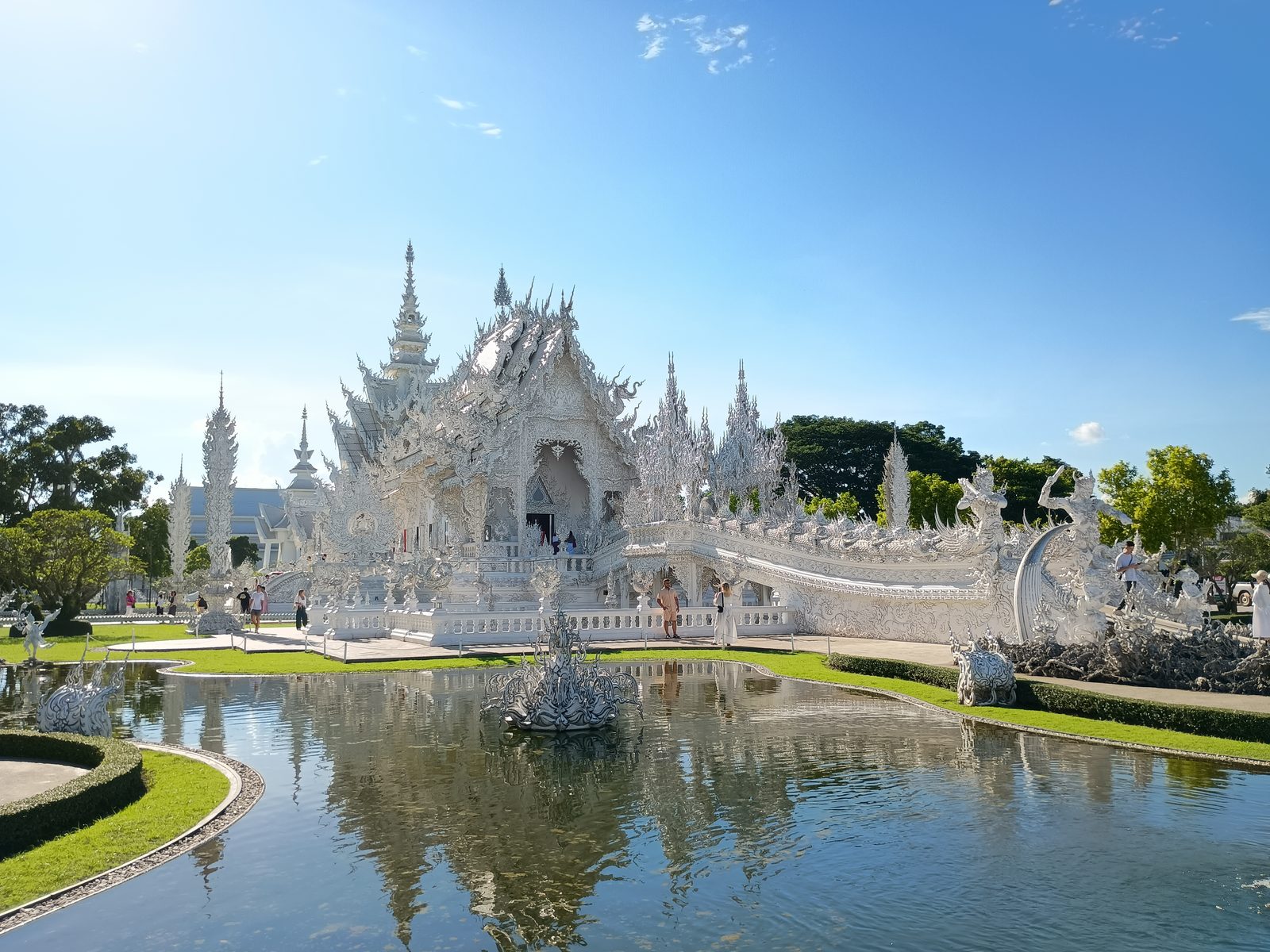
Also on the grounds is a golden building — deliberately coloured so as to contrast with the white ubosot. This is not a temple structure but a lavishly decorated restroom facility, reportedly among the most ornate public toilets in Thailand. The juxtaposition is intentional: the artist has said that the golden building represents the body, while the white temple represents the mind.
Wat Rong Khun attracts approximately 1.5 to 2 million visitors per year, making it Chiang Rai’s most visited attraction. Entry is 100 THB for foreign visitors, free for Thai nationals. The temple has been damaged by earthquakes — notably in May 2014 — but Chalermchai has personally overseen repairs and has stated that the structural integrity has been reinforced against future seismic events.
Wat Rong Suea Ten: The Blue Temple
Roughly three kilometres from the centre of Chiang Rai town, Wat Rong Suea Ten — the Blue Temple — stands as a striking counterpoint to Wat Rong Khun. Where the White Temple is stark and monochromatic, the Blue Temple is saturated in deep cobalt and gold, glowing against the northern Thai sky.
The temple was designed by Phuttha Kabkaew (also known as Sala Nok), a Chiang Rai-born artist who studied under Chalermchai Kositpipat. Construction began in 2005 on the site of an older, abandoned temple — the name Rong Suea Ten (ร่องเสือเต้น) means “Tiger Leaping Gorge,” a reference to the terrain that once characterised the area. The temple was completed and formally opened in 2016.
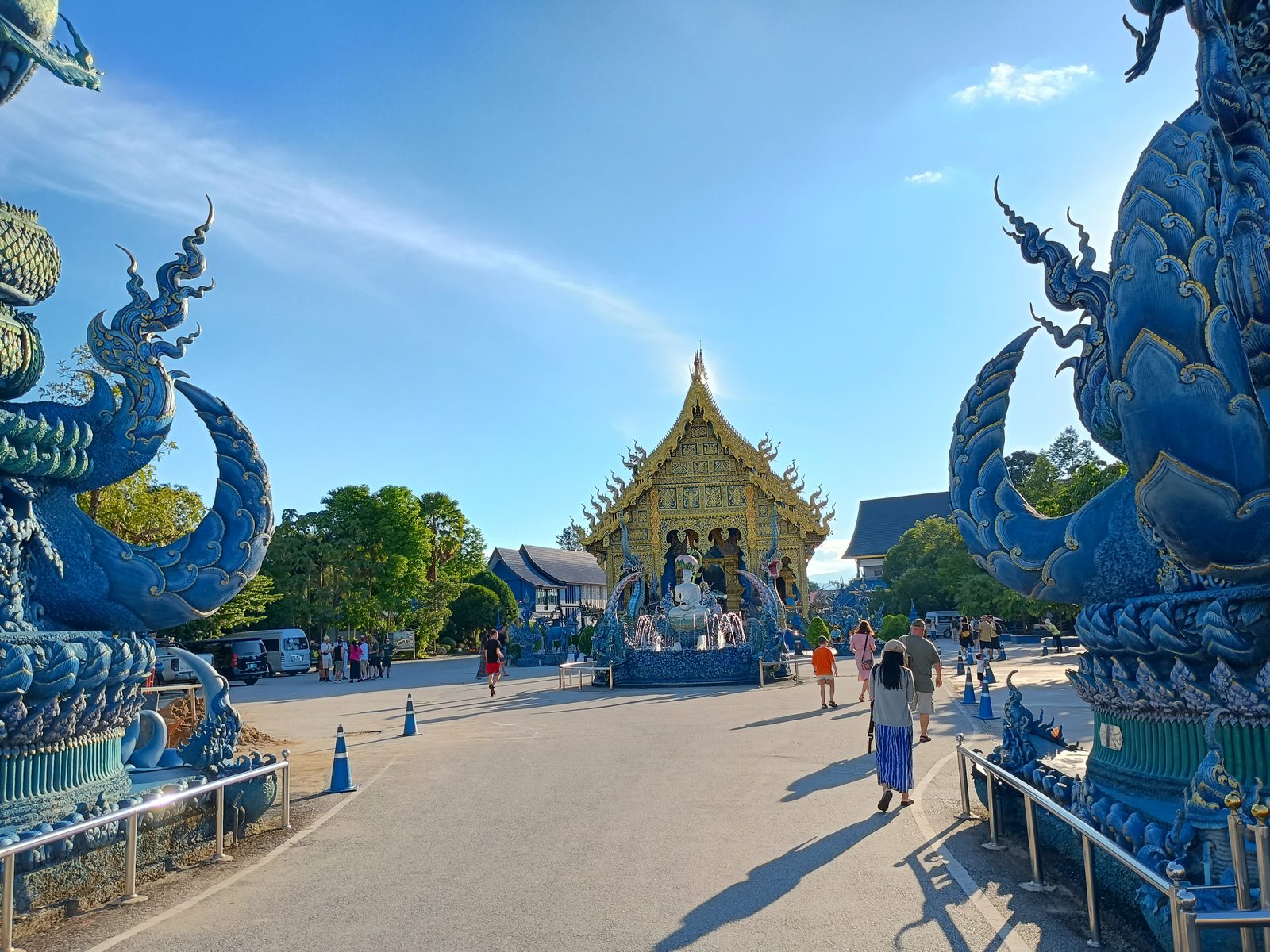
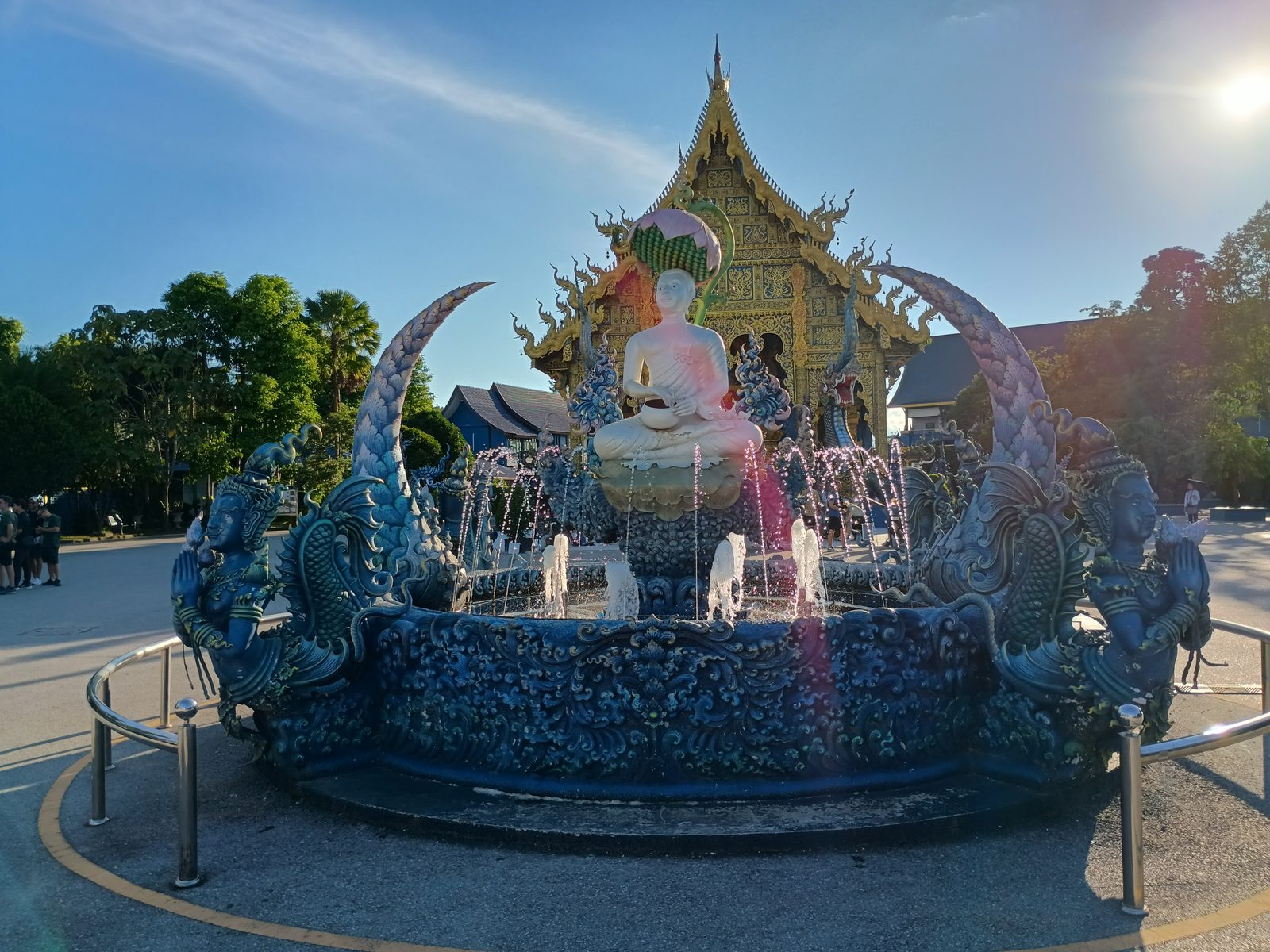
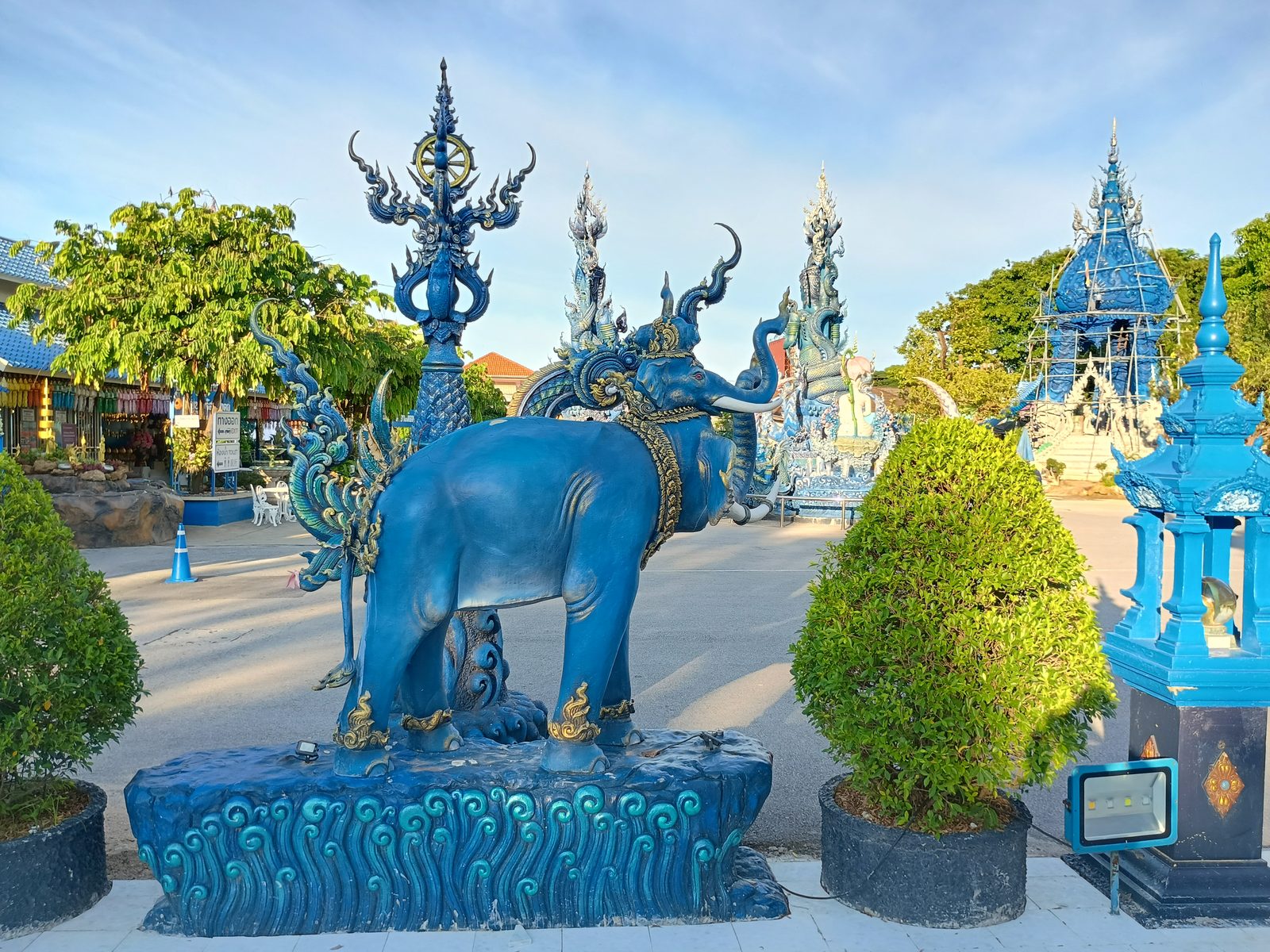
The colour choice is deliberate: in Buddhist art, blue is associated with wisdom, the infinite, and the dhamma (the Buddha’s teachings). The exterior is layered in elaborate blue stucco with gold filigree, while the interior features a monumental white Buddha in a seated meditation posture — the whiteness of the statue contrasting sharply with the deep blue walls surrounding it. The ceiling is painted with celestial motifs, and the walls contain murals depicting the life of the Buddha in a contemporary northern Thai visual idiom.
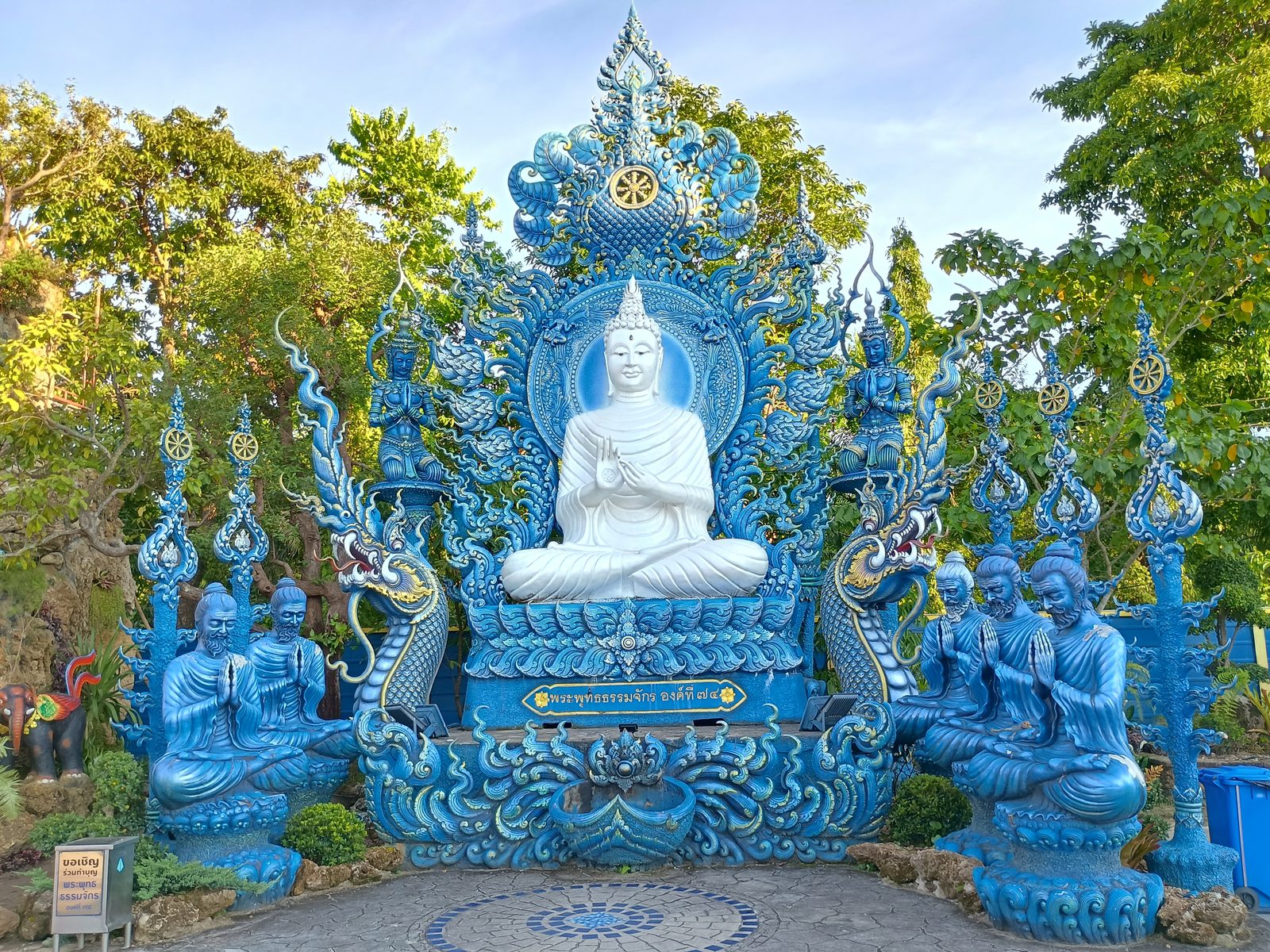
Guardian Naga figures flank the entrance, and the temple grounds include several smaller shrines and a pleasant garden area. The scale is more intimate than Wat Rong Khun — this is primarily a working temple rather than a tourist installation — but the visual impact is immediate. Wat Rong Suea Ten has rapidly become one of Chiang Rai’s defining landmarks, drawing visitors who make the circuit between the White Temple, the Blue Temple, and the nearby Wat Huay Pla Kang (which features an immense Guanyin statue visible for kilometres).
Singha Park: Tea Plantations and Electric Rides
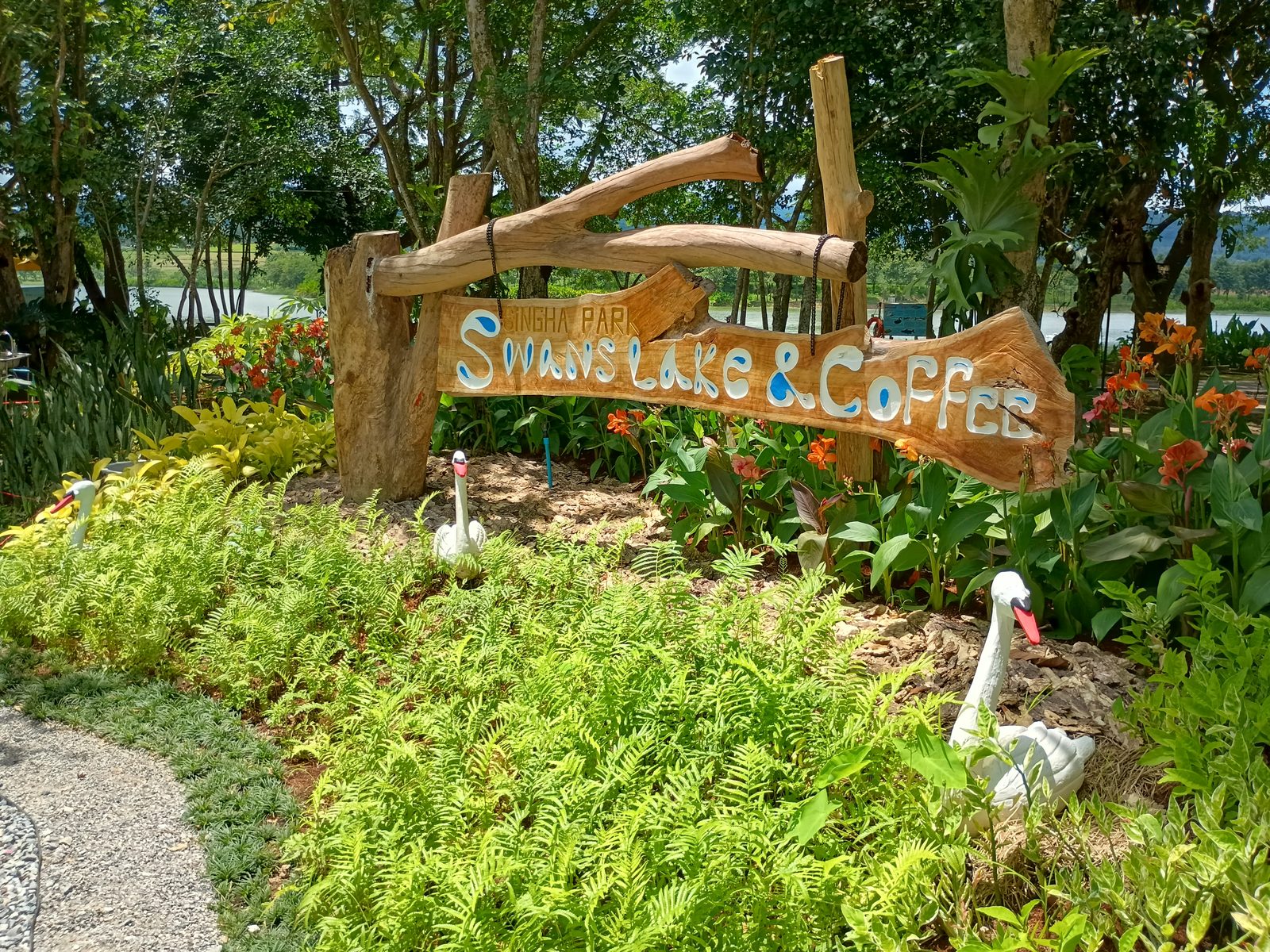
Approximately 12 kilometres southwest of Chiang Rai town, Singha Park (สิงห์ปาร์คเชียงราย) occupies a sprawling 8,000 rai (roughly 12.8 square kilometres) of rolling hills, tea plantations, and manicured gardens. The park was established by Boon Rawd Brewery — the maker of Singha beer — as both a tourist attraction and a working agricultural enterprise. The site grows tea, barley, and various fruits, and its landscape design makes strategic use of the natural topography: terraced tea fields cascade down gentle slopes toward a central lake, with the mountains of Chiang Rai providing a distant backdrop.
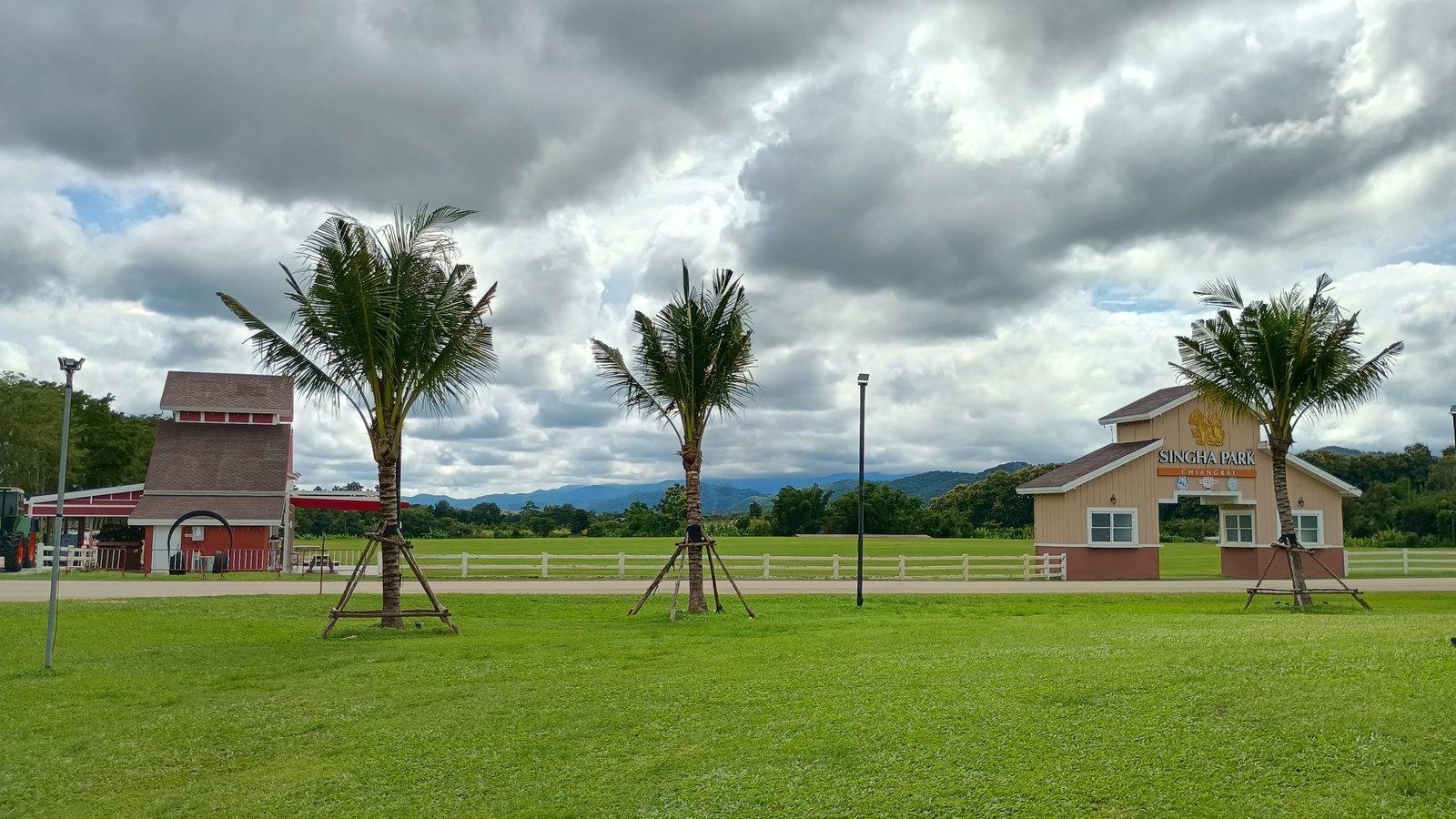
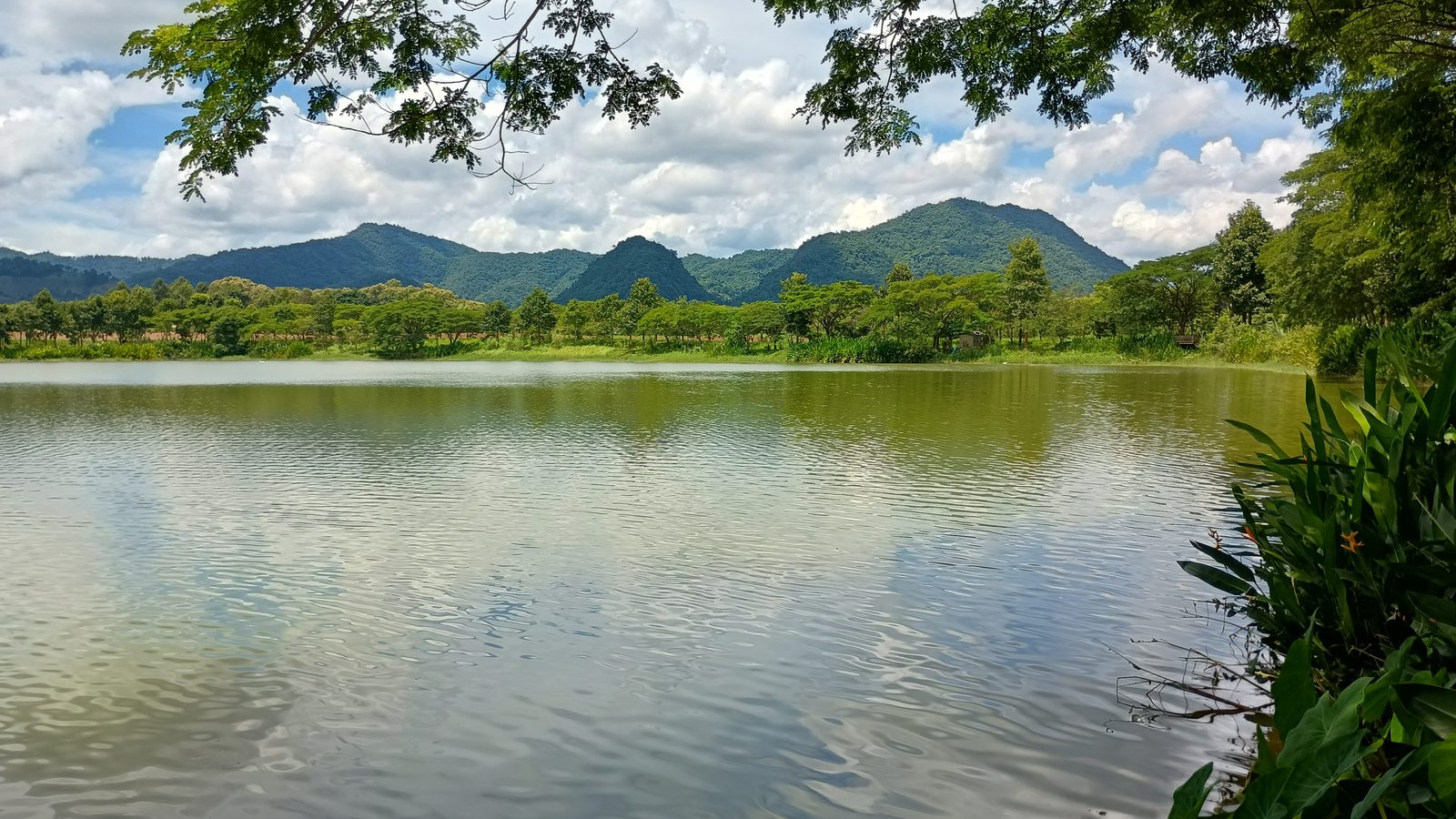
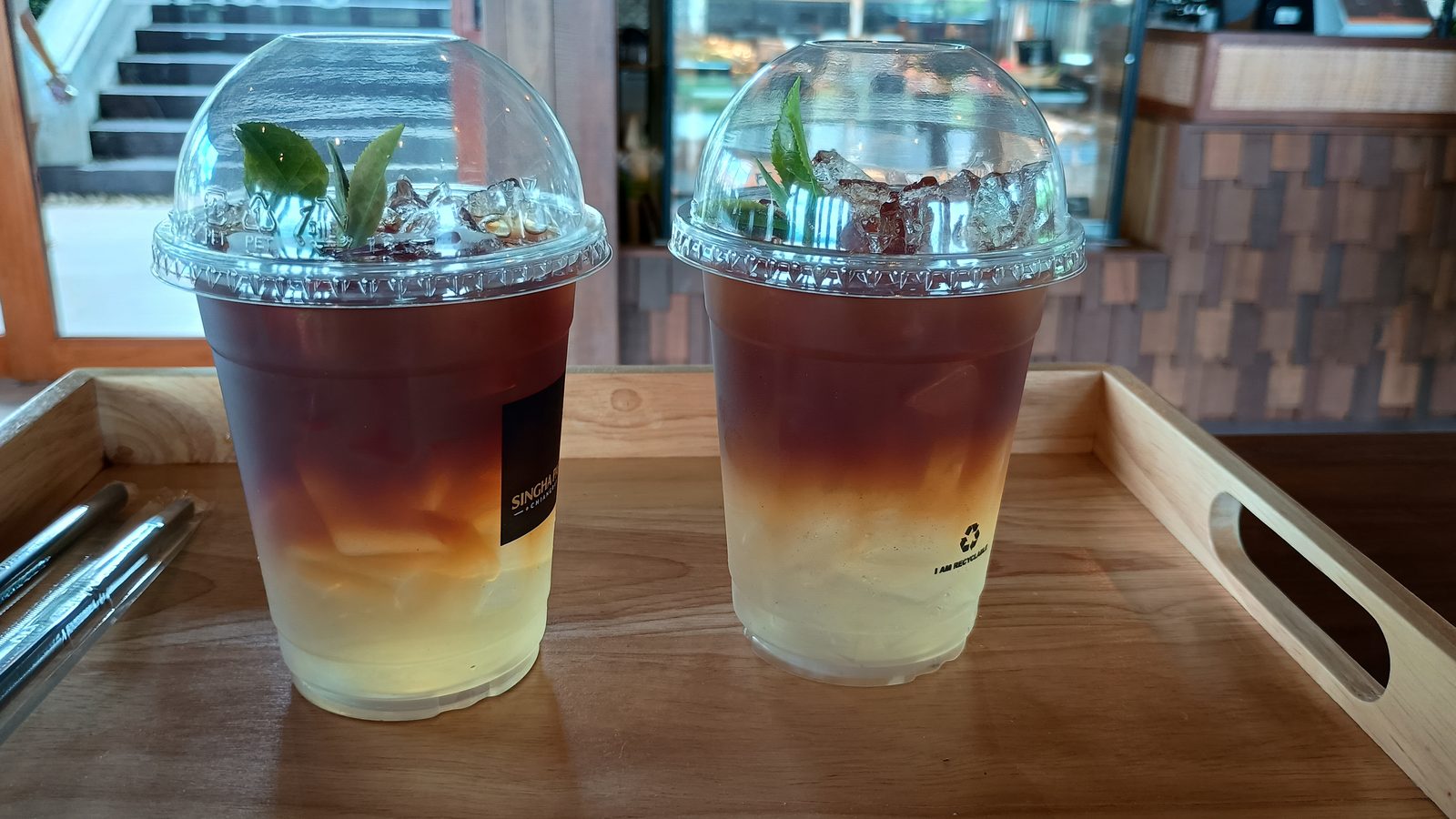
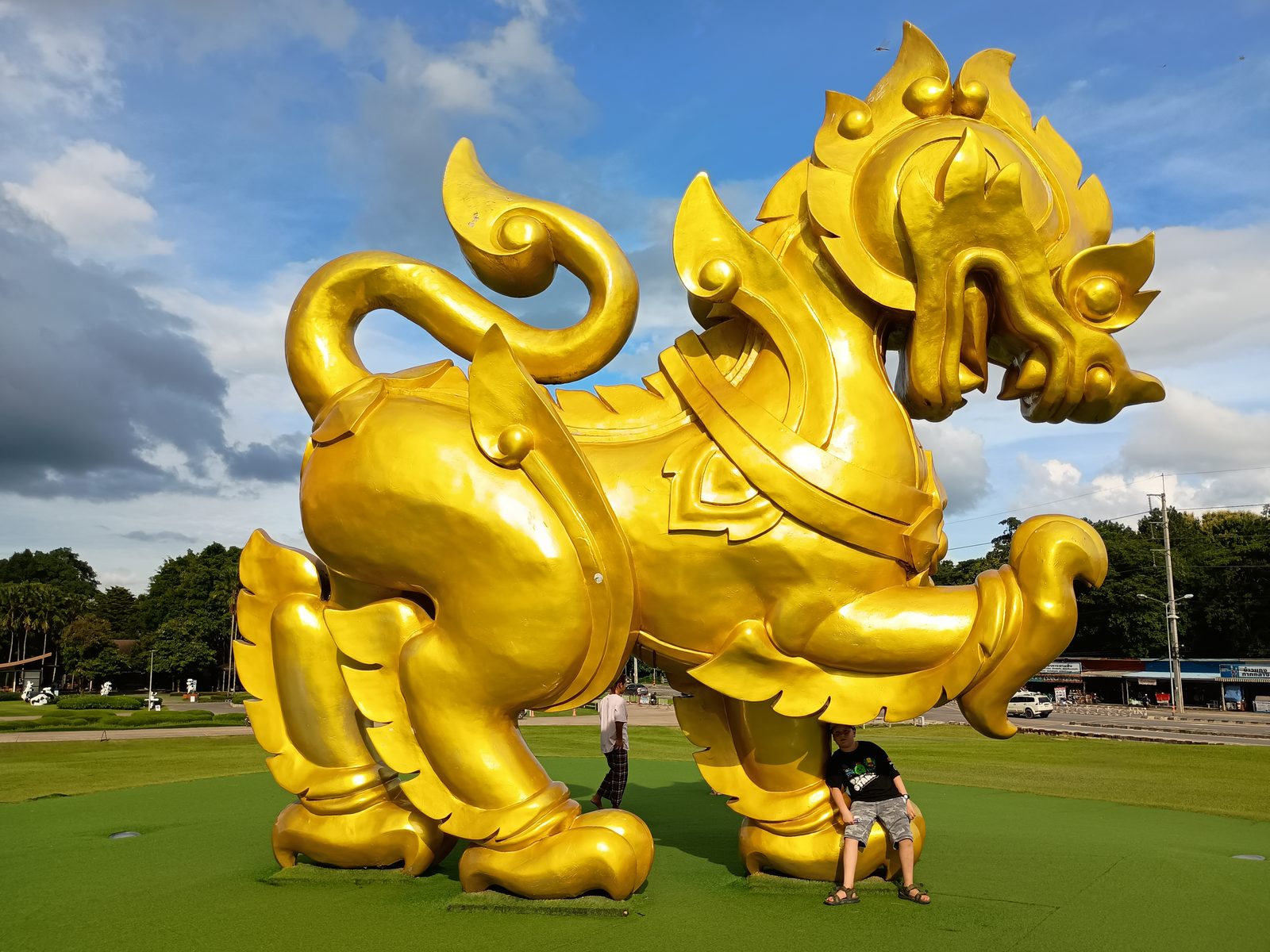
The park’s most prominent landmark is a massive golden statue of the Singha lion — the brand’s mythological mascot — positioned on a hilltop where it surveys the grounds. The statue is visible from much of the park and has become a de facto symbol of the attraction.
One of Singha Park’s more distinctive features is its fleet of electric cars, available for rent by visitors who prefer to explore the extensive grounds on wheels rather than on foot or bicycle. The cars are compact, open-sided, and quiet — practical for covering the park’s considerable distances, and highly photogenic in their own right. The park also offers bicycle rentals, a zipline course, and seasonal festivals, including an annual hot air balloon event and flower festivals that draw regional crowds.
The park operates as a day-trip destination from Chiang Rai, with on-site cafes, restaurants, and viewing platforms. Entry is generally free, though specific activities carry individual fees. For visitors based in Phayao, Singha Park adds a third dimension to the Chiang Rai temple circuit — a shift from sacred to pastoral, from artistic vision to agricultural enterprise, united by the same northern landscape.
Practical Notes
Phayao is accessible by road from Chiang Mai (approximately 3 hours via Highway 118 and Route 120) and from Chiang Rai (approximately 2 hours via Highway 1). Bus services operate from both cities. The town is small enough to explore on foot, though a vehicle is necessary for reaching Wat Analayo and the Chiang Rai temple circuit.
The best season for visiting is November through February, when temperatures are mild and the skies over Kwan Phayao tend toward clear. The rainy season (June–October) brings lush vegetation but also overcast skies that may obscure mountain views. Accommodation is limited by comparison with Chiang Mai or Chiang Rai — Phuglong Hotel, the Gateway Hotel, and several smaller guesthouses make up the primary options.
Phayao rewards a slower pace. It is not a checklist of attractions but a lakeside town whose pleasures reveal themselves over several days: the morning mist on Kwan Phayao, the afternoon light on temple stucco, the evening congregation of families and food stalls along the promenade. The province’s depth — its 900-year history, its palaeontological significance, its Lanna heritage — remains largely undiscovered by international tourism.
This guide draws on historical sources, academic publications, tourism authority materials, and local knowledge. Prices and operating hours were current as of mid-2025 and may have changed.